Monumental engineering
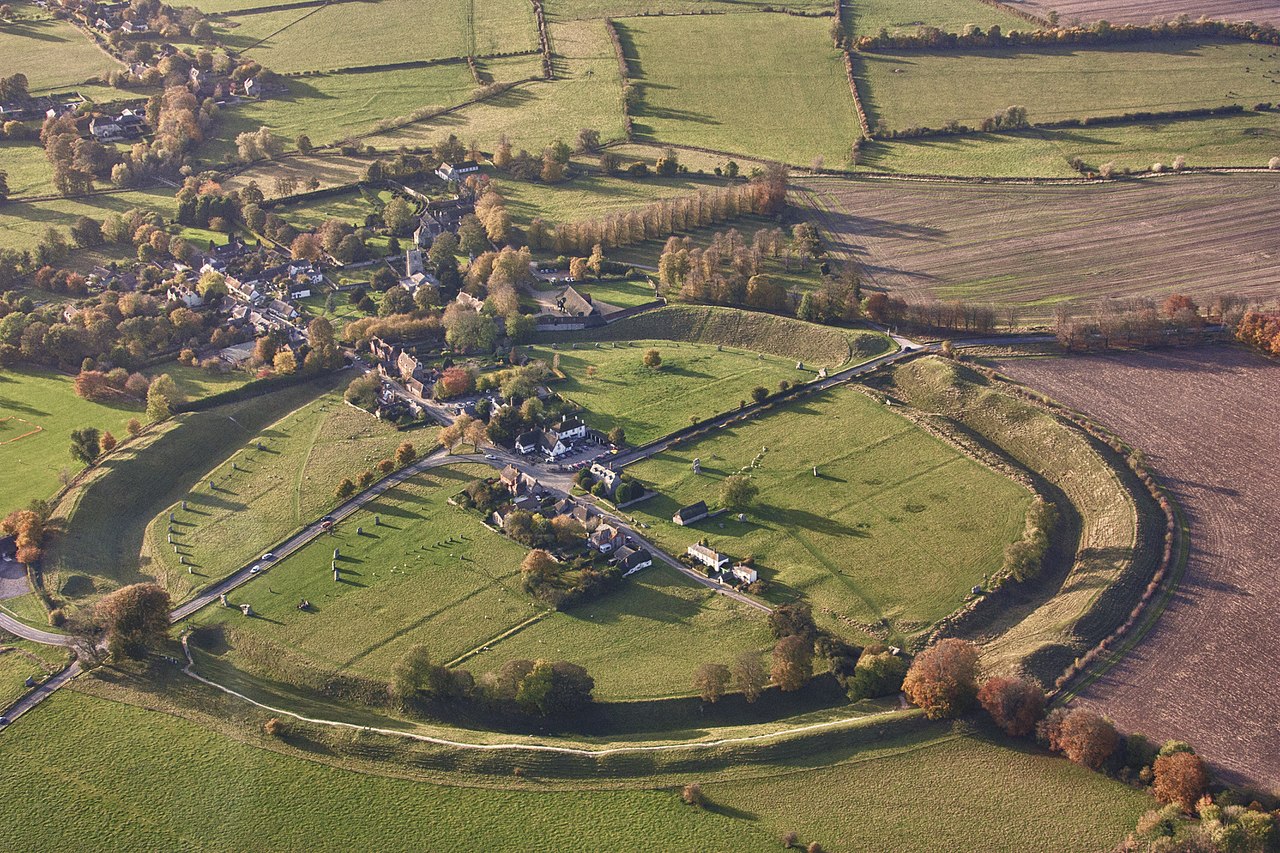
The Avebury Henge is an example of Neolithic construction, built and modified between 2850 and 2200 BCE. The monument's main feature is a massive circular earthwork, a bank and an internal ditch, that covers 11.5 hectares (28.5 acres). This ditch was originally cut up to 10 meters deep into the chalk bedrock, with the excavated material used to create an outer bank that stood about 5 meters high. From the bottom of the ditch to the top of the bank, the total height was once 16 meters. The entire earthwork has a circumference of nearly a mile.
Inside this enclosure stands the largest prehistoric stone circle in the world, originally composed of around 100 sarsen stones. This Outer Circle, in turn, contains two smaller, separate stone circles. The northern inner circle once had 27 stones, including a three-sided formation called "The Cove." The southern inner circle was made of 29 stones and featured a central, 6.4-meter-high monolith called the "Obelisk," which is no longer present. The stones themselves are an unworked, local type of silicified sandstone called sarsen, sourced from the Marlborough Downs just a few kilometers away. The largest of these stones weighs over 100 tonnes. Two ceremonial avenues of paired stones, the West Kennet Avenue and the Beckhampton Avenue, once led away from the henge, connecting it to other sites in the landscape.