A city shaken, not sacked
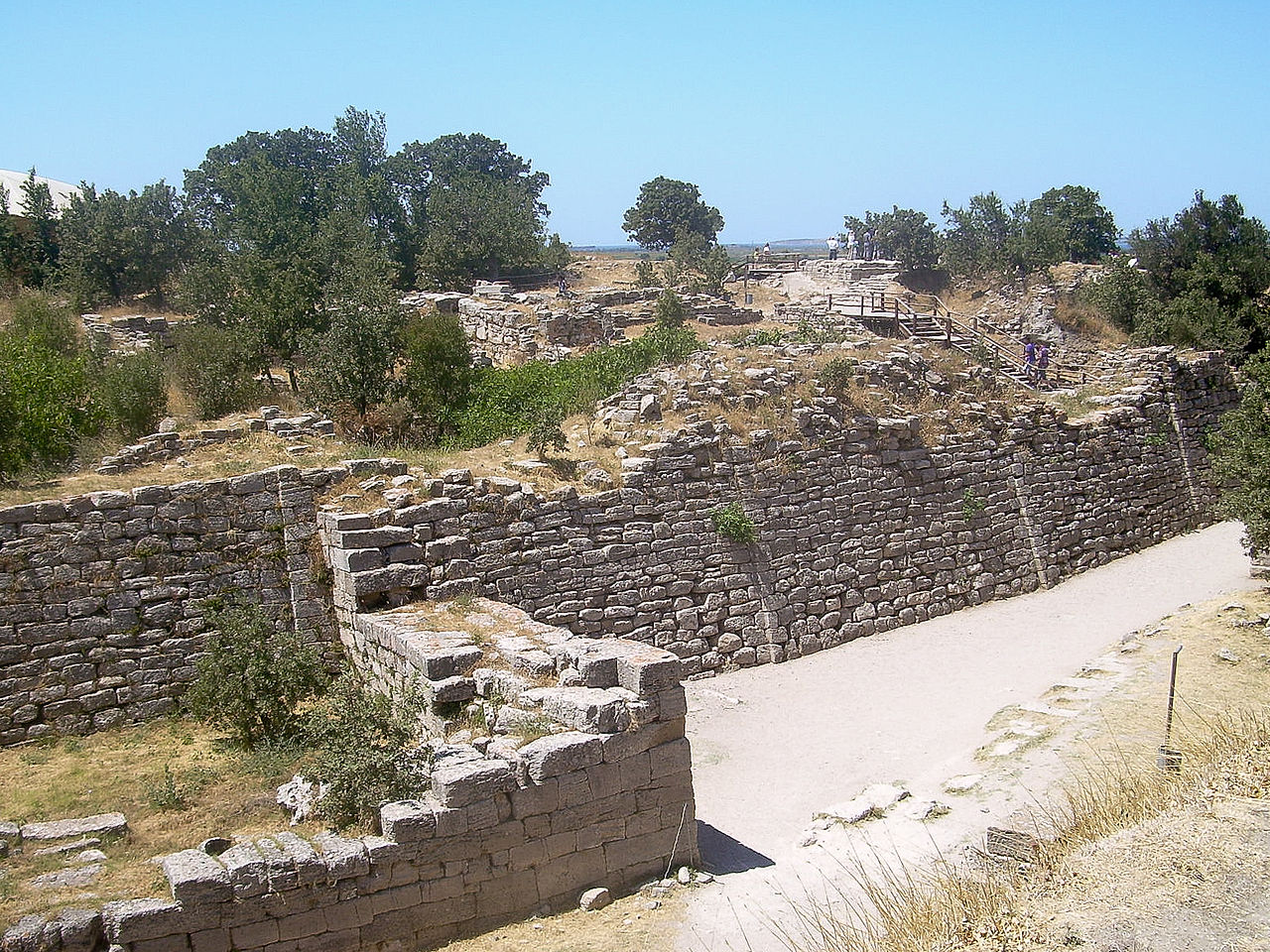
The legend of Troy, immortalized in Homer's Iliad, tells of a decade-long war, a giant wooden horse, and a city razed by vengeful Greeks. The archaeological reality, however, points to a different culprit for the destruction of the settlement layer known as Troy VIIa. Excavations led by archaeologist Carl Blegen in the 1930s uncovered a pattern of damage inconsistent with human warfare. Instead of random fire and battle damage, Blegen's team found evidence of a powerful seismic event.
The evidence is written in the stones of the city itself. Fortification walls were found buckled and shifted off their foundations. In some areas, entire sections of masonry had collapsed, with the stones falling in a uniform direction. Floors had subsided, and the architecture showed clear signs of violent, horizontal shaking. This pattern of structural failure indicates a strong earthquake. Adding to this picture, archaeologists discovered human remains in the streets and under collapsed buildings, suggesting a sudden catastrophe that left no time for escape or for the customary recovery of bodies after a battle. The destruction is dated to around 1180 BCE, a period that aligns with the traditional timeframe for the Trojan War.
The North Anatolian Fault
The location of Troy provides a geological explanation for this destruction. The site sits in a tectonically active region of northwest Anatolia, caught between branches of the North Anatolian Fault System (NAFS). The NAFS is a major right-lateral strike-slip fault, comparable in scale and activity to California's San Andreas Fault. This fault system accommodates the westward movement of the Anatolian Plate as it is squeezed between the Eurasian and African plates. The region contains a complex network of faults, including the nearby Troy Fault System, capable of producing earthquakes with a magnitude of 6.5 or higher.
The destruction of Troy VIIa was not an isolated event. Geoscientist Amos Nur and others have proposed the concept of an "earthquake storm"—a period of intense, clustered seismic activity that struck the Aegean and Eastern Mediterranean between roughly 1225 and 1175 BCE. Evidence for contemporaneous earthquake destruction appears at numerous other Bronze Age sites, including Mycenae, Tiryns, and Ugarit. This half-century of seismic chaos may have contributed to the widespread societal collapse that defines the end of the Late Bronze Age. The story of Troy's fall, therefore, was likely not an army but part of a larger event of natural forces reshaping civilizations.