Microscopic Butchery Scars
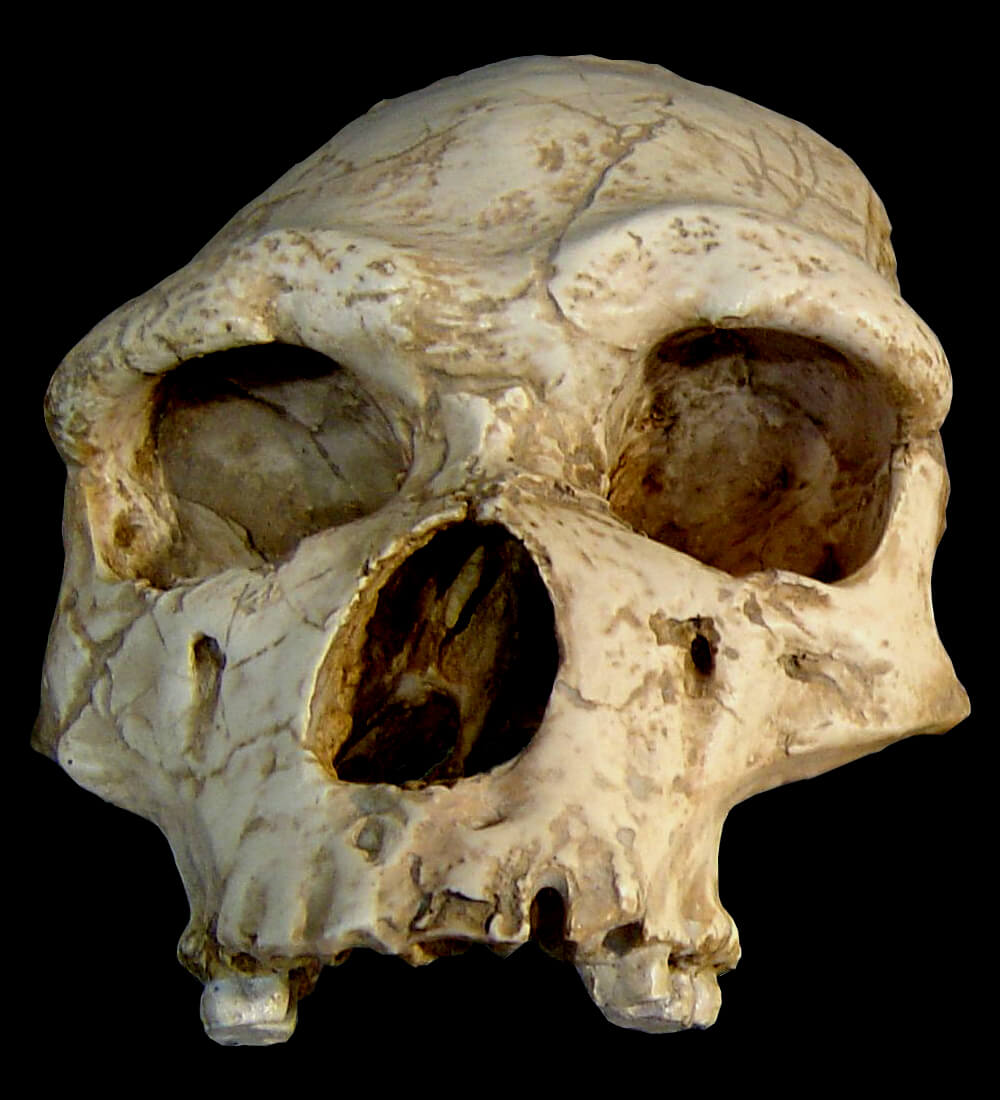
In a large limestone cavity known as the Caune de l'Arago, or Arago Cave, overlooking the Tautavel plain, archaeologists have uncovered a detailed record of pre-human life. The site contains over 15 meters of sediment preserving 600,000 years of history, with the most significant human fossils dating to around 450,000 years ago. These remains belong to Homo heidelbergensis, an archaic human species that inhabited Europe long before Homo sapiens.
Among the more than 150 human fossils found are numerous teeth. Close examination of the front teeth (the incisors and canines) reveals a pattern of fine, non-masticatory scratches. These are not marks from chewing food, but striations accidentally inflicted by stone tools. The prevailing interpretation is that these individuals would grip one end of a piece of meat with their front teeth and hold the other end taut with one hand. They would then use a sharp stone flake in their dominant hand to slice the meat. Occasionally, the tool would slip and score the enamel surface of the tooth. This behavior, using the mouth to hold items, shows their daily activities.
A Right-Handed World
The orientation of these dental scratches is what shows how the Tautavel hominins lived. The vast majority of the striations run diagonally, from the upper right to the lower left, across the surface of the upper front teeth. This specific angle is consistent with a right-handed individual holding a tool and cutting upwards. A left-handed person would produce scratches with the opposite orientation, from upper left to lower right. The pattern at Tautavel strongly indicates that most of these hominins were right-handed.
This finding pushes back the evidence for right-hand dominance, a trait linked to brain lateralization, deep into the human lineage. In modern humans, about 90% of the population is right-handed, a ratio that differs significantly from the roughly 50-50 split seen in apes. The evidence from Tautavel suggests that this modern human-like brain organization, where different hemispheres specialize in different tasks, was already established in Homo heidelbergensis nearly half a million years ago. The dental microwear analysis allows scientists to reconstruct diet and complex behaviors of extinct human relatives.