A graveyard of enigmas
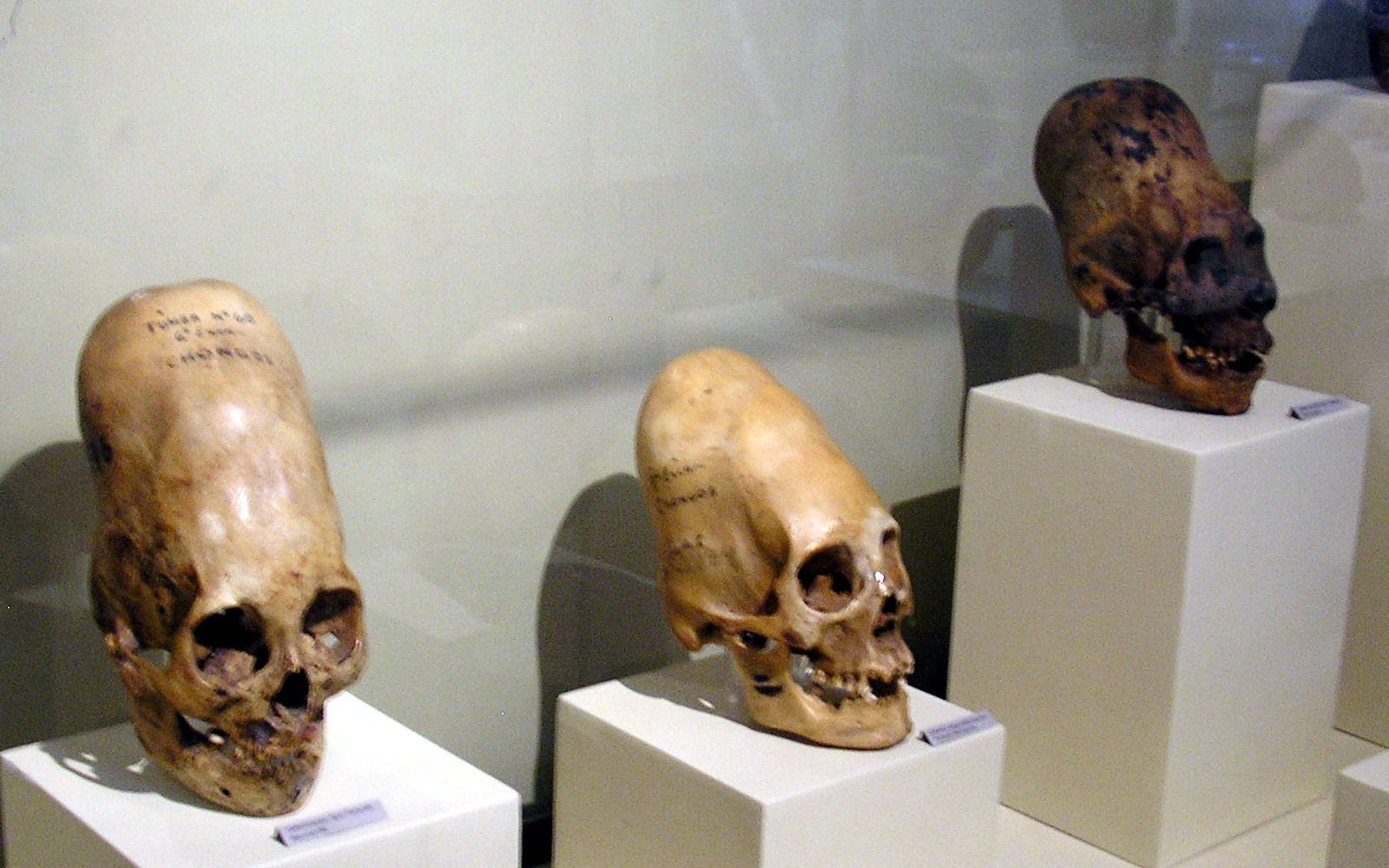
In 1928, on the arid Paracas Peninsula of Peru, archaeologist Julio C. Tello discovered a vast and complex graveyard. The necropolis contained more than 300 burial sites, some dating back 3,000 years. The desert conditions preserved the remains, but it was the skulls that presented a lasting puzzle. These were not typical human skulls; they were dramatically elongated.
The culture, known as the Paracas civilization, thrived from approximately 800 to 100 BCE. The initial explanation for the skulls' shape was artificial cranial deformation (ACD), a practice seen in various ancient cultures. This process involves binding an infant's head with cloth or boards to reshape the pliable bone over many years. ACD, however, only changes a skull's shape, not its volume or mass. The Paracas skulls are different. Their cranial volume is up to 25% larger and they are as much as 60% heavier than typical human skulls. These measurements suggest the shape may not have resulted from binding alone.
Anatomical and genetic questions
Beyond sheer size, some of the skulls have other unusual features. Proponents of an alternative origin point to anatomical traits inconsistent with known human physiology, such as the absence of a sagittal suture, the connective tissue joint that runs along the top of the skull, in some specimens. The foramen magnum, the opening at the base of the skull where the spinal cord connects, is also positioned differently in some of the Paracas skulls compared to typical human skulls.
Initial, non-peer-reviewed DNA analyses have added to the controversy. These tests, promoted by researchers outside of mainstream academia, reported mitochondrial DNA with mutations not found in any known human, primate, or other animal. Subsequent reports from the same sources claimed the skulls' DNA showed origins in Europe and the Middle East, which contradicts established models of migration to the Americas.
However, these genetic findings have not been published in peer-reviewed scientific journals and are not accepted by the broader archaeological and genetic communities. The scientific consensus remains that the Paracas skulls are the result of artificial cranial deformation. Until the controversial DNA evidence is subjected to independent and peer-reviewed analysis, the skulls are considered to be from an isolated human population with unique cultural practices, not a separate species.