Hydrology of a holy place
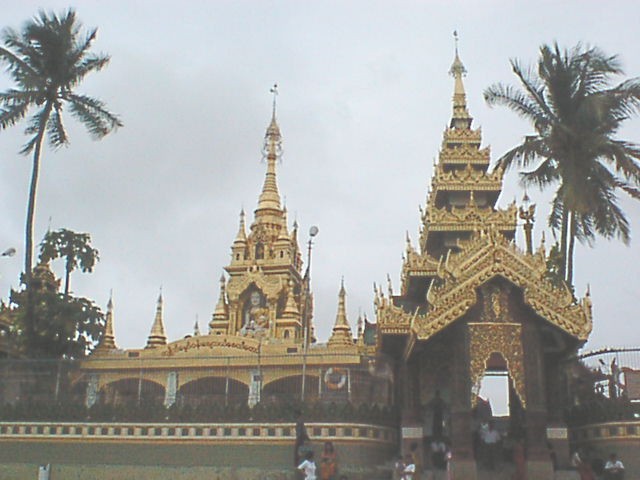
The Kyauktan Ye Le Pagoda is on a small islet in the Hmaw Wun Creek, a tributary of the much larger Yangon River. This location places it directly within a dynamic estuarine system, subject to the powerful influence of the Andaman Sea. The area is a macrotidal estuary, meaning it experiences a very large difference between high and low tide. At the mouth of the Yangon River, the spring tidal range can reach approximately 6 meters. This massive exchange of water creates strong, reversing tidal currents that dominate the local hydrodynamics, with peak speeds reaching 1.5 to 3 meters per second.
For centuries, the annual pagoda festival has featured processions of boats carrying pilgrims and religious icons through these complex waterways. The timing of these processions is not arbitrary. It shows a deep and practical understanding of the local tidal hydrology. By scheduling their movements to coincide with specific phases of the tide, participants can harness the powerful currents to their advantage. Traveling downstream is far easier on an ebb tide, when the water is flowing out to sea. Conversely, the flood tide, with water pushing inland, assists with upstream journeys. Navigating across channels becomes most efficient during slack water, the brief period at high or low tide when the currents cease before reversing. This traditional knowledge effectively minimizes the physical effort required for rowing and ensures safer passage.
Modeling the invisible forces
Modern hydrodynamic modeling confirms the scientific basis for this ancient practice. The Yangon River estuary is classified as partially mixed to well-mixed, a result of the intense tidal energy that churns the water column. Numerical models, using data on river discharge and tidal elevations, can accurately simulate the complex flow structures within the river and its tributaries. These models show that tidal flows are the dominant force in the river system, particularly during the dry season.
The models show how current velocities change throughout the semi-diurnal tidal cycle—two high and two low tides each day. They illustrate the asymmetry in the flow, where the ebb (outgoing) current often has a higher velocity than the flood (incoming) current. This detailed understanding of flow velocity and direction at any given time reveals the optimal windows for navigation. The festival's schedule, refined over generations, aligns perfectly with these windows. The boat processions evolved to catch specific combinations of currents, turning a difficult journey through powerful tidal channels into a predictable and manageable ceremony.