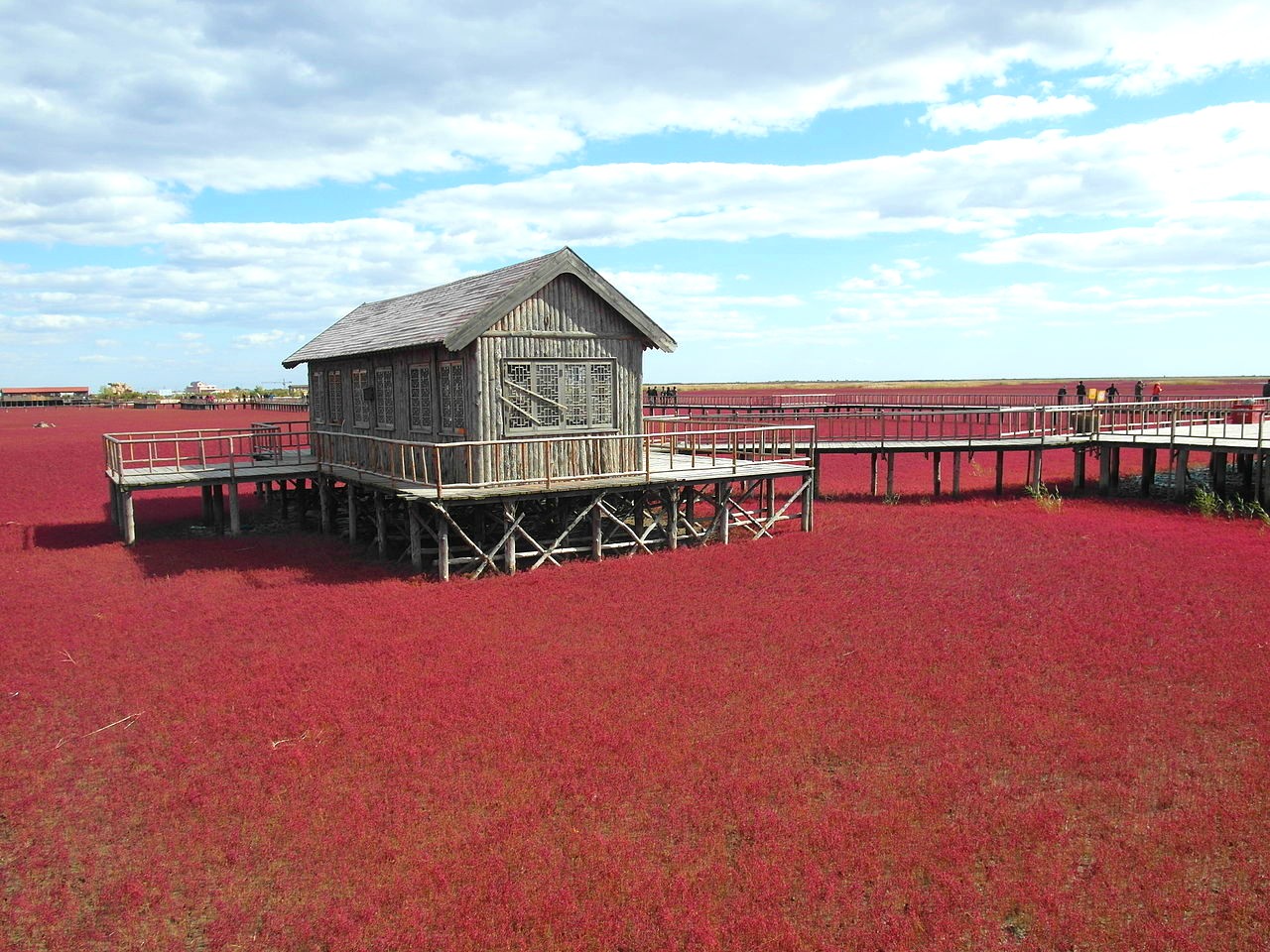
A Landscape Painted by Salt
The Red Beach, located in the Liaohe River Delta near Panjin, is not a sandy shore but a vast coastal wetland. Its famous crimson color is produced by a dense carpet of a salt-tolerant plant, or halophyte, called Suaeda salsa. This species thrives in the saline-alkaline soil of the marsh, which covers an area of roughly 100 square kilometers. The Liaohe River Delta is one of the world's largest wetlands and reed marshes, creating a unique environment where few other plants can survive the high salt concentrations.
The plant's life cycle dictates the beach's appearance throughout the year. In the spring, around April and May, the Suaeda begins to grow and is a tender, light red or green color. As summer progresses into autumn, the plant matures. The increasing salinity of the soil triggers a dramatic biochemical change. Chlorophyll, the pigment responsible for the green color, breaks down. This reveals the red pigments (anthocyanins) stored within the plant's cells. The process intensifies from August through October, with the landscape reaching its most bright red from mid-September to mid-October. As winter approaches, the color deepens to purple before the plant dies back.
An Ecological Powerhouse
Suaeda salsa is a pioneer species foundational to the wetland ecosystem. It is one of the first organisms to colonize the barren, saline mudflats deposited by the Liaohe River. Its root systems help to stabilize the sediment, preventing erosion and gradually making the soil more suitable for other species. As the plants decompose, they add organic matter to the soil, paving the way for less salt-tolerant vegetation like reeds (Phragmites australis) to take hold.
This unique habitat supports a high level of biodiversity. The wetland is a stopover point for migratory birds on the East Asian-Australasian Flyway. Over 260 bird species and nearly 400 wildlife species inhabit the area. It is a significant breeding ground for the endangered Saunders's gull and a habitat for the rare red-crowned crane (Grus japonensis). The ecosystem also provides a nursery for various fish, crabs, and other invertebrates, contributing to the health of the nearby Bohai Sea.