A 47-million-year-old fossil site in Germany where animals were killed and preserved so quickly by volcanic gases that scientists can identify their stomach contents. One famous specimen is a pregnant mare with her unborn foal still visible inside her body.
Jens L. Franzen, Philip D. Gingerich, Jörg Habersetzer1, Jørn H. Hurum, Wighart von Koenigswald, B. Holly Smith, CC BY-SA 2.5, via Wikimedia Commons
An Eocene ecosystem, instantly preserved
Around 47 million years ago, a violent volcanic eruption occurred when rising magma met groundwater, creating a deep crater known as a maar. This crater filled with water, forming Lake Messel, which was up to 300 meters deep. The area was a lush, subtropical rainforest with a climate much warmer than modern Germany's.
The lake became a perfect trap. It was thermally stratified, meaning the deep bottom waters did not mix with the surface and contained no oxygen. Scientists theorize that periodic releases of toxic volcanic gases, like carbon dioxide, silently suffocated animals near the shore or flying overhead. Their bodies would then sink into the anoxic depths, where the lack of oxygen prevented scavenging and slowed decomposition. Over millennia, fine layers of sediment and dead algae settled on the lakebed, forming the oil shale that encased the fossils. This unique combination of factors led to the exceptional preservation of bones and soft tissues like fur, feathers, and internal organs.
Evidence of ancient life
The Messel Pit shows the flora and fauna of the Eocene epoch. Tens of thousands of fossils have been discovered, showing a complete ecosystem in detail. The site is famous for specimens that reveal their last meals and even their coloration. Jewel beetles have been found with their iridescence still visible after 47 million years.
One of the most remarkable finds is a pregnant mare of the species Eurohippus messelensis. Discovered in 2000, the fossil is so complete that the fetus is visible inside, along with preserved soft tissues of the uteroplacenta. This shows scientists the reproductive systems of early mammals. Over 60 prehistoric horse skeletons have been found at the site.
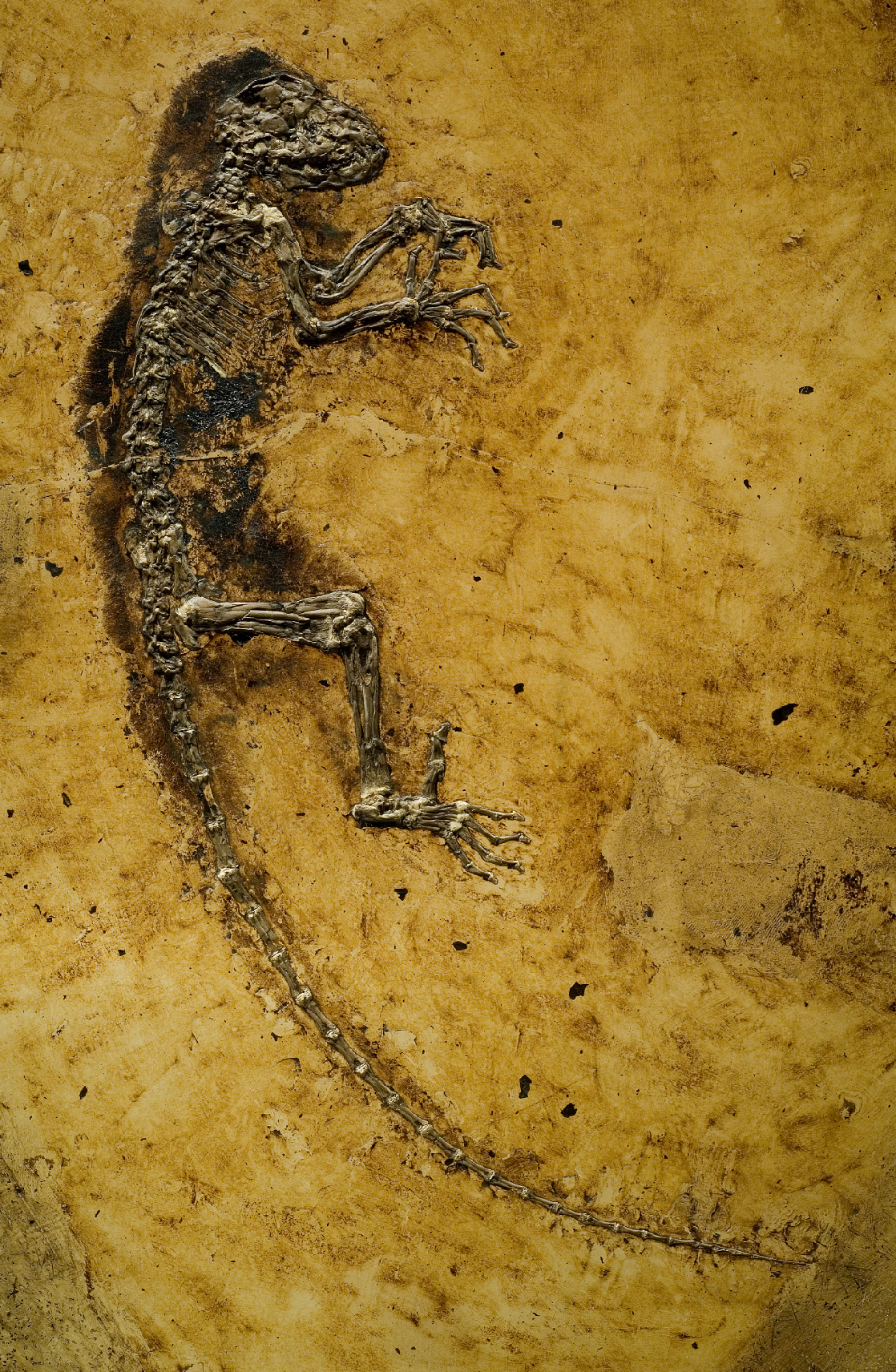
Other significant fossils include Darwinius masillae, nicknamed "Ida," a remarkably complete primate fossil discovered in 1983. While initially claimed to be a direct human ancestor, it is now understood to be an early lemur-like primate. The site has also yielded fossils of bats with moths in their stomachs, early pangolins, and numerous birds and crocodiles. Giant ants of the species Titanomyrma gigantea, with queens growing up to 7 centimeters long with a 16-centimeter wingspan, have also been unearthed.
The former oil shale quarry was active from 1859 until 1971. In the 1970s, the site was slated to become a landfill, but public and scientific protest saved it. The state of Hesse purchased the land in 1991, and it was declared a UNESCO World Heritage Site in 1995.
💡Fun Facts
Fossils from the oil shale have a water content of about 40% and will crumble into dust if they dry out. Preparators must use a special resin transfer technique to preserve them.
Scientists have found fossilized leaves with preserved bite marks from insects, showing direct evidence of ancient plant-animal interactions.
The site has yielded over 1,400 different species of plants and animals, providing a comprehensive picture of this Eocene environment.
Some of the earliest known fossils of mating turtles were discovered at Messel Pit.
March 15 - November 15: Daily, 10:00 AM - 5:00 PM. November 16 - March 14: Wednesday - Sunday, 10:00 AM - 5:00 PM. Closed on some public holidays.
Admission
Access to the pit itself is by guided tour only. Prices vary depending on the tour length. Admission to the visitor center and museum is available separately.
Accessibility
The visitor center is accessible. Access to the pit for guided tours involves walking on unpaved paths in a former mine.