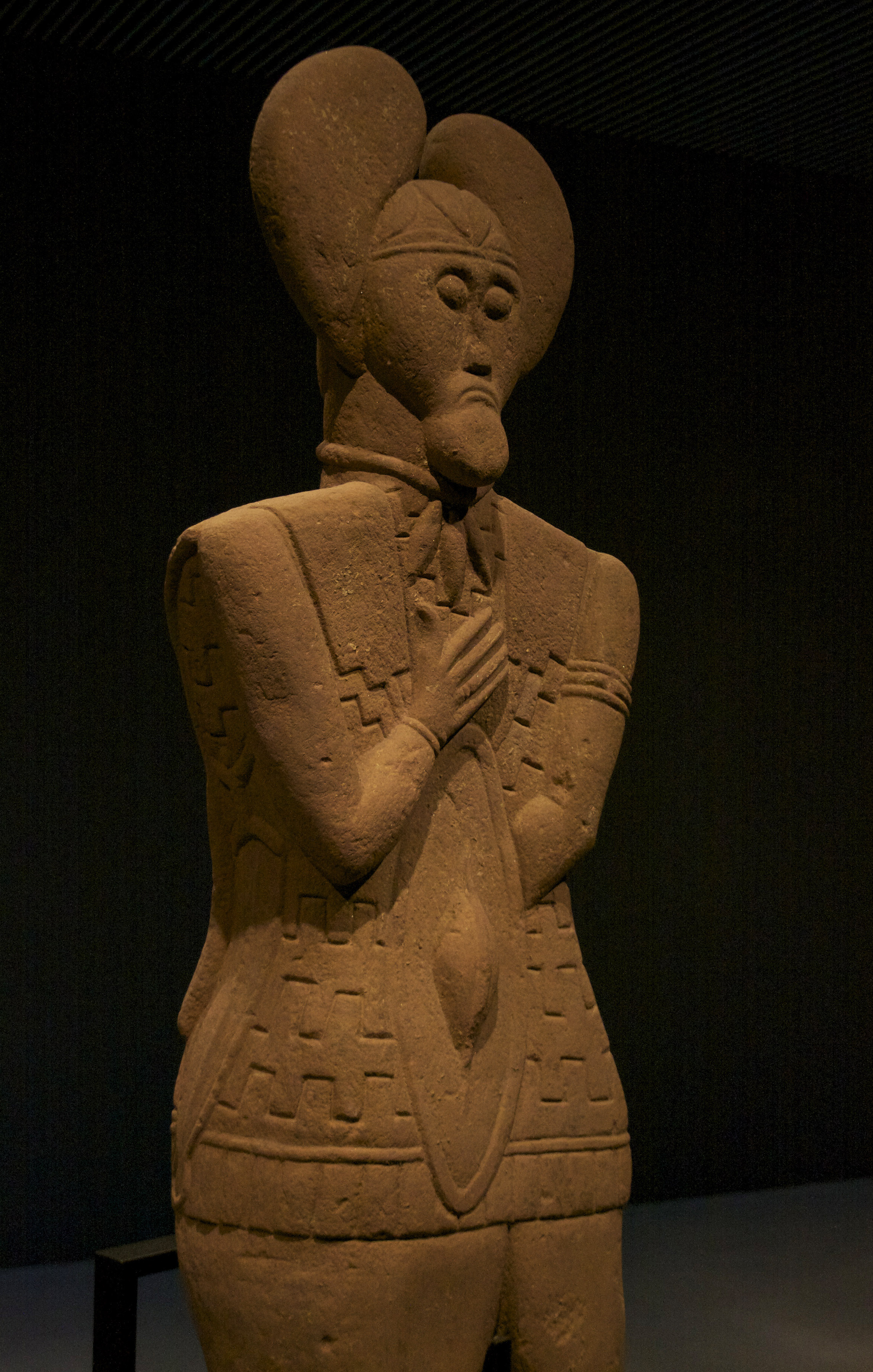
An unprecedented image
In 1996, archaeologists excavating a Celtic site near Glauberg, Germany, discovered a nearly complete, life-size statue of a warrior. Carved from local sandstone around 420 BCE, the figure stands 1.86 meters tall and weighs 230 kilograms. This statue is one of the oldest known life-size human sculptures from Celtic Europe. The figure is depicted with a sword on his right hip, a shield held in his left hand, and armor. The items shown on the sculpture, including a prominent gold neck ring (torc), arm ring, and finger ring, precisely match the actual grave goods found in a nearby burial mound. This direct correlation shows the statue depicts the powerful individual buried there.
The statue was not found inside the tomb, but was discovered in a large ditch that surrounded the main burial mound. Fragments of at least three other similar, though not identical, statues were also recovered from the area. This suggests the statues may have once stood together in a rectangular enclosure as part of a larger memorial or ancestor cult. The main burial mound, now reconstructed, was originally a monumental structure with a diameter of nearly 50 meters and a height of 6 meters.
The Prince and his possessions
The main tomb, designated Grave 1, contained the remains of a high-status warrior from the early La Tène period. His grave was filled with an array of valuable objects. Among them was a golden torc with three pendants, an exact match to the one carved on the sandstone statue. Analysis of the gold jewelry from the grave revealed a complex story. One gold ring was made of local river gold, while another was crafted from purified gold, a technology not known north of the Alps at that time. This suggests the purified gold was imported from the Mediterranean region, showing long-distance trade networks.
Other items in the burial included weapons and a rare bronze jug. The jug is also believed to be an import, possibly from Etruscan Italy. Analysis of its contents detected residue of mead. The entire Glauberg site was a significant political and ceremonial center during the late Hallstatt and early La Tène periods. The hillfort, or oppidum, was a fortified settlement for a large community, showing the status of the individuals buried in the "princely" graves below.