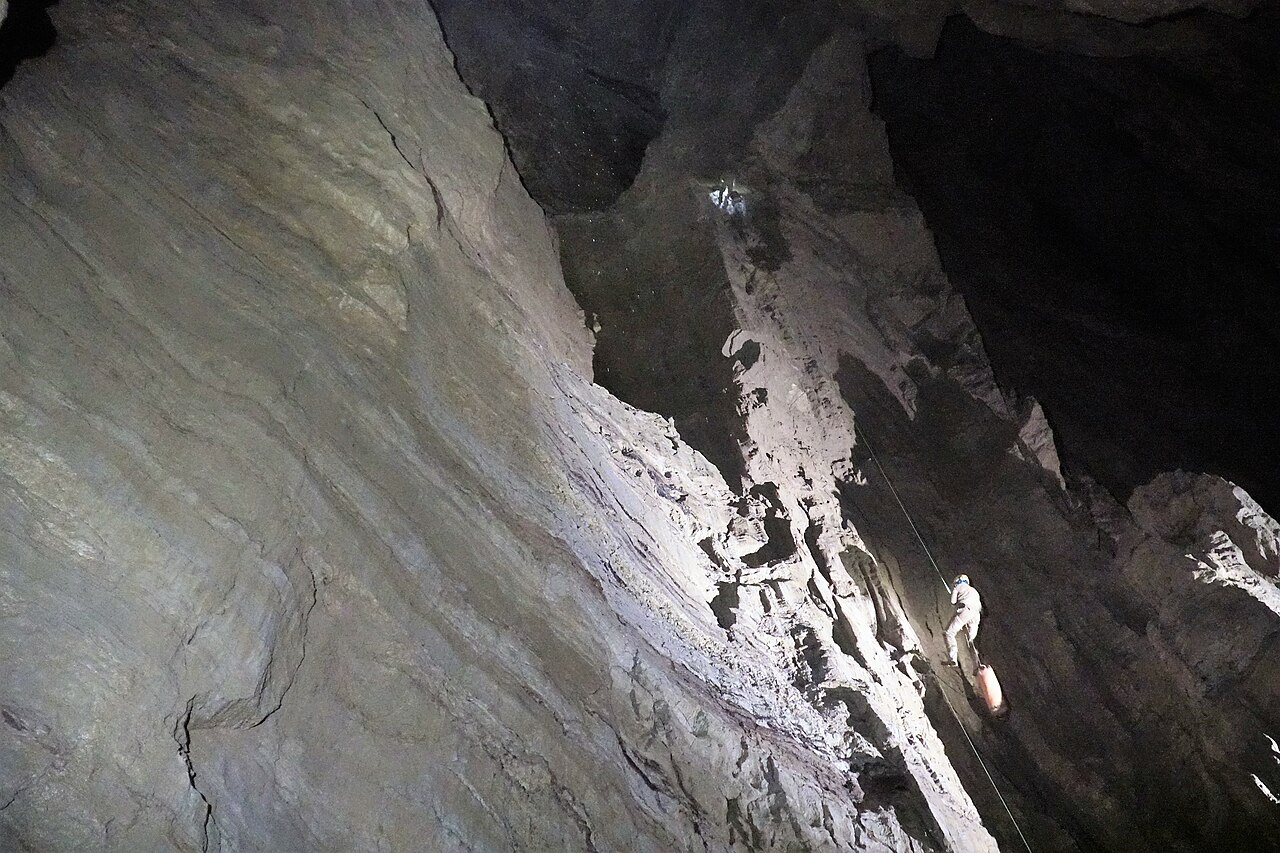
A vertical world of rock and darkness
Veryovkina Cave is a nearly vertical descent into the Earth's crust, located in the Arabika Massif of the Western Caucasus mountains. The entrance, a modest 3-by-4-meter opening, sits at an altitude of 2,285 meters. From there, the cave plunges 2,212 meters (7,257 feet) into a world of permanent darkness and 100% humidity. This extreme depth is the result of millions of years of water infiltration into the massif's limestone, a type of soluble rock. Rainwater, made slightly acidic by atmospheric carbon dioxide, has slowly carved the network of deep vertical shafts that characterize the cave.
The environment inside is stable and hostile. Temperatures remain between a frigid 4°C and 7°C year-round. The descent to the bottom is a multi-day endeavor even for professional speleologists, requiring the use of underground camps established at various depths. The cave's structure is predominantly a series of deep pits connected by narrow passages, including one shaft with a freefall of 155 meters. This aphotic zone, completely devoid of sunlight, cannot support life based on photosynthesis. The organisms that live here depend on entirely different survival strategies.
An ecosystem in isolation
Life in Veryovkina Cave shows biological resilience. The base of the food web consists of microorganisms called chemoautotrophs. These bacteria and archaea derive energy not from sunlight, but from chemical reactions with minerals and inorganic substances in the rock and water, such as sulfur or methane. This process, known as chemosynthesis, is the basis of the cave's isolated ecosystem. The first microbiological study of Veryovkina identified dominant phyla such as Proteobacteria, Acidobacteria, and Actinobacteria at various depths.
Besides chemosynthesis, the ecosystem receives a sparse but steady supply of nutrients from the surface. Allochthonous organic matter—bits of soil, microbes, and decaying plant material—is washed down into the cave system by percolating water. This material supports a sparse community of invertebrates. Species documented in the cave include the cave shrimp Xiphocaridinella demidovi, the eyeless beetle Duvalius abyssimus, and the millipede Heterocaucaseuma deprofundum. These creatures are highly adapted to the dark, low-nutrient environment, often lacking pigmentation and eyes.