A world of strangers
Imagine not recognizing your spouse, your children, or your own reflection in the mirror. This is the reality for people with prosopagnosia, or "face blindness." This neurological condition impairs the ability to recognize familiar faces, even though other aspects of visual processing and intellect remain perfectly intact. Research from institutions in the Cambridge area, including Harvard Medical School, explains this phenomenon, which affects a surprising number of people. Some studies suggest that developmental prosopagnosia, a lifelong condition not caused by brain injury, affects up to 1 in 33 people, or over 10 million individuals in the United States.
The term "prosopagnosia" was coined in 1947 by German neurologist Joachim Bodamer. He described the case of a 24-year-old man who, after a bullet wound to the head, could no longer recognize his friends or family by their faces alone. He had to rely on other cues like their voice or gait. This shows the two primary forms of the condition: acquired prosopagnosia, which results from brain damage, and developmental prosopagnosia, which is present from birth. The latter often has a genetic component, with the condition frequently appearing in multiple members of the same family.
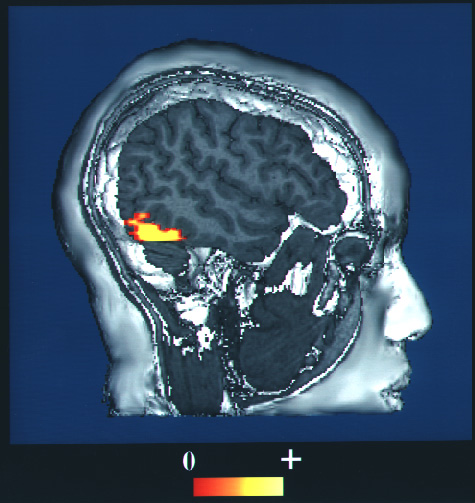
The brain region associated with face recognition is a small, spindle-shaped area in the inferior temporal cortex called the fusiform gyrus, specifically the fusiform face area (FFA). Functional magnetic resonance imaging (fMRI) shows this area activates specifically in response to faces. In individuals with prosopagnosia, the brain must rely on its general object-recognition systems to process a face, which is a far less efficient and specialized tool for the job.
Separate circuits for faces
One of the most revealing aspects of prosopagnosia is what remains intact. A person with face blindness can often look at a face and successfully identify the emotion being expressed. This observation is important for neuropsychologists, showing that the brain uses different neural pathways for recognizing identity and processing emotion. Recognizing identity requires holistic processing—interpreting the entire configuration of facial features at once. Emotion recognition, conversely, can often rely on analyzing specific features, like the curve of a mouth or the crinkle around the eyes.
This dissociation is an important area of study. While some individuals with prosopagnosia show subtle impairments in judging expression, the ability is largely separate from identity recognition. The brain’s emotion-processing centers, such as the amygdala, handle the interpretation of expressions before the information is even passed to the FFA for identity processing. This separation explains why someone can perceive a smile as happy without knowing whose face is smiling.
To cope, individuals with prosopagnosia develop alternative strategies. They become experts at recognizing people by non-facial cues. These can include a person's hairstyle, specific clothing, body shape, or unique mannerisms of walking. This reliance on external details shows the brain's capacity to adapt, even when a highly specialized module like the FFA is not functioning typically.