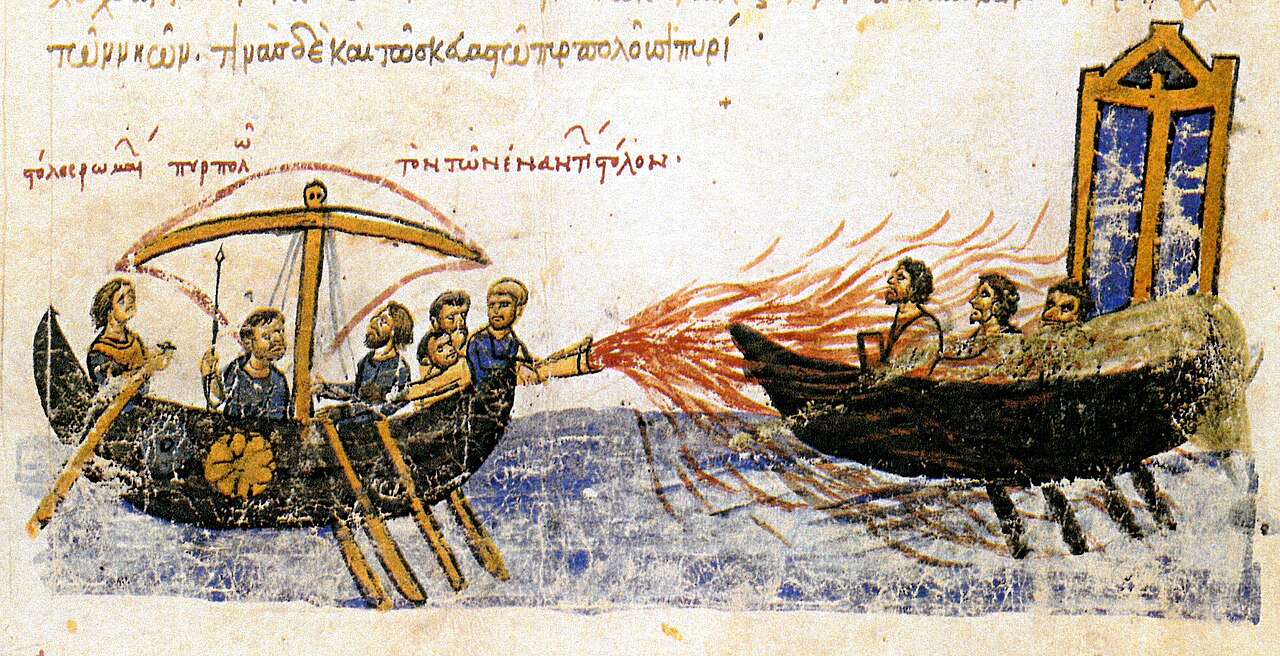
A 7th-century weapon system
The Byzantine weapon known as Greek Fire was a complete system, combining a secret chemical formula with a revolutionary delivery device. Around 672 AD, an engineer named Kallinikos of Heliopolis, a refugee from Syria, is credited with developing the technology for the Byzantine Empire. His main innovation was the incendiary liquid and the bronze apparatus designed to project it: the siphōn. This device was essentially the world's first advanced flamethrower.
Mounted on the prow of Byzantine warships called dromons, the siphon was a piece of engineering. It consisted of a sealed bronze tank or cauldron, a furnace to heat the liquid, and a hand-operated force pump. Operators would heat the petroleum-based mixture and then use the pump to build up pressure. This pressure forced the liquid through a bronze tube to a swiveling nozzle, which was often decorated to look like the head of a lion or other beast. As the superheated liquid was ejected, a flame at the nozzle's tip ignited it, unleashing a continuous stream of fire. This system allowed a single ship to incinerate an enemy vessel from a distance. The effective range was relatively short, estimated to be up to 15 meters (about 49 feet), making it a terrifying close-quarters naval weapon.
The chemistry of a state secret
The precise chemical composition of Greek Fire is lost to history. The formula was a state secret, known only to the Kallinikos family and the ruling emperors, who passed it down through generations. Byzantine texts even claimed the formula was delivered by an angel to ensure it was never shared. This secrecy was so effective that even when enemy forces captured siphons and quantities of the liquid, they were unable to replicate the weapon.
Modern analysis and historical descriptions suggest the main ingredient was a petroleum or naphtha base, which the Byzantines had access to from natural seeps around the Black Sea. This was likely mixed with other substances to improve its properties. Pine resin and other resins would have been added to make the liquid thick and sticky, ensuring it clung to wooden hulls, sails, and people. Other potential ingredients include sulfur, pitch, and quicklime.
One of the fire's most notorious properties was its ability to burn on water, which some scholars suggest could be due to a reaction with quicklime or calcium phosphide. The weapon produced a loud roar and thick smoke, increasing its psychological impact. Historical accounts state it could only be extinguished by sand, vinegar, or urine—water seemed to make the flames more intense.