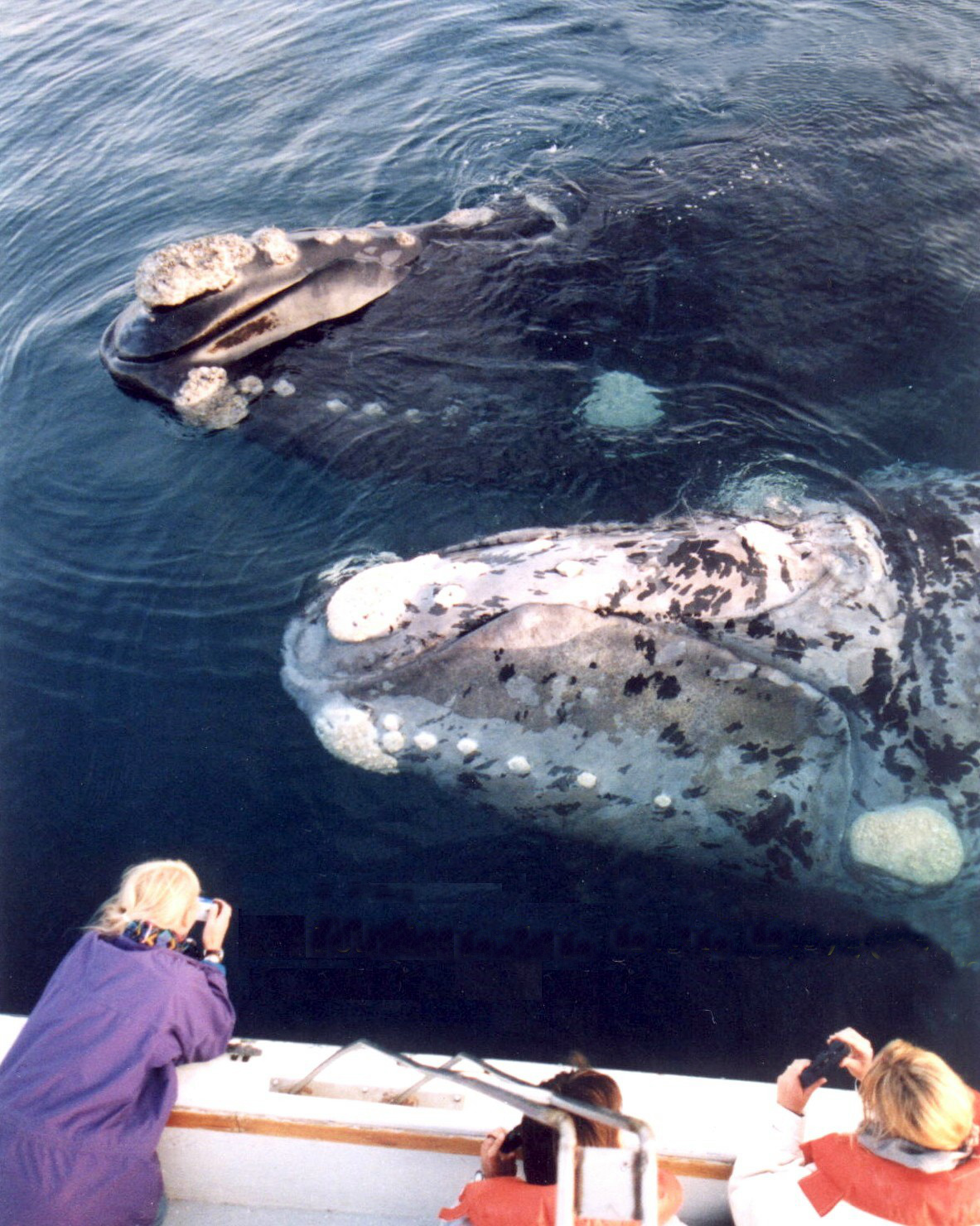
The Cetacean Calculation
The calm, protected waters of Península Valdés are the setting for a powerful scientific and economic argument. Here, the value of a living southern right whale (Eubalaena australis) is ecological and a quantified economic asset. The region's whale-watching industry is a case study in conservation economics, demonstrating that the long-term revenue from tourism far exceeds the short-term profits from historical whaling. This economic data provides a numbers-based rationale for conservation that has been used in international policy discussions, influencing the global debate on the commercial hunting of whales.
Before global protections took effect in the mid-20th century, commercial whaling decimated southern right whale populations. In the 17th century, the southwest Atlantic population was estimated at over 58,000; by 1830, fewer than 2,000 remained. Ships, including many from New England, used the natural harbors of Patagonia to process whales for oil and baleen, contributing to the species' near-collapse. Today, the reverse is true. The annual arrival of whales supports a thriving ecotourism sector, which saw tourist numbers grow from just over 17,000 in 1991 to more than 113,000 by 2007.
A Biological Sanctuary
The Península Valdés, a UNESCO World Heritage site since 1999, is a significant breeding and calving grounds for the southern right whale. Each year starting in May, these massive marine mammals migrate from their feeding grounds in subantarctic and Antarctic waters to the sheltered bays of Golfo Nuevo and Golfo San José. Pregnant females arrive to give birth in the shallow waters, which offer protection for their newborn calves.
The gestation period for a southern right whale is about 12 months, and a single calf is born to a female roughly every three years. The calf relies on its mother's milk, which is over 50% fat, allowing it to grow by 2 to 3 centimeters daily. this nursing period lasts for months before the pair begins their long journey back to the feeding grounds, a migration that can cover over 18,000 kilometers in 239 days. The peak season for sightings, when mothers and calves are most active, is typically from September to November.
The whale-watching industry itself is an applied science, operating under strict regulations developed from decades of observation. Argentina's "Patagonian whale watching technique" dictates that boats must not pursue or corner the animals. Instead, vessels often cut their engines and wait, allowing the naturally curious whales to approach them. Regulations limit the number of boats that can approach a single whale or group, and approaches to mother-calf pairs are forbidden until September to minimize disturbance during the most vulnerable period.