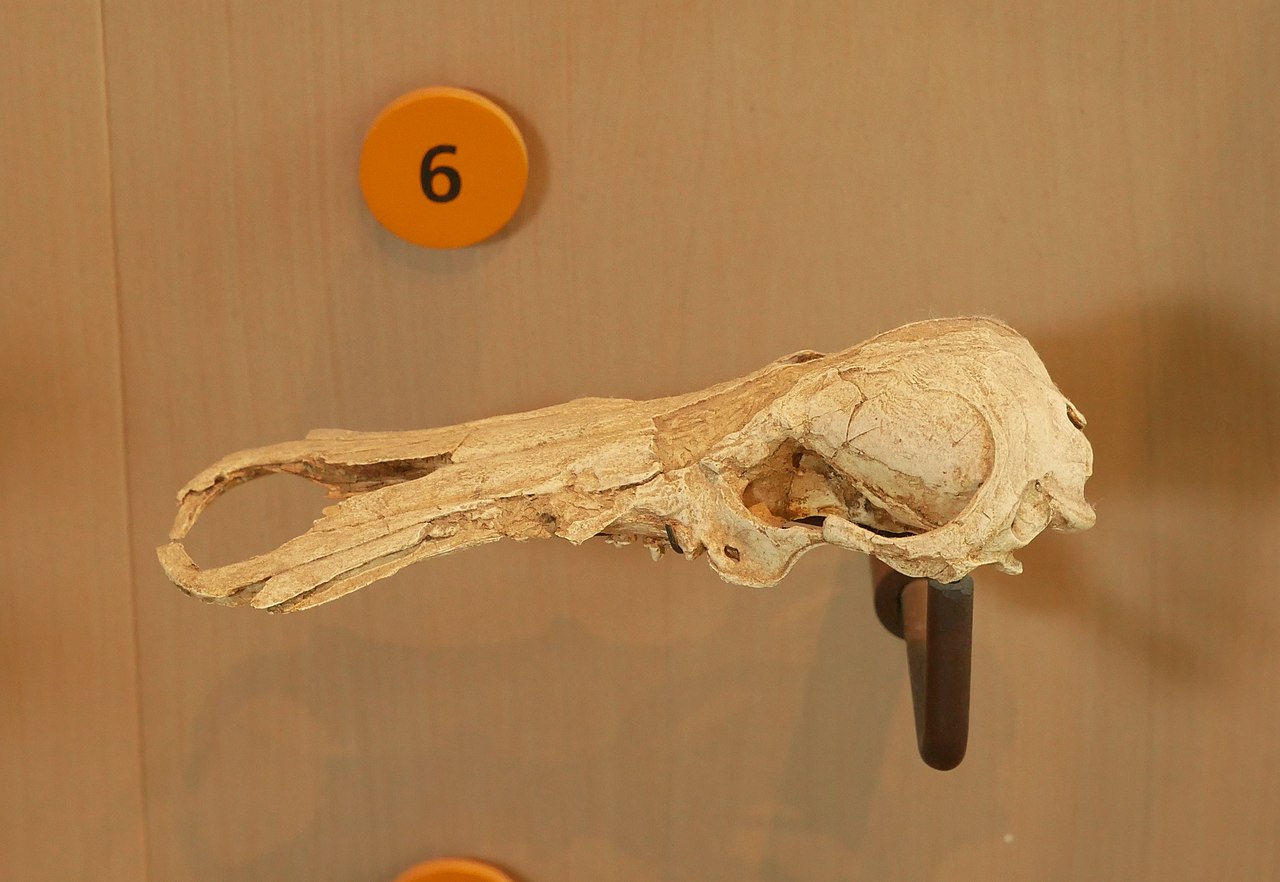
A platypus with teeth
In the Miocene Epoch, around 15 to 19 million years ago, the Riversleigh area was not an arid expanse but a lush rainforest with freshwater pools. Swimming in these waters was a platypus very different from its modern relative. This was Obdurodon dicksoni, a species that retained fully functional teeth into adulthood. The modern platypus (Ornithorhynchus anatinus) is famously toothless as an adult, using tough, keratinized pads to grind its food. Obdurodon, by contrast, had a powerful jaw with rooted molars and premolars designed for crushing hard-shelled prey. Its name even translates from Greek to "lasting tooth," a direct reference to this feature.
The most significant fossil of this animal is an exceptionally well-preserved skull, discovered at a location called the Ringtail Site. This specimen revealed that O. dicksoni had a larger and flatter skull than today's platypus. The jaw possessed well-developed coronoid and angular processes—attachment points for strong chewing muscles that are nearly gone in the modern species. This anatomy suggests a different feeding strategy. The modern platypus forages on the soft-bodied invertebrates at the bottom of rivers, Obdurodon's powerful bite allowed it to eat crayfish, snails, insect larvae, and even small vertebrates like frogs and fish.
Riversleigh's ancient world
The fossil record at the Riversleigh World Heritage Area records Australia’s deep past. The fossils here are preserved in soft, freshwater limestone, which means they often retain their three-dimensional structure. This exceptional quality of preservation has allowed scientists to study the fine details of animals like Obdurodon. Analysis of the O. dicksoni skull shows it had a wider, spoon-shaped bill and a different internal bone structure compared to the V-shaped bill of the living platypus. This suggests it may have fed by digging into the sides of riverbanks or snapping at prey on the water's surface, unlike the modern platypus which probes the riverbed.
Obdurodon dicksoni was also larger than its modern counterpart, estimated to be around 60 centimeters long. It was not the only giant platypus found at Riversleigh, however. A single tooth led to the identification of an even larger species, Obdurodon tharalkooschild, which may have reached one meter in length and lived between 5 and 15 million years ago. Its tooth wear patterns suggest it could crush the shells of small turtles. These toothed platypuses were not direct ancestors of the modern species but represent a separate, successful branch of the family tree that eventually went extinct. Their fossils show how the monotreme lineage has changed over millions of years, adapting to shifts in climate and environment from ancient rainforests to the drier continent we see today.