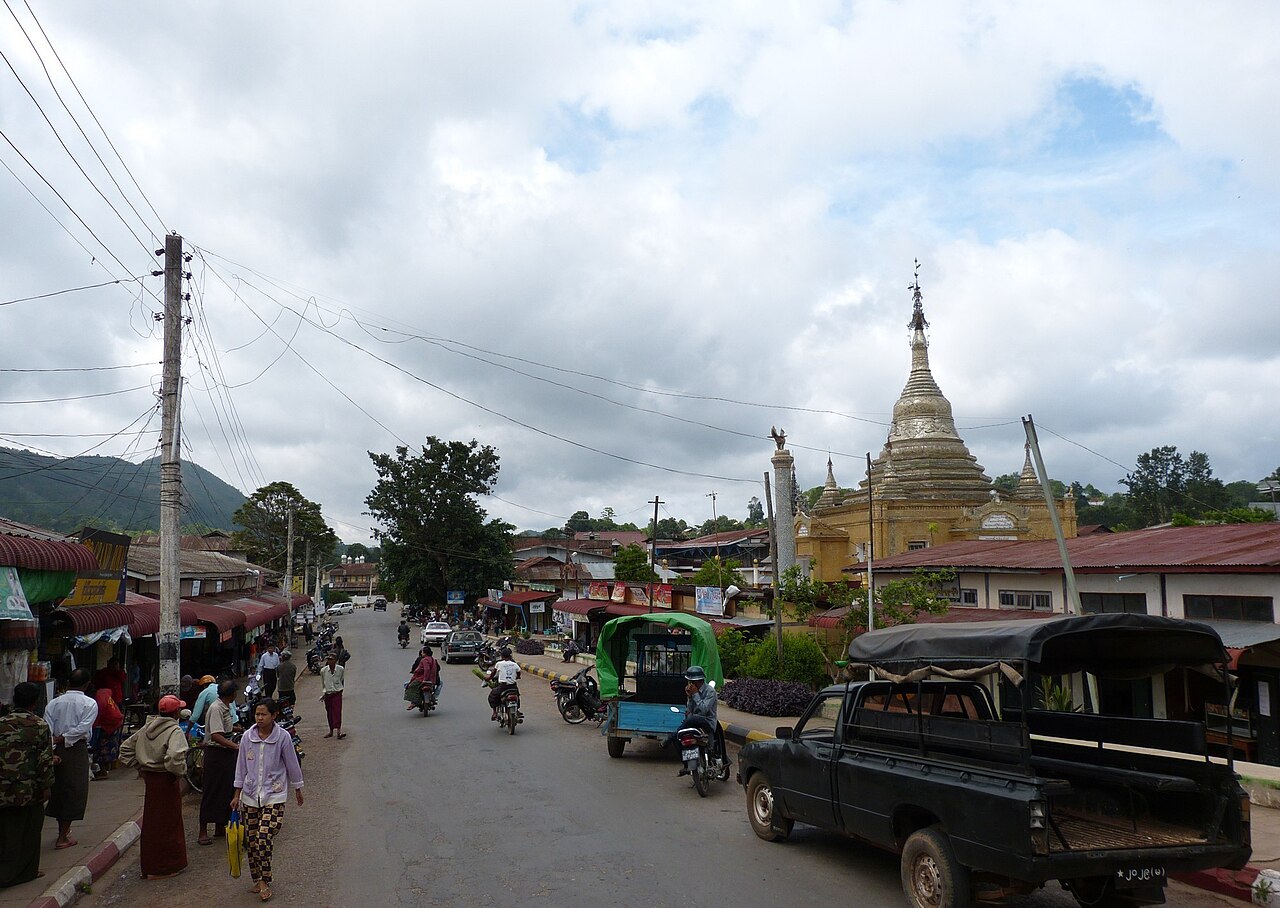
A highland refuge
Kalaw sits at an elevation of 1,310 meters (4,297 feet) on the western edge of the Shan Plateau. This altitude gives it a temperate climate, a contrast to the tropical heat of the lowlands. During the British colonial period, this cool air made Kalaw a location for a hill station, a high-altitude town where officials and their families could find respite. The town developed in the early 1900s from a small cluster of villages into a popular resort, complete with colonial-style bungalows and pine-lined streets. The first hotel was opened by a British couple in 1903, and the arrival of the railway in 1915 further solidified its status as a highland retreat.
The town's climate is classified as a subtropical highland climate (Cwb) under the Köppen system. This classification denotes cool, dry winters and warm, wet summers. The average yearly temperature is around 19°C (66°F). This is significantly cooler than much of Myanmar, which typically experiences a tropical savanna climate. The landscape supports pine trees and agricultural products that thrive in cooler conditions, a marker of its distinct climatic zone.
A climate under pressure
The very climate that made Kalaw a desirable escape is now changing. The impacts of climate change are a challenge for agriculture throughout Myanmar, and Shan State is particularly vulnerable. Increased frequency of extreme weather events, including droughts and floods, threatens the livelihoods of the region's small-scale farmers.
In the Kalaw area, farmers cultivate a variety of highland crops, including potatoes, ginger, tea, cabbage, and fruits. These cool-climate crops are sensitive to temperature and precipitation shifts. Changes in the monsoon patterns, such as delayed onset or lower than average rainfall, directly impact planting seasons for rain-fed agriculture, which constitutes about 80% of Myanmar's farmland. Studies show that rising temperatures and erratic rainfall are already causing crop failures and eroding soil fertility in Shan State. This puts the region's agricultural economy, from ginger and turmeric to potatoes, a cash crop for the area—at risk.