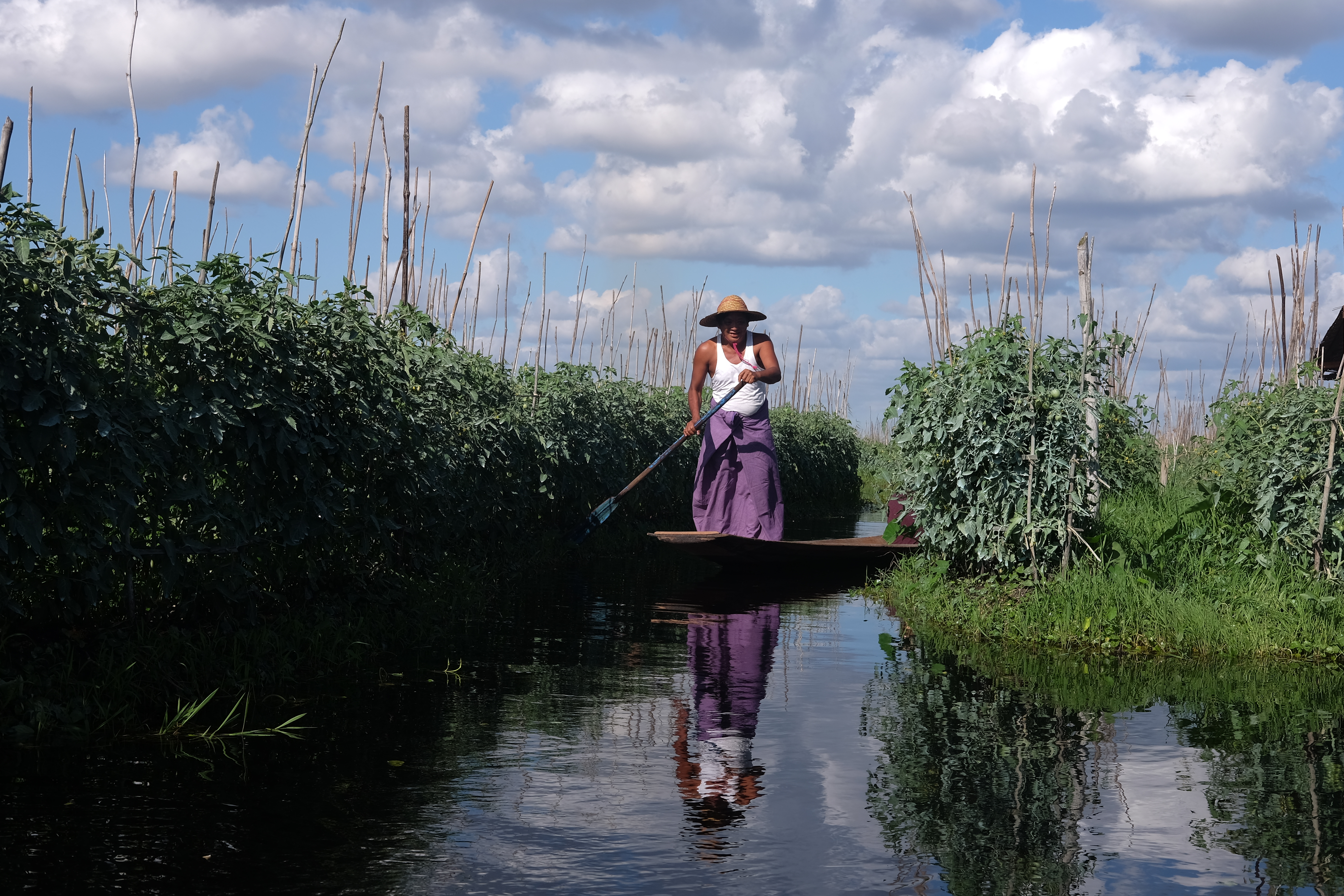
Hydroponics on a grand scale
The Intha people of Inle Lake in Myanmar practice a unique form of agriculture, cultivating crops on buoyant islands built from lake weeds. Known locally as "yechan," this method is an adaptation to life lived on the water. The gardens begin with a base of invasive water hyacinth (Eichhornia crassipes) and other aquatic plants, which are gathered from the lake. Farmers weave these weeds into long, dense rafts, which they anchor to the lakebed with bamboo poles to prevent them from drifting away. These floating beds rise and fall with the seasonal changes in water level, protecting the crops from flooding.
Over this vegetative base, farmers layer nutrient-rich mud and sediment dredged from the bottom of the lake. This mixture of decaying plant matter and lake-bottom soil creates an incredibly fertile growing medium, constantly supplied with water from below. The entire construction process is done by hand from small boats. A mature garden bed is about one meter thick and can take 20 to 30 years to become fully established and stable. These gardens are surprisingly durable, with some being productive for approximately a decade before needing reconstruction.
A tomato-based economy
While a variety of crops are grown on the floating gardens, including beans, cucumbers, gourds, and flowers, tomatoes are by far the most significant. Tomato cultivation accounts for about 90 percent of the gardens' total production. The constant water supply and fertile substrate allow for year-round harvesting, a distinct advantage over land-based farming in the region. The tomatoes grown here are a major economic driver for the Intha people and are shipped to markets throughout Myanmar.
This intensive agriculture is not without its ecological consequences. The practice, which began in the 19th century and expanded significantly in the 1960s, now covers about a quarter of the lake's surface. Between 1935 and 2000, the open water area of Inle Lake shrank by 32.4%, largely due to the expansion of these gardens. The increased use of chemical fertilizers and pesticides on the gardens is a concern, as these chemicals are applied directly onto the lake's surface. This has led to higher concentrations of nitrogen and phosphate in the water, contributing to eutrophication and threatening the lake's ecosystem, which includes over 35 native fish species, 17 of which are endemic.