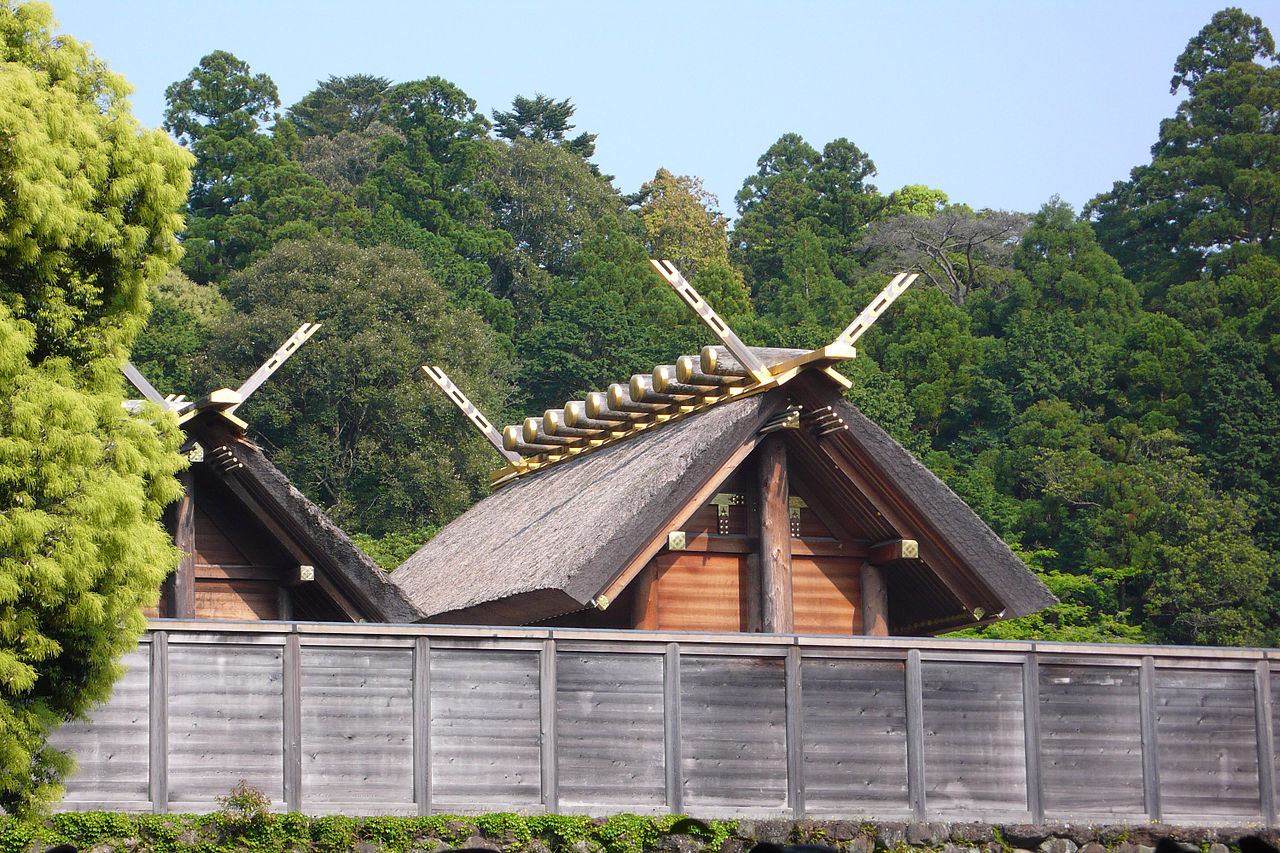
A cycle of rebirth
Every 20 years, Japan's most sacred Shinto site, Ise Jingu, is completely dismantled and rebuilt on an adjacent plot. This tradition, called Shikinen Sengu, has continued for over 1,300 years, with the first ceremony taking place around 690 AD. The cycle expresses Shinto beliefs in renewal, and is a logistical and ecological undertaking. The process requires a steady supply of high-quality timber, specifically around 10,000 logs of Japanese cypress, or hinoki (Chamaecyparis obtusa). To meet this demand, a forestry plan was devised that operates on a 200-year timescale, ensuring that trees of the perfect age and size are available for each generational rebuilding.
The architectural style of the shrines, Yuiitsu shinmei-zukuri, is an ancient design based on grain storehouses and may not be used for any other shrine. Construction uses no nails, relying instead on complex interlocking joints crafted by master carpenters. This method necessitates exceptionally straight-grained, durable wood. The chosen material, hinoki, is a slow-growing cypress that can reach heights of 35 meters. Its timber is light, highly resistant to rot, and has a distinct lemon-like scent. The rebuilding process itself is extensive, taking about nine years to complete and involving the reconstruction of 65 different structures.
The sacred forest
The shrine's forestry system manages a vast 5,500-hectare area of dedicated forest land. Historically, the local forests supplied all the necessary timber, but by the Edo Period (1603-1867), these resources became depleted. This led to a reliance on timber from other regions of Japan. Recognizing the unsustainability of this approach, a long-term reforestation plan was formally established about a century ago. The goal of this 200-year plan is for the shrine to become completely self-sufficient in its timber supply.
This management involves more than planting and harvesting. It is a holistic system that mimics natural forest succession, creating a mosaic of tree ages and habitats. The protected forests enrich the soil and local water sources, which in turn supports the abundant marine life in nearby Ise-Shima. The felling of trees is a ritual in itself, with priests asking mountain deities for permission before the first cypress is cut. The logs are then seasoned for two years in a pond, a method called "underwater drying," which removes excess oils before they are shaped for construction. This long-range planning shows an understanding of ecological cycles and resource management, predating modern concepts of sustainable forestry by centuries.