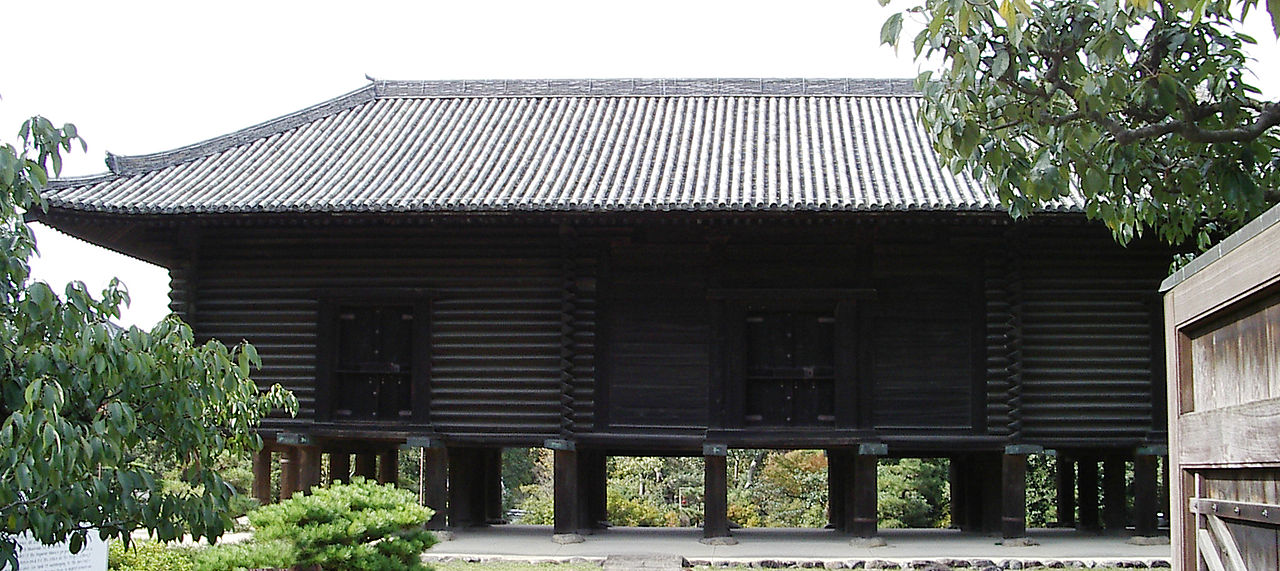
An archive of wood and weather
On the grounds of Tōdai-ji temple stands the Shōsōin, a deceptively simple wooden storehouse built in the 8th century. It was constructed to house thousands of treasures belonging to Emperor Shōmu and Empress Kōmyō. While the collection of over 9,000 artifacts links the Silk Road and 8th-century courtly life, the building itself is a scientific artifact. Its construction demonstrates passive climate control, and its timbers contain an unbroken climate record of ancient Japan.
The building shows an architectural style known as azekura-zukuri. This method uses logs—in this case, primarily Japanese cypress (hinoki)—hewn into a triangular cross-section. These timbers interlock at the corners without nails, creating a flexible structure that can withstand earthquakes. The entire storehouse is elevated roughly 2.7 meters off the ground on forty massive posts, a design that protects the contents from ground moisture and pests while promoting air circulation. For centuries, it was believed that the triangular logs expanded in summer humidity to seal the repository and contracted in winter dryness to ventilate it. More recent analysis suggests the climate-regulating effect comes from the sheer mass of wood absorbing and releasing moisture, stabilizing the internal environment.