A Province Forged by Fire
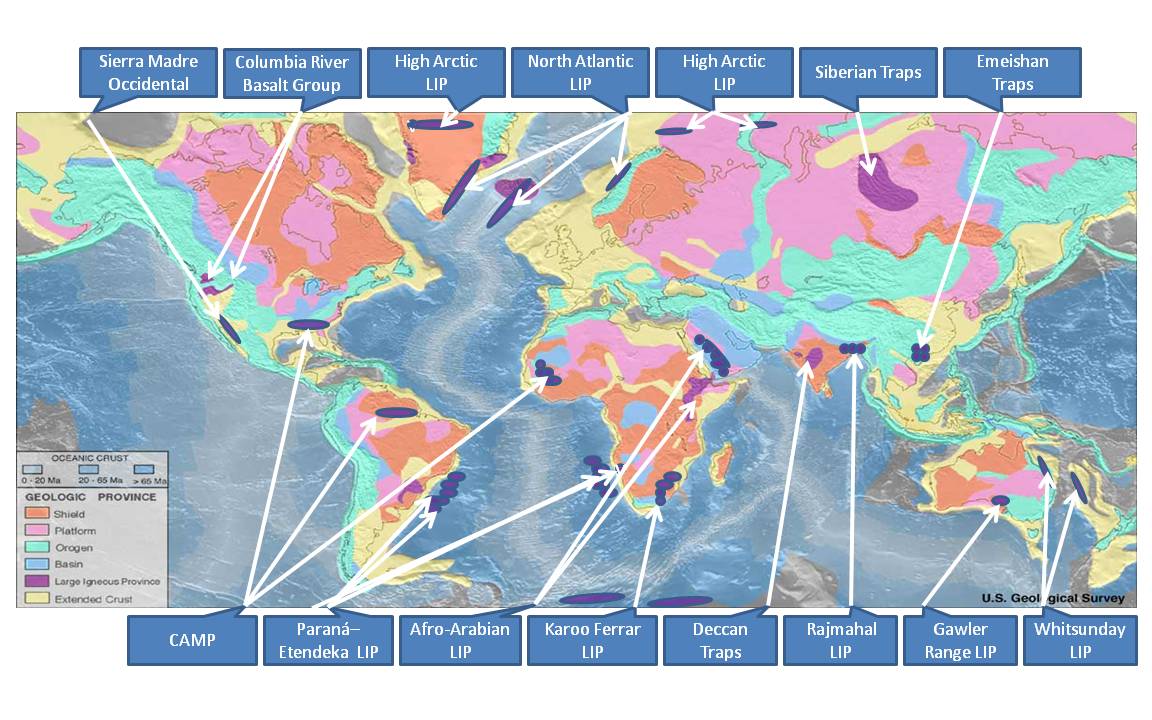
In what is now Sichuan, China, an immense volcanic event began around 265 million years ago. This was not a single volcano, but a Large Igneous Province, or LIP. Over several million years, fissures in the Earth's crust unleashed vast quantities of basaltic lava, a process likely caused by a mantle plume, an upwelling of superheated rock from deep within the planet. The main eruptive period occurred between 262 and 261 million years ago.
These eruptions, known as the Emeishan Traps, originally covered an area estimated at up to 500,000 square kilometers. Today, the remaining volcanic rock covers about 250,000 square kilometers. The lava flows stacked up to create a "trap" landscape, named from the Swedish word trappa for "stairs," which describes the step-like hills formed by the erosion of successive basalt layers. The total volume of erupted material is estimated to be around 300,000 cubic kilometers, with thicknesses in some western areas reaching up to 5.5 kilometers. The province contains a variety of igneous rocks, including basalt, picrites, and more silica-rich rocks like rhyolites.
Architect of a Mass Extinction
The timing of the Emeishan Traps eruption aligns precisely with a global catastrophe: the end-Guadalupian (or Capitanian) mass extinction event, around 260 million years ago. This event, although smaller than the larger end-Permian "Great Dying" that followed millions of years later, ranks as one of history's most severe extinctions. The eruptions were a primary trigger.
The kill mechanism was lava and gases. The volcanoes released enormous volumes of gases into the atmosphere, including sulfur dioxide (SO2) and carbon dioxide (CO2). The SO2 would have formed sulfate aerosols, blocking sunlight and causing a sudden, short-lived "volcanic winter" accompanied by intense acid rain. Following this, the massive injection of CO2, a potent greenhouse gas, led to long-term global warming and severe ocean anoxia (a lack of oxygen) and acidification. Geochemical analysis of sedimentary rocks from this period reveals a major disruption to the global carbon cycle, showing the volcanism's devastating environmental impact. While the Emeishan event destabilized global ecosystems, the even larger Siberian Traps eruption about 8 million years later delivered the final blow of the Permian period.