An ancient public announcement
Excavations at Dholavira, a major city of the Indus Valley Civilization, uncovered a unique artifact in a side chamber of the city's North Gate. A large inscription, commonly called the Dholavira Signboard, was found lying face down on the ground. The sign consists of ten large characters of the Indus script, each standing about 37 centimeters (15 inches) tall. These symbols were crafted from pieces of white crystalline gypsum, which would have been inlaid into a wooden board. The wood itself has long since decayed, but the gypsum characters survived because the board fell on its face, protecting them.
The entire signboard measured approximately 3 meters (9.8 feet) in length. This size corresponds with the width of the North Gate, suggesting it was mounted above the entrance for public viewing. Its discovery during the 1990-2005 excavation series, led by R.S. Bisht of the Archaeological Survey of India (ASI), provided the longest known inscription in the Indus script. Unlike the thousands of other Indus inscriptions found on small seals and pottery, this one was clearly intended for a large audience. One of the ten symbols, a wheel-like character, is repeated four times in the sequence.
A 4,500-year-old puzzle
The meaning of the Dholavira Signboard remains unknown because the Indus script has not been deciphered. This writing system, used between approximately 2600 and 1900 BCE, contains over 400 distinct signs. The lack of a bilingual text, like a Rosetta Stone, and the short length of most inscriptions—which average only five signs—are major obstacles to translation.
Theories about the signboard’s message are numerous. Some researchers propose it could be the name of the city, a ruler, or a deity. Others suggest it may have been a public notice or an administrative declaration. The large, public nature of the sign is often used as evidence that the Harappan civilization had a high degree of literacy, or at least that written information was important to civic life. Today, the original signboard is housed in the National Museum in New Delhi for preservation, though it is not on public display.
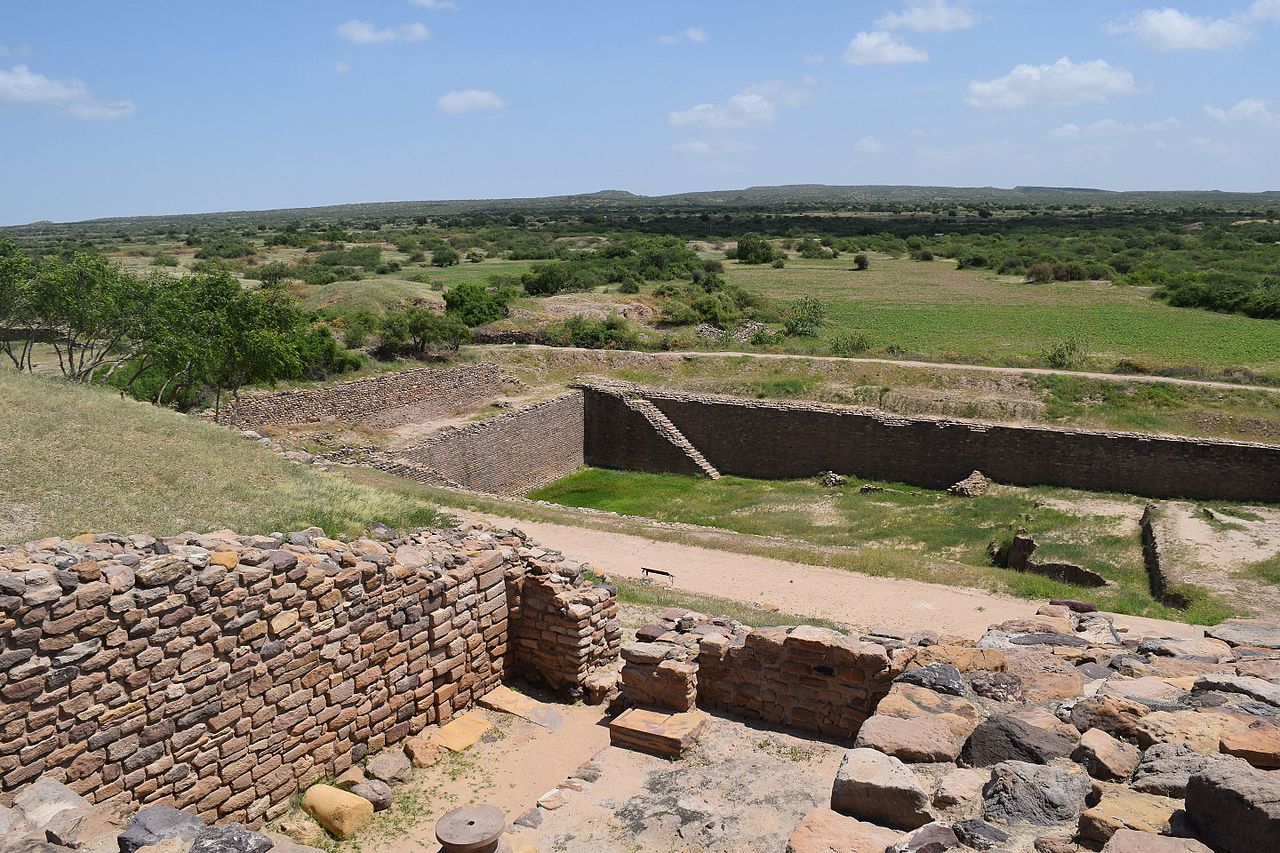
The city of Dholavira itself is a UNESCO World Heritage Site, occupied between circa 3000-1500 BCE. It is recognized for its sophisticated urban planning, multi-layered fortifications, and an advanced water management system with at least 16 reservoirs.