A century of contamination
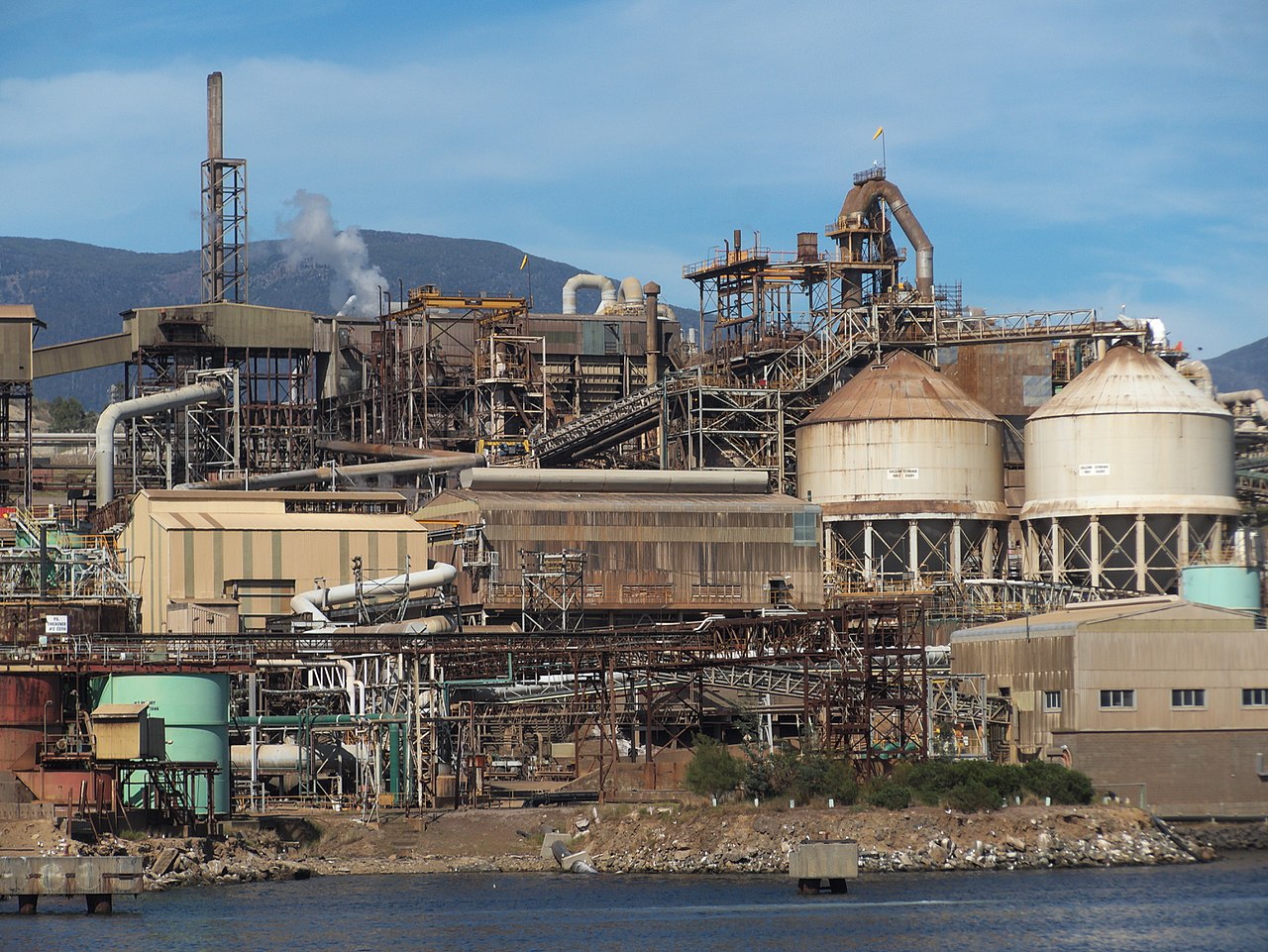
The heavy metal legacy in Hobart's Derwent River began in 1916 with the establishment of the Electrolytic Zinc Company of Australasia at Risdon. Spurred by a zinc shortage during the First World War, the refinery, now owned by Nyrstar, grew to become one of the largest zinc smelters in the world. For decades, industrial waste containing a mixture of heavy metals was discharged directly into the river. This included vast quantities of zinc, lead, cadmium, mercury, copper, and arsenic.
By the 1970s, the Derwent was recognized as one of the most polluted river systems globally. The primary source of this contamination was the zinc smelter, which contributed over 80% of the heavy metal load, largely through contaminated groundwater and historical stockpile runoff. While process changes and remediation efforts since the 1990s have reduced new inputs by an estimated 95%, the historical pollution remains locked in the riverbed. The metals bind tightly to the fine particles of the estuary's floor, forming a toxic reservoir that persists today.
a lasting chemical signature
The river's sediment shows the industrial history. Scientific analysis of sediment cores reveals a contaminated layer with an average thickness of 63 cm, reaching a maximum of over a meter in some places. This layer contains heavy metal concentrations that are orders of magnitude above natural background levels. A 2012 survey found mid-estuary sediments contained zinc levels up to 14,000 micrograms per gram (µg/g), lead up to 1,800 µg/g, and cadmium up to 120 µg/g.
This contamination has direct biological consequences. The metals bioaccumulate in marine organisms, moving up the food chain. Filter-feeding shellfish like oysters and mussels contain levels of zinc, lead, and cadmium that are far higher than national food safety standards. Consequently, health authorities advise against eating any shellfish collected from the Derwent. Restrictions are also in place for several species of fish. Black bream are not to be eaten at all due to high mercury levels, and consumption of other species like flathead is limited, especially for children and pregnant women. Based on current sedimentation rates, scientists estimate it could take an average of 123 years for the surface sediments to return to safe background levels if left undisturbed.