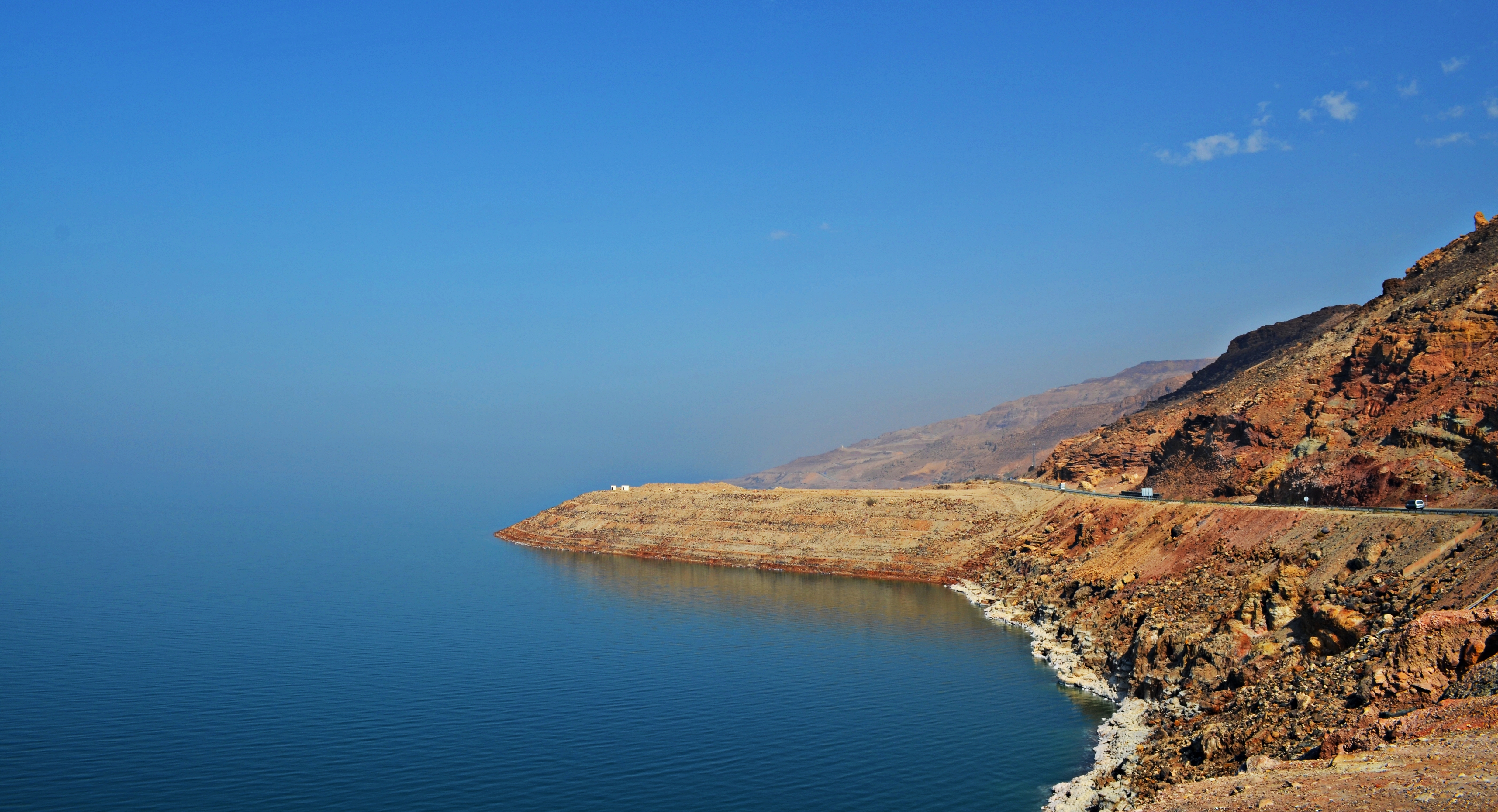
A lake on life support
The Dead Sea is an endorheic lake, meaning water flows into it but not out. Its only exit is evaporation. For millennia, the Jordan River provided enough inflow to balance the water lost to the arid climate. This balance no longer exists. Since the 1960s, diversion of the Jordan River for agriculture and drinking water by Israel, Jordan, and Syria has had a dramatic effect. Historically, the river sent 1.3 billion cubic meters of water into the Dead Sea annually; today, that volume is less than 100 million cubic meters. This massive reduction in inflow is the primary driver of the lake's decline.
The water level is now dropping by an average of 1 to 1.2 meters each year. Its surface, the lowest land-based elevation on Earth, was about 390 meters below sea level in 1960 and now sits at approximately 435 meters below sea level. The lake’s total surface area has shrunk accordingly, from around 1,050 square kilometers in 1930 to 605 square kilometers by 2016. This water loss also increases the lake's salinity. With a salt concentration of about 34.2%, the Dead Sea is 9.6 times saltier than the ocean.
Industrial mineral extraction exacerbates the problem. Companies on both the Israeli and Jordanian sides pump water from the northern basin into vast evaporation ponds in the shallower southern basin to harvest potash, bromine, and magnesium. This industrial activity accounts for a significant portion of the total water loss.
A collapsing coastline
The most alarming consequence of the disappearing water is the proliferation of sinkholes. Since the 1980s, more than 6,000 sinkholes have appeared along the Dead Sea's western coast. These pits can form suddenly and catastrophically, some reaching depths of 25 meters. Entire tourist complexes, roads, and date plantations have been abandoned after being swallowed by the collapsing ground.
The mechanism behind their formation is a direct result of the falling water level. As the hypersaline lake recedes, it leaves behind exposed mudflats containing a thick, 10,000-year-old subterranean salt layer. Freshwater from underground aquifers, which previously flowed directly into the Dead Sea, now encounters this salt layer. The fresh water dissolves the salt, creating large underground cavities. Eventually, the surface layer, no longer supported, collapses. The rate of sinkhole formation has accelerated, with hundreds of new ones appearing each year, transforming the coastline into a hazardous and unpredictable area.
A major engineering proposal, the Red Sea-Dead Sea Water Conveyance, aimed to address the issue by building a pipeline to carry brine from a Red Sea desalination plant to replenish the Dead Sea. However, after years of planning, the project was abandoned in 2021 due to geopolitical tensions and a reported lack of interest from the parties involved.