The Not-So-Dead Sea
The name "Dead Sea" is a misnomer. While its extreme salinity (around 34.2%, or nearly ten times that of the ocean) prevents fish and larger aquatic life from surviving, this hypersaline lake is teeming with microscopic life. The water is a harsh chemical soup dominated by sodium chloride but high concentrations of magnesium, calcium, and potassium chlorides. In this environment, a specialized group of microorganisms called extremophiles, specifically "halophiles" (salt-lovers), thrive.
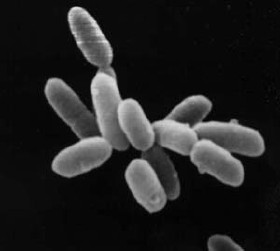
The two most prominent groups are the haloarchaea (a domain of single-celled organisms distinct from bacteria) and the unicellular alga Dunaliella salina. To survive, these microbes employ a "salt-in" strategy. They prevent water from being drawn out of their cells through osmosis by accumulating an extremely high internal concentration of potassium ions, balancing the external salt pressure. When conditions are right, particularly after winter rains dilute the surface water, these microbes can multiply rapidly, creating massive blooms that color the water pink and red. The red hue comes from two main sources: Dunaliella produces large amounts of the antioxidant pigment beta-carotene under stress, and haloarchaea like Haloarcula marismortui produce retinal pigments, including the reddish-purple bacteriorhodopsin. Bacteriorhodopsin allows the archaea to use sunlight to create a proton gradient across their cell membrane, generating metabolic energy in a process distinct from photosynthesis.
Dormant or Dead?
The most startling trait of these microbes is their ability to survive entombment in salt crystals for geological timescales. As the Dead Sea's water evaporates, halite (salt) crystals form, trapping tiny pockets of brine called fluid inclusions. Within these microscopic time capsules, entire microbial ecosystems can be preserved. Scientists have successfully cultured non-spore-forming Archaea that were trapped inside 22,000 to 34,000-year-old halite crystals.
These ancient organisms challenge scientific definitions of life and death. Trapped in the salt, their metabolism slows to a rate so low it is nearly undetectable, entering a state of deep dormancy. They may survive for millennia by feeding on the cellular contents of their dead neighbors, a process known as necrophagy, or by consuming glycerol leaked from preserved Dunaliella algae trapped in the same inclusion. While ionizing radiation from elements like potassium-40 within the salt crystal eventually damages cellular machinery beyond repair, studies suggest viability could persist for tens of thousands of years. The discovery of viable prokaryotes in ancient salt pushes the known limits of long-term survival, between a suspended state of life and absolute death.