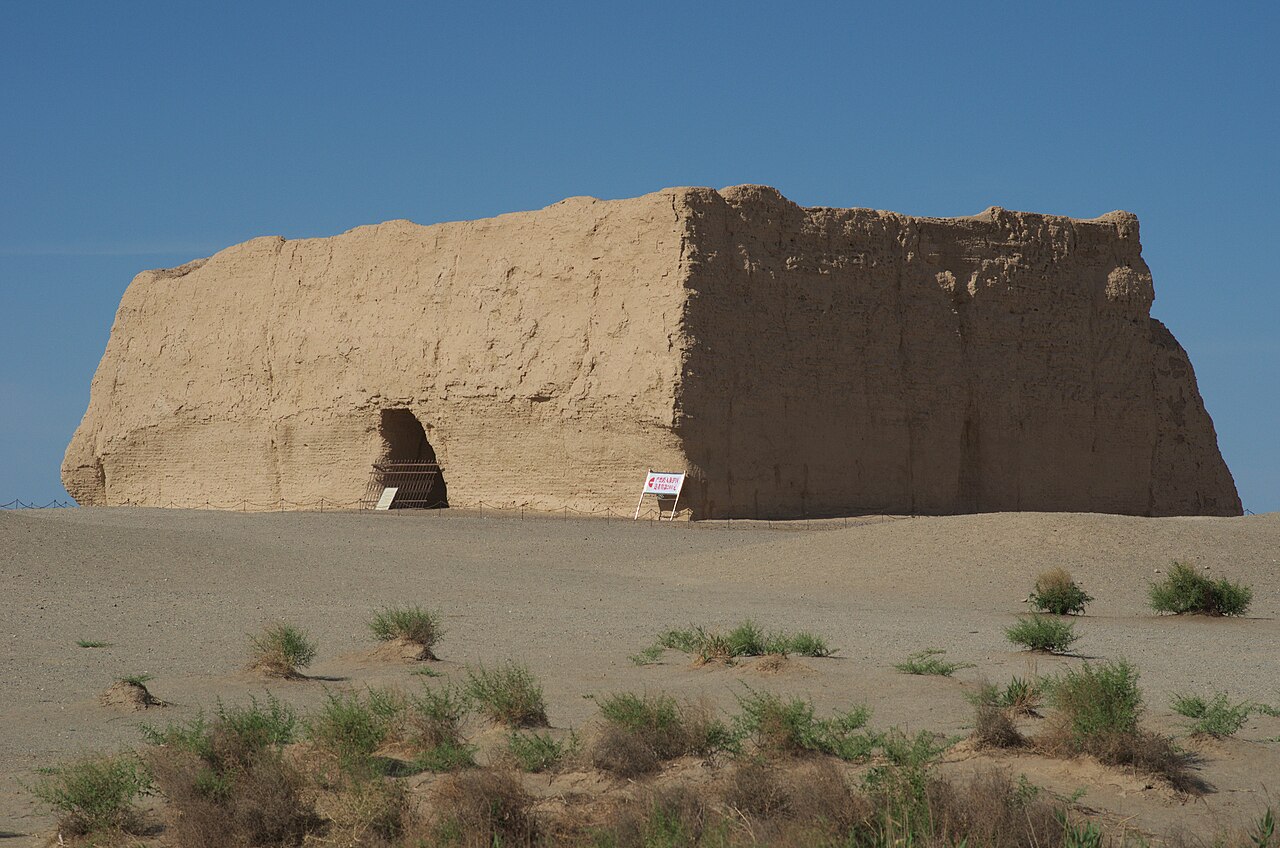
Frontier Fortress of Rammed Earth
Yumen Pass, or Yumenguan, is not a mountain pass but a square, mud-brick fortress in the Gobi Desert. Established during the reign of Emperor Wu of the Han Dynasty around 121-107 BC, it marked the western frontier of China proper. The primary remaining structure, known as the Small Fangpan Castle, measures 24.4 meters by 26.4 meters and covers an area of over 630 square meters. Its walls, constructed of rammed loess soil layered with reeds and tamarisk branches, originally stood about 10 meters high. This construction technique provided durability against the harsh desert climate, which sees temperature swings from -20°C in winter to over 40°C in summer.
The fortress was part of a larger defensive system. This system extended for about 45 kilometers and included 18 sections of ramparts and around 20 beacon towers. These towers, spaced every few kilometers, formed a communication network that used smoke and fire signals to transmit military alerts across the desert. Archaeological work at the site has uncovered thousands of bamboo slips, which were the primary medium for record-keeping. These documents provide detailed accounts of garrison life, administrative duties, and the movement of personnel and supplies.
Gateway for Jade and Legions
The name Yumenguan translates to "Jade Gate Pass." It earned this name because it was the entry point for caravans carrying jade from the oasis of Khotan, in modern-day Xinjiang, into central China. For centuries, all traffic moving along this branch of the Silk Road had to pass through either Yumen Pass or the nearby Yangguan Pass to the south. The pass was a checkpoint for taxing goods, inspecting envoys, and controlling movement across the border.
Beyond trade, Yumen Pass was a military garrison that protected the Hexi Corridor from incursions by Xiongnu nomads. The establishment of the pass followed major military campaigns by General Huo Qubing around 121 BC, which secured the region for the Han empire. The pass was also a post station, where officials and messengers could get supplies and change horses. The site's importance declined after the Tang Dynasty (618–907 AD) as trade routes shifted north and maritime trade grew. The original Han dynasty pass was eventually abandoned by the 6th century. In 2014, Yumen Pass was designated a UNESCO World Heritage Site as part of the "Silk Roads: the Routes Network of Chang'an-Tianshan Corridor".