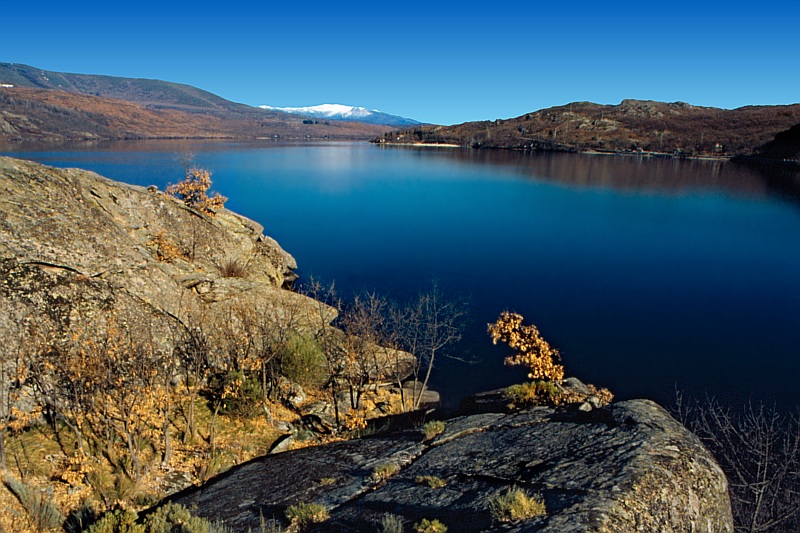
A climate archive in the mountains of Galicia
High in the Trevinca Massif, a mountain range reaching 2,127 meters at Pena Trevinca, lie a series of small lakes carved by ancient glaciers. These lakes, including Lagoa da Serpe and Lagoa de Ocelo, hold a scientific record within their muddy bottoms. The lakebeds contain layers of sediment deposited year after year for millennia, trapping pollen, charcoal, and minerals from the surrounding environment. By drilling long tubes into this mud, scientists extract sediment cores that provide a detailed timeline of past climate and vegetation.
The geology of the Trevinca Massif consists of metamorphic rocks like gneiss, schist, and slate, which were deformed during the Variscan orogeny. During the Pleistocene, an extensive icefield covered this region, with glaciers carving out the U-shaped valleys and cirques that are visible today. The ice reached a thickness of over 500 meters in the Bibei valley. As the glaciers retreated at the end of the last glacial period, they left behind moraines (ridges of rock and debris) and depressions that filled with water, forming the lakes we see today. The undisturbed sediment layers in these lakes record this period of environmental change.
Reading the pollen record
Pollen analysis, or palynology, of these sediment cores reveals a sudden shift in the local ecosystem around 14,700 years ago. Deeper, older layers of sediment are rich in the pollen of pine trees (Pinus), indicating a cold, boreal-type forest. Then, in sediment layers corresponding to the beginning of a warm period known as the Bølling-Allerød interstadial, the pine pollen is abruptly replaced by pollen from deciduous oaks (Quercus). This change indicates a rapid warming event that allowed oak forests to colonize the mountains.
This climatic shift is the beginning of the end of the last glacial period in this part of Europe. The data from Trevinca's lakes corresponds with evidence from ice cores in Greenland and other paleoclimate records across the Northern Hemisphere. The rapid warming, potentially on the order of several degrees Celsius within a few decades, caused the massive ice sheets to retreat and fundamentally reshaped the continent's ecosystems. The lakes of Trevinca provide a high-resolution, local account of this global climate event, preserved in the microscopic pollen grains buried deep in the mud.