An Ice Age Excavator
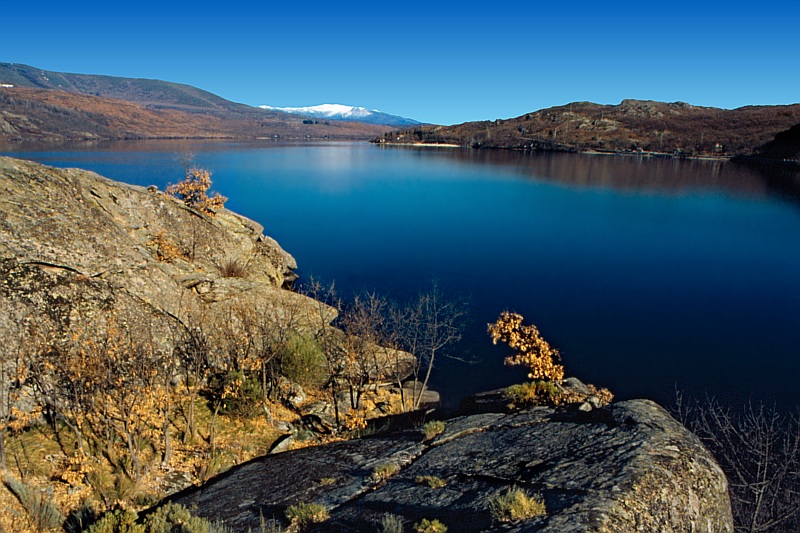
Sanabria Lake, the largest glacial lake on the Iberian Peninsula, occupies a basin carved by an immense glacier during the Würm glacial period. This period, part of the last major ice age, saw a massive ice cap centered on the nearby Sierra Segundera that covered over 440 square kilometers. From this high plateau, outlet glaciers flowed radially outwards. Two of these ice rivers, descending from the Tera and the Segundera-Cárdena valleys, merged to form a colossal glacier right where the lake now sits.
At its peak during the Last Glacial Maximum, around 21,000 years ago, the ice here reached a thickness of approximately 300 meters. The immense weight and slow, grinding movement of this frozen river reshaped the landscape. Acting like a giant excavator, the glacier plucked and abraded the granitic bedrock, transforming a V-shaped river valley into the deep, U-shaped trough visible today. The final basin was so deeply excavated—a process called glacial overdeepening—that the lake's water now reaches a maximum depth of 51 meters, with the true bedrock floor lying even deeper. The total volume of water held in this glacially-carved basin is over 96 million cubic meters.