A Mind Without "Left"
For the Vezo people, a semi-nomadic fishing community along the southwest coast of Madagascar, the concepts of "left" and "right" are linguistically absent and cognitively unnecessary. Their entire world, from navigating the Mozambique Channel to arranging items on a table, is organized by an allocentric frame of reference—one based on the fixed, external world, not their own bodies. This system relies on a primary axis defined by the sea. Instead of "left" or "right," a Vezo speaker describes an object's position as either ante, meaning "seaward," or an-tanety, "landward."
This mental map is absolute and ever-present. A Vezo person standing in a windowless building many kilometers from the coast can instantly and accurately point "seaward." Their language and cognition are constantly oriented along this seaward/landward axis. When giving directions, they might say, "My house is seaward of the big baobab tree." This approach to spatial reasoning represents a difference in worldview, one where the individual's position is always relative to the larger environment, not the other way around. This constant awareness of a geographic feature shapes their perception of space itself.
The Coastal Coordinate System
The Vezo spatial system is more complex than a single axis. A second, perpendicular axis runs parallel to the coastline, using the terms avaratra ("north-along-the-coast") and atsimo ("south-along-the-coast"). Together, these two axes create a complete coordinate system that allows for precise descriptions of location and direction. One can specify a location by saying it is, for example, "seaward and to the north" of a reference point. This system eliminates the ambiguity of egocentric terms like "in front of" or "behind you," which change as a person turns. For the Vezo, directions are constant regardless of which way an individual is facing.
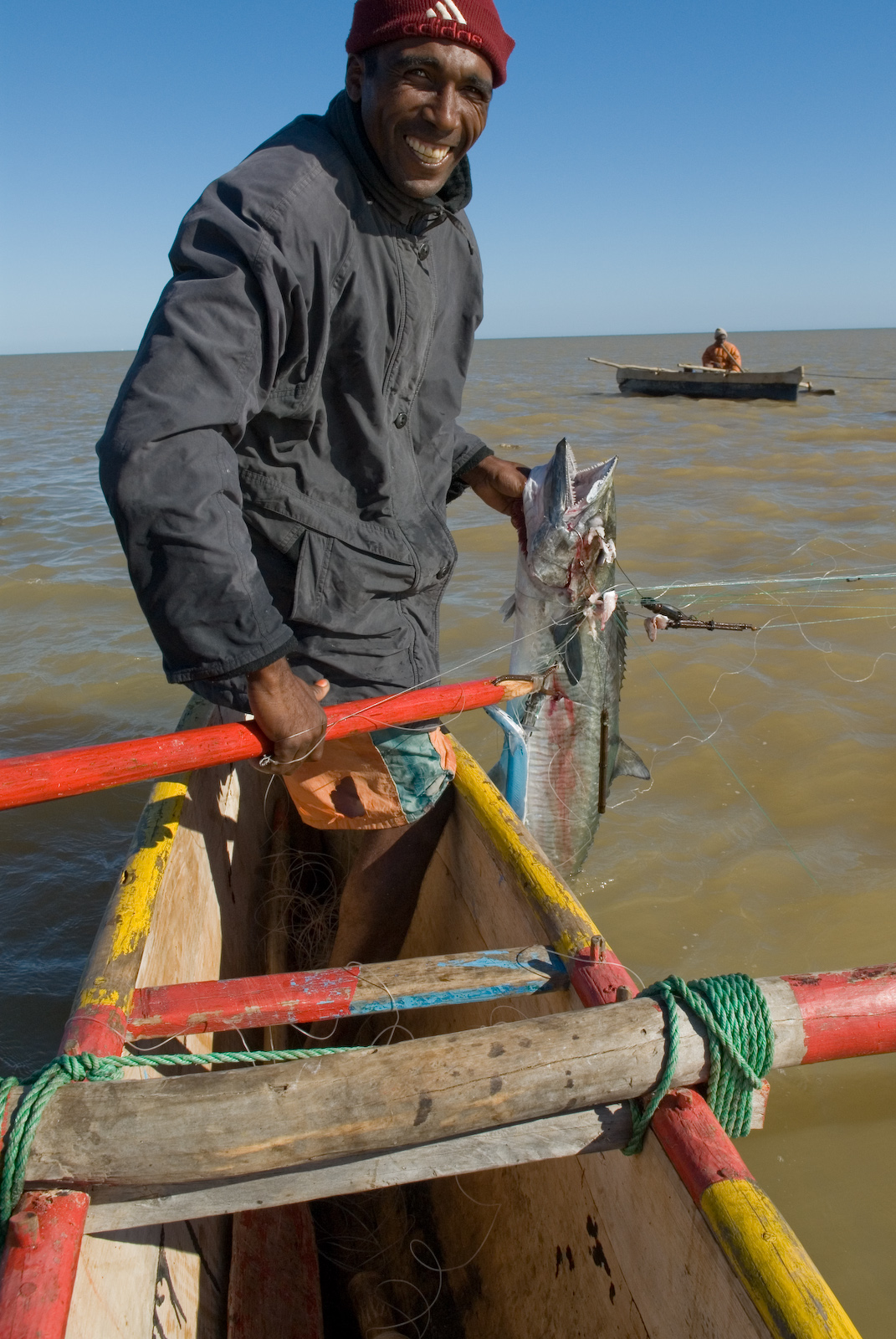
This linguistic framework is an example of the principle of linguistic relativity, which suggests that the language a person speaks influences their thought processes. The structure of the Vezo dialect of Malagasy shapes how they navigate and interact with their environment. This sea-based orientation is learned from early childhood and becomes an automatic part of their cognition. It provides them with exceptional navigational skills, essential for a life spent on the water, migrating along the coast in outrigger canoes called lakana to follow seasonal fish stocks. Their very identity is this life, as the name "Vezo" can be translated as "to paddle" or "to struggle with the sea."