A mammal that chirps
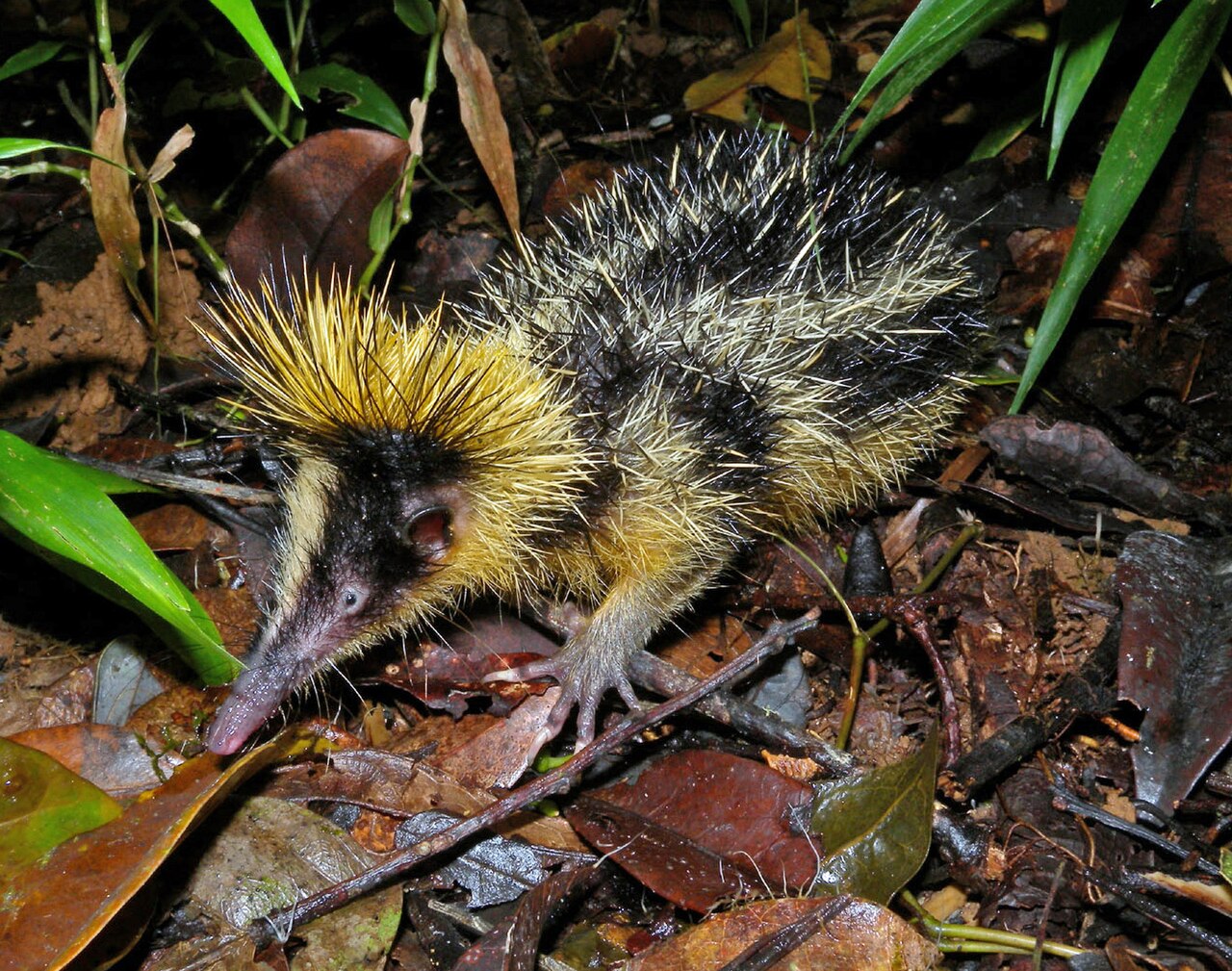
In the dense rainforests of eastern Madagascar lives a creature that challenges simple categorization. The Lowland Streaked Tenrec (Hemicentetes semispinosus) is a small mammal, about 14 cm long, with the spines of a hedgehog and the black-and-yellow warning stripes of a bumblebee. But its most unusual characteristic is audible only to specialized equipment: it communicates by rubbing parts of its body together, a method known as stridulation. This makes it the only mammal known to use a form of communication more common among insects and snakes.
The tenrec's unique sound-producing organ is a small patch on its mid-back containing a cluster of 7 to 16 specialized, non-barbed quills. These keratinous quills are arranged in three rows. Beneath them lies a disc of cutaneous muscle, about 16.8 mm long in an adult, which vibrates the quills. When the tenrec contracts these muscles, the quills rub against each other, creating a series of high-frequency chirps and clicks. These sounds are largely ultrasonic, meaning they are too high-pitched for the human ear to detect without the aid of equipment like a bat detector. This silent chatter is constant as the tenrecs forage, likely helping family members stay in contact within the dense undergrowth.
Life in a noisy family
The Lowland Streaked Tenrec is the most social of all tenrec species, living and foraging in family groups that can include up to 20 individuals. These groups inhabit complex, interconnected burrow systems. Their unique form of communication is essential for navigating their world. With very poor eyesight, they rely on sound and a keen sense of smell to find food and each other. The stridulation may be used to communicate between a mother and her young or to serve as a warning signal to predators like the fossa or snakes.
These diurnal (day-active) mammals primarily hunt for earthworms and other soft-bodied invertebrates in the leaf litter. They use their long, sensitive snouts to probe the soil and are sometimes seen stamping their front feet, a behavior thought to agitate earthworms and make them easier to find. Their jaws are surprisingly fragile, limiting their diet to soft foods. When threatened, a tenrec erects the sharp, barbed quills on its head and body and may aggressively headbutt an attacker, attempting to embed its detachable spines.