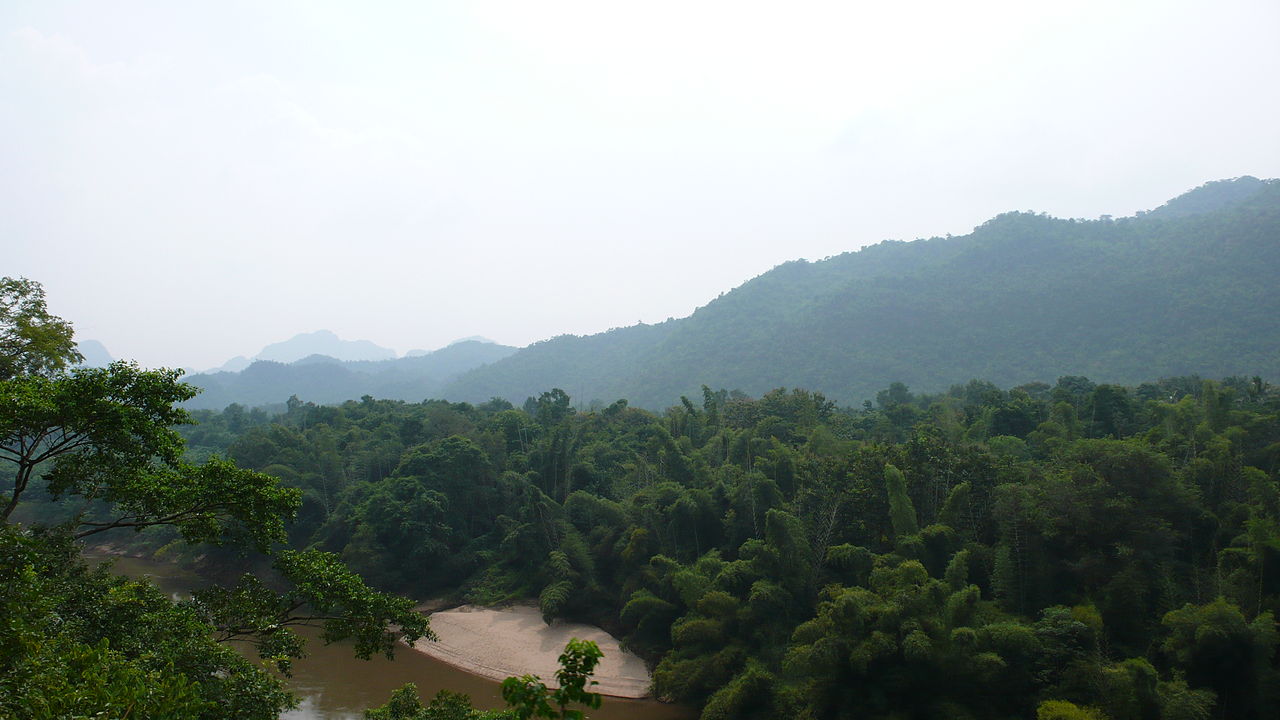
A biological crossroads
The Tenasserim Range is a 1,700-kilometer-long granite mountain system that is a physical and biological barrier between Myanmar and Thailand. This range is an important transition zone where the fauna of the Indo-Himalayan region to the north meets the Sundaic fauna of the Malay Peninsula and Indonesia to the south. The southern boundary of this ecoregion is marked by the Kangar-Pattani floristic line, a significant boundary that separates the floras of Indochina and Malesia.
This convergence creates a unique faunal mix. Mammals with Himalayan origins, like the red goral (a type of goat-antelope) and potentially the red panda, approach the northern limits of their range, while classic Sundaic species like the Malayan tapir (Tapirus indicus) reach their northernmost territories here. The region has one of the most diverse mammal assemblages in Asia. It supports major populations of Asian elephants (Elephas maximus) and supports major populations of tigers (Panthera tigris). A remarkable diversity of wild cats—at least eight species—coexist here, including the clouded leopard (Neofelis nebulosa), leopard (Panthera pardus), and Asiatic golden cat. The region has over 160 mammal species and more than 560 species of birds.