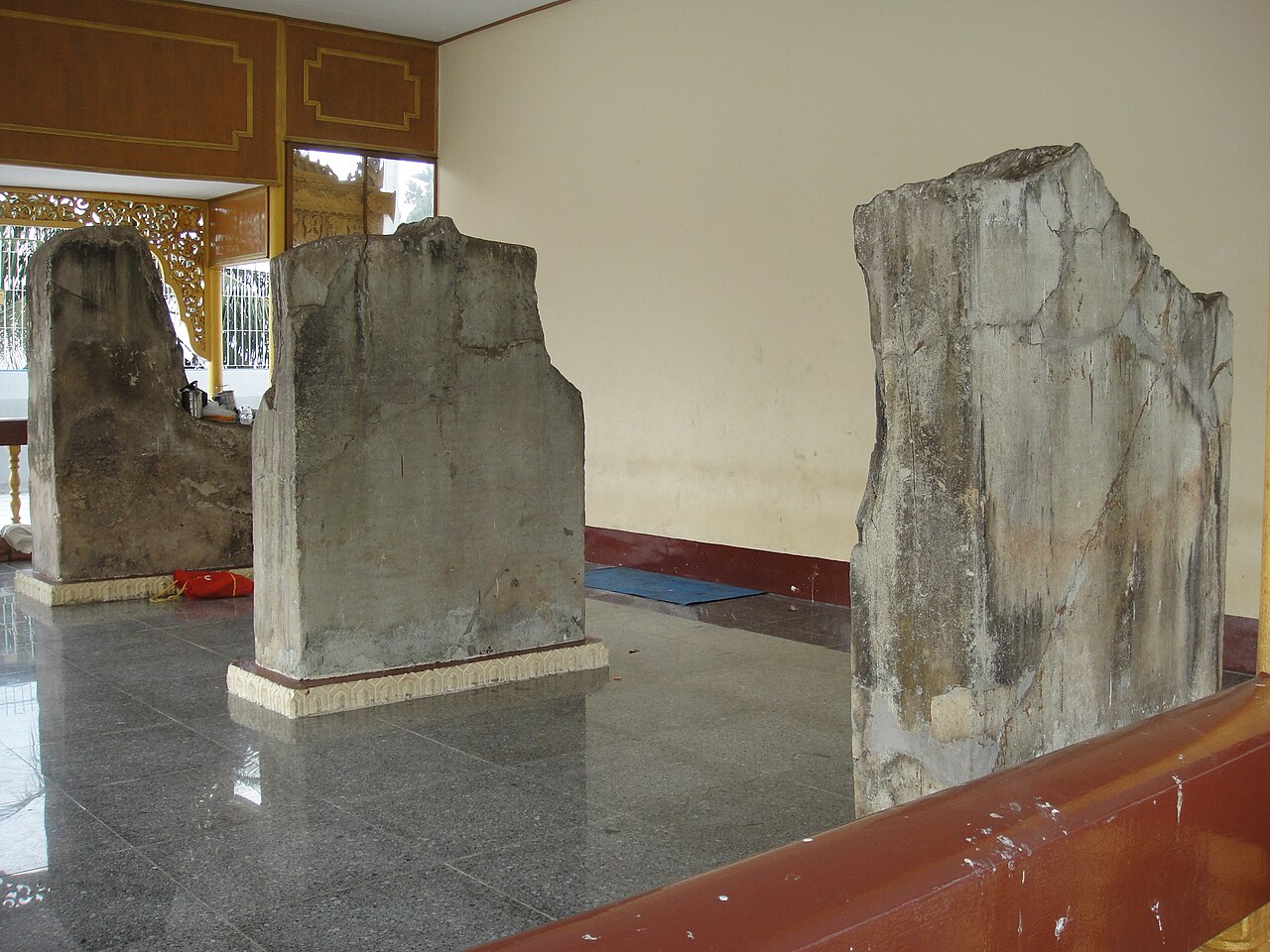
A Kingdom's Ledger
In the 15th century, southern Myanmar was the heart of the Hanthawaddy Kingdom, a prosperous state enjoying a golden age. Its ports, such as Bago and Martaban, were active hubs in a maritime trade network that stretched across the Indian Ocean, filling the royal treasury with profits from spices, silver, and silks. The kingdom's rulers, most notably the enlightened King Dhammazedi (reigned 1471-1492), had a practice of erecting stone inscriptions to commemorate religious events and royal proclamations. The Taikkyi Textile Inscription is a rare surviving record of this practice applied to a more worldly matter: economic governance.
While most inscriptions from this period record pagoda donations or religious reforms, the Taikkyi inscription stands out as a public record of commercial regulations. Discovered in the Taikkyi area, it lays out rules governing the region's textile trade. Such inscriptions were the official legal records of their time, placed in public to ensure that merchants, weavers, and officials all understood the standard codes of practice. The stone itself is a part of the 15th-century Hanthawaddy administration, providing a direct link to the economic structure that supported this flourishing kingdom. Its text details the intersection of state power and daily commerce, a subject rarely preserved with such permanence.