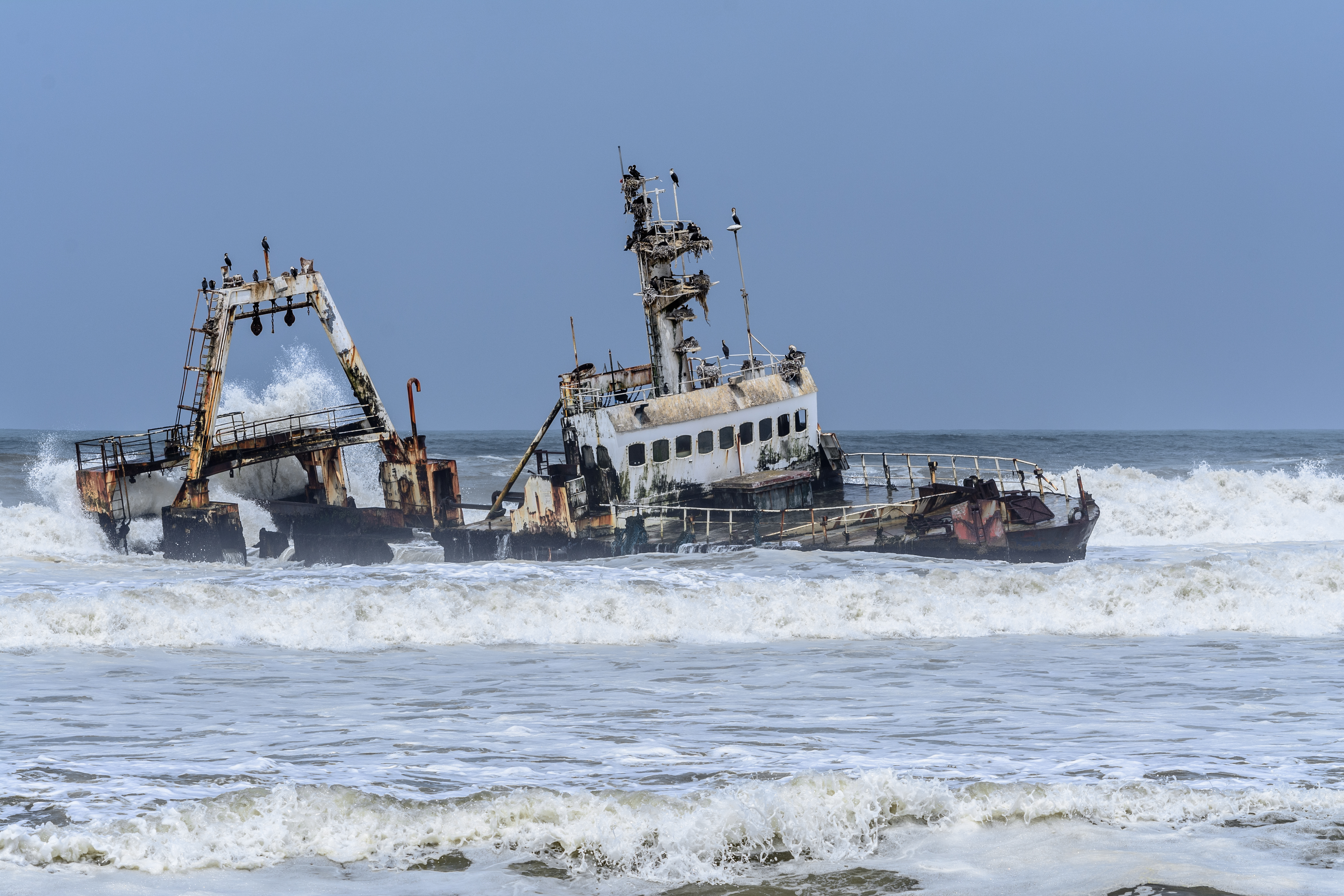
Over 1,000 ships wrecked on a coast where cold currents create perpetual fog. The desert preserved wooden hulls for centuries.
Domenico Convertini from Zurich, Schweiz, CC BY-SA 2.0
An atmospheric trap
The Skeleton Coast is a maritime graveyard with over 1,000 wrecks because of a persistent atmospheric phenomenon. The cold, nutrient-rich Benguela Current flows north from Antarctica along the Namibian coast. When warm, dry air from the Namib Desert blows westward over this cold water, the moisture in the air rapidly condenses. This interaction creates dense advection fog that blankets the coast for more than 180 days a year. This fog can extend up to 100 kilometers inland, obscuring the coastline from mariners.
Compounding the poor visibility are treacherous sea conditions. The coast is battered by heavy surf and strong, unpredictable crosscurrents that push ships toward the shore. Shifting underwater sandbanks create further navigational hazards. Once a vessel runs aground, the powerful waves make escape or rescue incredibly difficult. This combination of thick fog and dangerous waters has claimed ships for centuries, from 16th-century Portuguese galleons to modern fishing trawlers. The coastline is littered with the skeletal remains of whales and seals, which, along with the numerous shipwrecks, names the area.
A graveyard preserved in sand
The same arid environment that makes the coast inhospitable is responsible for the preservation of its shipwrecks. The dry desert air slows the process of decay, leaving many wrecks visible for centuries. Some ships now lie hundreds of meters inland, as the Namib Desert's dunes slowly advance into the sea. The German cargo ship Eduard Bohlen, which ran aground in 1909, now rests approximately 400 meters from the ocean, half-buried in sand. When it first wrecked, it was possible to walk to the hull at low tide within ten days.
One of the most significant archaeological finds is the Bom Jesus, a Portuguese merchant ship that sank in 1533. Discovered by diamond miners in 2008, the wreck was astonishingly well-preserved. The cold water and burial in sand protected its contents for nearly 500 years. Archaeologists recovered over 40 tons of cargo, including more than 2,000 gold and silver coins, 1,845 copper ingots, and 105 elephant tusks. The ivory cargo, identified through DNA and isotope analysis, came from at least 17 different herds of West African forest elephants, showing data on historical elephant populations.
💡Fun Facts
The local San people called this region "The Land God Made in Anger."
After the *Eduard Bohlen* wrecked in 1909, diamond miners briefly used the intact ship as a makeshift hotel.
The name "Skeleton Coast" originally referred to the numerous whale and seal bones that littered the shore from the whaling era.
The oldest known shipwreck on this coast, the *Bom Jesus*, was found in 2008 by miners from the diamond company De Beers.
The Skeleton Coast National Park's southern section is generally accessible between sunrise and sunset; specific gate times may vary.
Admission
A permit is required to enter the park, which can be purchased at the entrance gates (Ugab River or Springbokwasser).
Accessibility
The terrain is harsh and remote. A 4x4 vehicle is strongly recommended. Many wrecks, like the *Eduard Bohlen*, are inaccessible to self-drivers and require a guided tour or scenic flight to view.