A Patterned Enigma
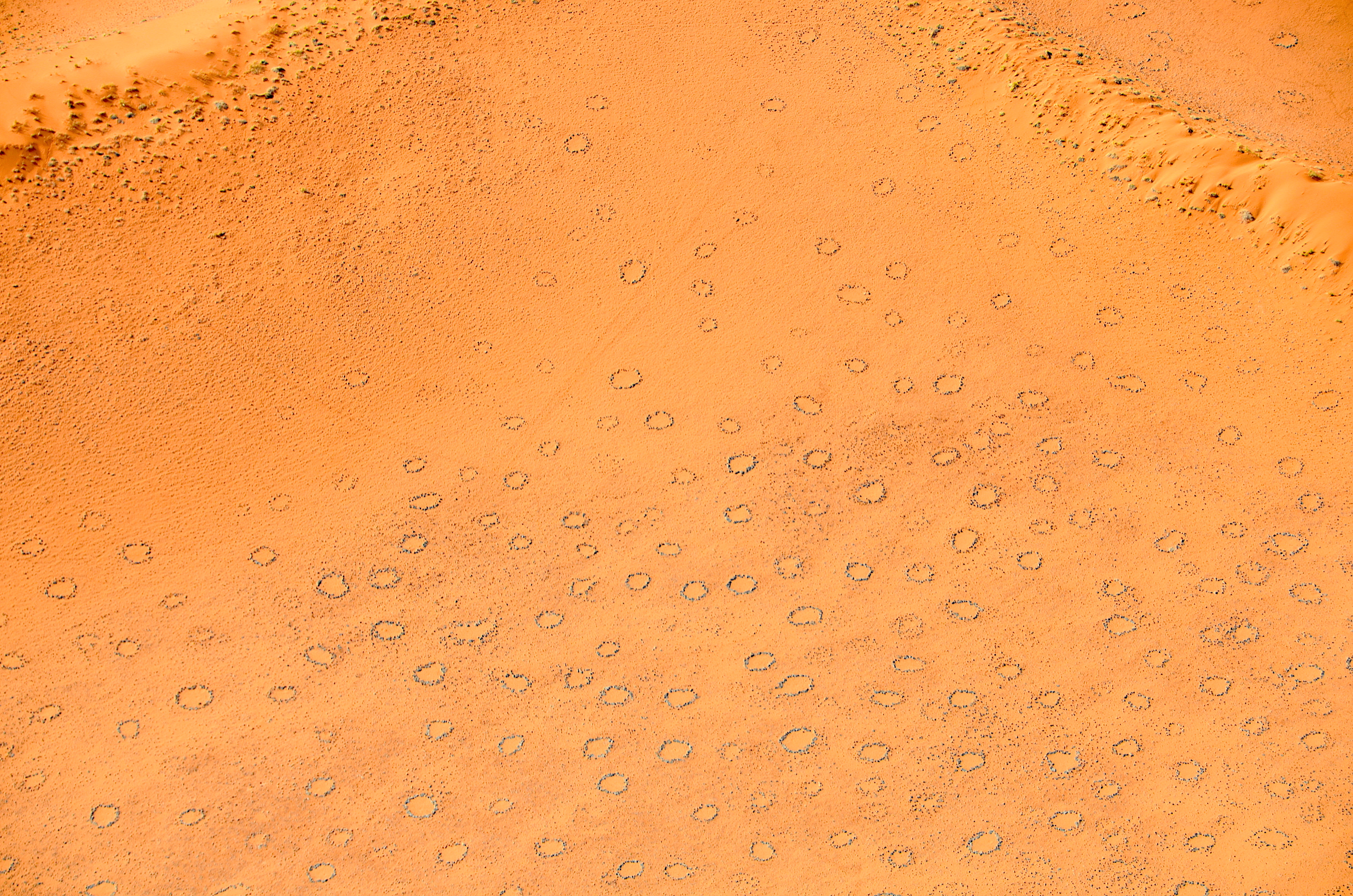
Stretching for roughly 2,400 kilometers along the eastern edge of the Namib Desert, the landscape is marked by millions of bare circular patches of earth. These "fairy circles" are uncannily uniform, ranging from 2 to 12 meters in diameter and often bordered by a ring of taller grasses, primarily of the Stipagrostis genus. From the air, they form a vast, repeating pattern that resembles a honeycomb, an arrangement that has intrigued scientists for over 50 years. The circles themselves are not static; they have a distinct life cycle, appearing, growing, and eventually disappearing over a lifespan estimated to be between 24 and 75 years. The soil inside the circles is often barren, and research has shown it to be nearly devoid of the tiny soil-dwelling worms called nematodes that are essential for soil health, creating a biological desert within the desert.
Competing Causes
Two primary scientific explanations have long competed to explain the circles' formation. The first theory centers on the sand termite, Psammotermes allocerus. Proponents argue that termite colonies engineer these ecosystems by consuming the roots of grasses in a circular patch. This clearing allows scarce rainwater to percolate into the sandy soil instead of being absorbed by plants, creating an underground water reservoir that sustains the termite colony through dry periods. The taller grasses forming the outer ring then benefit from this stored moisture.
The second major theory involves plant self-organization. In the arid conditions of the Namib, plants fiercely compete for water. The larger, more established grasses at the edge of the circle develop extensive root systems that draw water away from the center, outcompeting and killing off any new seedlings that attempt to grow there. This dynamic creates a bare patch that acts as a water reservoir, benefiting the surrounding ring of vegetation. According to this model, the hexagonal pattern seen across the landscape emerges naturally as the most efficient way for the circles to pack together. Recent studies, including detailed soil moisture measurements and grass excavations, have provided strong evidence for this water-stress hypothesis. Researchers found that grasses inside the circles die from a lack of water shortly after rainfall, as the surrounding plants quickly deplete the moisture, and their roots show no initial signs of termite damage. The scientific debate continues, with some researchers still presenting evidence supporting the termite theory.