A library of ancient floods
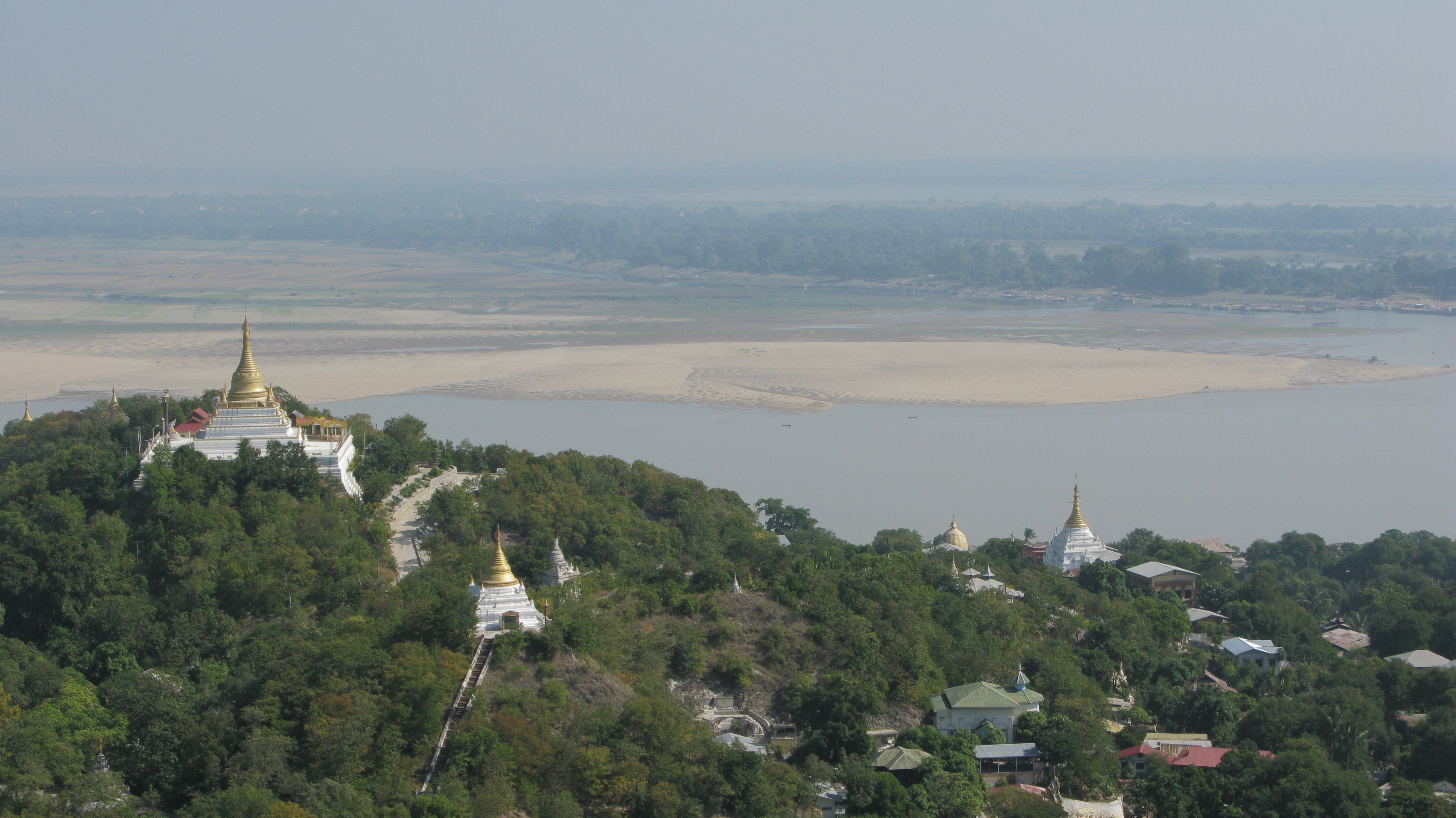
In the dry zone of central Myanmar, the landscape holds a natural climate record spanning the entire Holocene epoch. This record is the Pakokku Alluvial Fan, a massive, gently sloping cone of sediment deposited where the Chindwin River flows into the great Irrawaddy River. An alluvial fan is a feature created as a river emerges from a confined channel and spreads out, losing energy and dropping its load of sediment. The Central Myanmar Basin, a geological depression filled with Cenozoic sedimentary rocks up to 18 kilometers thick, provides the perfect setting for such a large-scale deposition.
The story is written in alternating layers of sand and mud. During periods of intense summer monsoons, the rivers swell with turbulent, high-energy floodwaters. These floods carry coarse, heavy sand particles, which are deposited across the fan. In contrast, during drier periods with weaker monsoons, the river flows are calmer. These lower-energy flows can only transport fine-grained particles like silt and clay, which settle out to form layers of mud. Each layer represents a climatic period. A thick band of sand indicates a powerful flood season; a layer of fine clay points to a period of relative drought or weak monsoonal rains.
Scientists drill deep into the fan to extract sediment cores, which are vertical cylinders of these preserved layers. By analyzing these cores, they can read the history of the Asian monsoon system. The entire sequence provides a high-resolution look at approximately 10,000 years of climate history, revealing patterns of flood and calm that stretch back to the end of the last ice age.
Reading the layers
To establish a timeline, researchers use radiocarbon dating on organic materials like preserved leaves or wood fragments trapped within the sediment layers. This technique allows them to assign specific dates to different depths in the core. The analysis reveals a detailed history of monsoonal variability, showing how the strength and frequency of floods have changed over millennia.
These local sediment records connect to a much larger story about global climate. The Holocene Climatic Optimum, a warm period between roughly 9,000 and 5,000 years ago, is visible in these records as a time of generally stronger monsoons. Data from the Pakokku fan can be compared with other climate archives, such as ice cores from the Himalayas and marine sediment cores from the Bay of Bengal, to build a comprehensive picture of regional climate dynamics. Understanding this long-term behavior of the monsoon—its response to past shifts in solar insolation and global temperatures—is essential for predicting how it might behave in the future. The layers of sand and mud in Myanmar are dirt; they are a record of one of Earth's most powerful climate systems.