The geography of extreme cold
Oymyakon’s status as the Northern Hemisphere's "Pole of Cold" comes from its geography. The village sits in a valley flanked by mountain ranges that trap and concentrate cold air, an effect known as a temperature inversion. This topography prevents warmer winds from mixing with the dense, frigid air that pools on the valley floor. The effect is amplified by the Siberian High, a massive, semi-permanent area of high pressure that dominates the region during winter, ensuring clear skies and preventing storm systems from bringing in milder air.
The officially recognized record low temperature at Oymyakon's weather station is -67.7°C (-89.9°F), recorded on February 6, 1933. This is the coldest temperature ever documented for a permanently inhabited location on Earth. An unofficial reading of -71.2°C (-96.2°F) from 1924 is commemorated by a monument in the town square. The climate is so extreme that the average minimum temperature for January is -50°C (-58°F). Summers can be mild or even hot, with a record high of 34.6°C (94.3°F) set in July 2010. This gives Oymyakon a temperature range of over 100°C (180°F), among the largest in the world.
Life adapted to the freeze
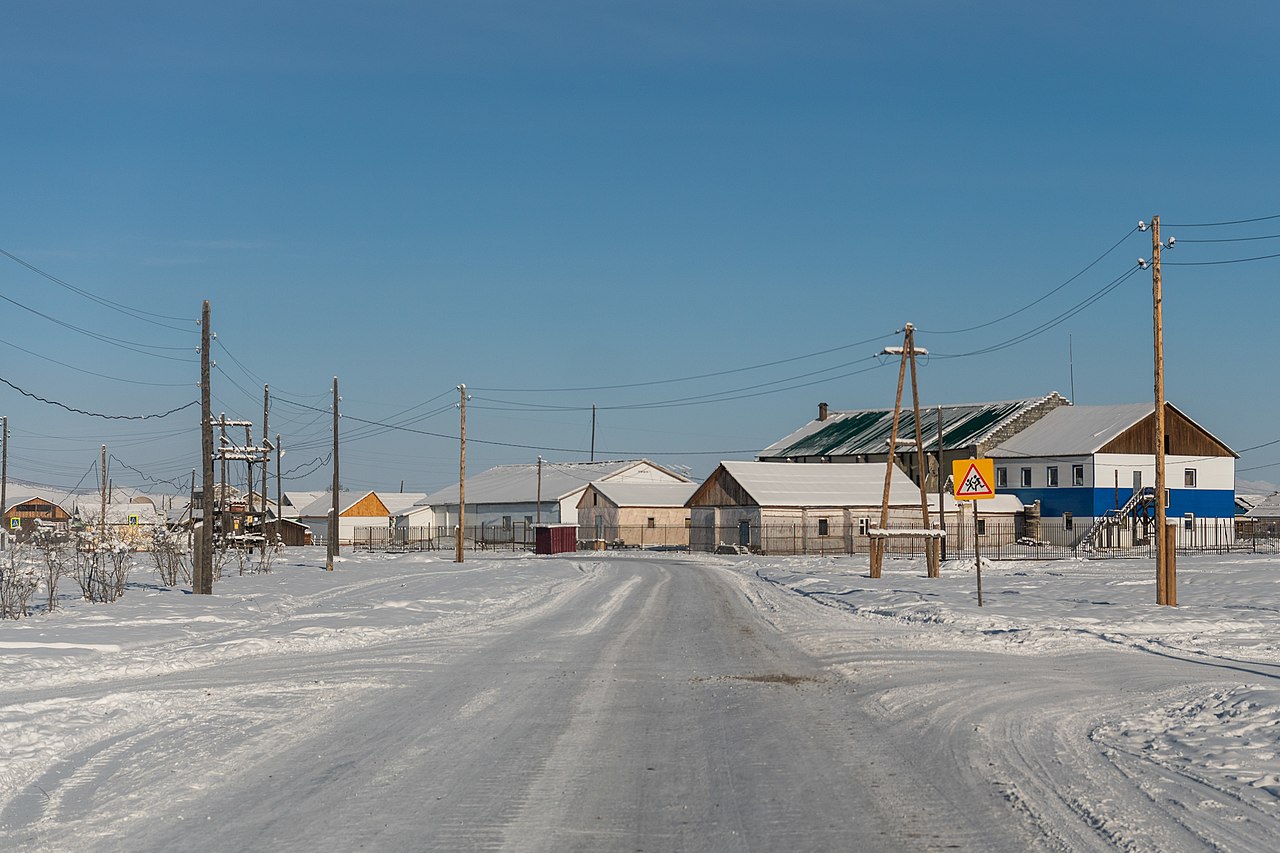
Survival for the roughly 500 residents requires specific adaptations. Most homes are built on stilts driven deep into the ground. This prevents the building's heat from melting the underlying permafrost, which would cause the structure to sink. Due to the permanently frozen ground, indoor plumbing is nearly impossible, making outhouses the standard. Water is often sourced by cutting blocks of ice from rivers.
Transportation is a major challenge. Vehicles are kept in heated garages or are simply left running continuously throughout the winter, as a frozen engine block will not restart. The local diet is almost entirely meat-based, as the frozen soil makes agriculture impossible. Staples include reindeer meat, horse meat, and stroganina—a dish of raw, thinly shaved frozen fish. These foods are high in calories, providing the necessary energy to withstand the cold. The local Yakutian horses have evolved, having adapted to the climate with compact bodies and thick winter coats the ability to enter a state of reduced metabolic activity to conserve energy. They can even find and graze on vegetation buried under deep snow.