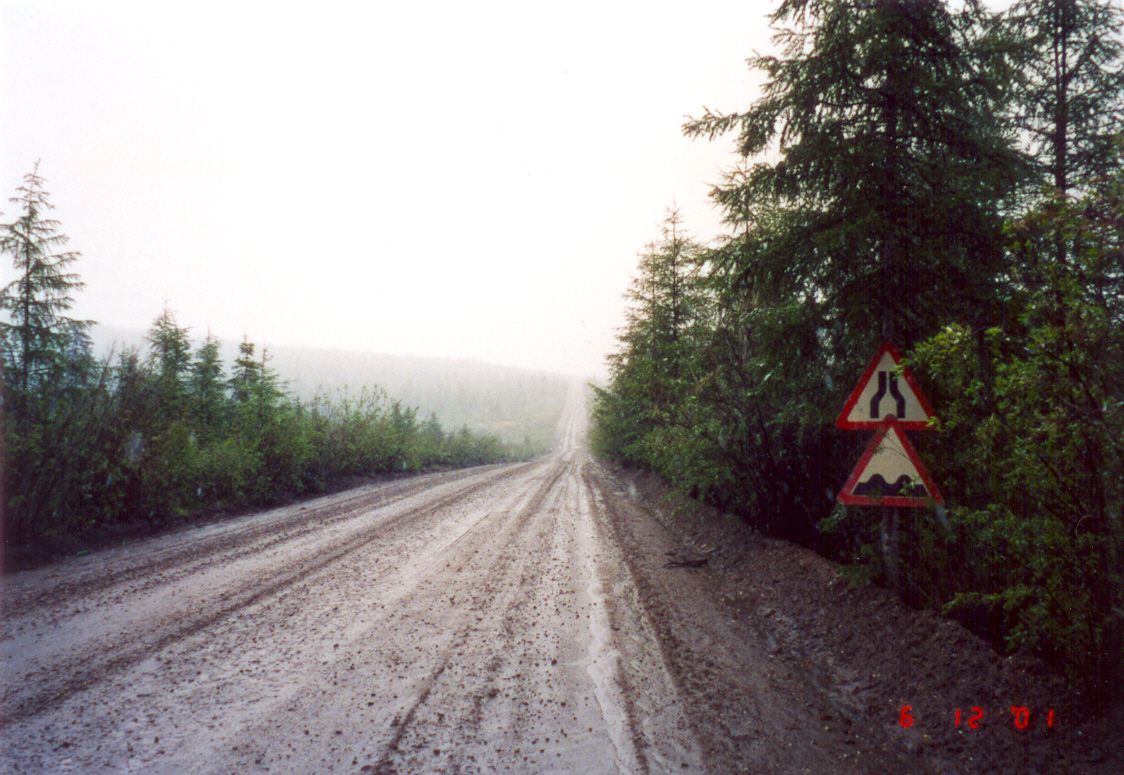
An engineering problem on frozen ground
The R504 Kolyma Highway is a 2,031-kilometer road connecting Magadan with Nizhny Bestyakh on the Lena River. Its existence confronts one of the planet's most formidable construction challenges: permafrost. This region of northeastern Siberia is a zone of continuous permafrost, where the ground remains frozen year-round to depths reaching 200 meters. Building on this substrate is a complex science. The surface layer, known as the active layer, thaws during the brief summer, turning the ground into an unstable morass of mud. Any structure built directly on it will sink and buckle as the ground thaws and refreezes.
Construction began in 1932 under the control of Dalstroy, the Soviet state enterprise that managed the Gulag labor camps. The prisoners, equipped with little more than hand tools, had to pioneer methods for building a stable roadbed. Early attempts made a mistake: removing the surface vegetation. This insulating layer of moss and tundra protects the underlying permafrost from summer warmth. Its removal caused the ground to thaw and the road to collapse. Engineers learned to build the road embankment directly on top of the natural surface, using gravel and crushed rock to create a raised structure. This design uses the cold air of winter to keep the ground beneath the road frozen solid, providing a stable foundation.
A human cost preserved in ice
The scientific reason for the road's existence was geology. Soviet surveyors confirmed vast gold deposits in the Kolyma region in the late 1920s, and the highway was created to move labor into the mining camps and transport the extracted resources. The human cost of this endeavor was immense. Between 1932 and 1953, Gulag prisoners worked in unimaginably harsh conditions. The region is the "Pole of Cold," with winter temperatures regularly falling below -50°C. The officially recorded low in nearby Oymyakon is -67.7°C (-89.9°F).
The permafrost that made construction so difficult also dictated how the dead were treated. In the extreme cold, digging individual graves in the iron-hard frozen ground was often impossible. The solution was grimly practical: the bodies of workers who perished from exhaustion, malnutrition or exposure were incorporated directly into the road's foundation. They became part of the fill material, buried beneath the gravel. This practice led to the highway's nickname, the "Road of Bones." Estimates of the number of people who died in the Kolyma camps range from over 125,000 to more than a million. The permafrost preserves the remains, and erosion along the roadside occasionally exposes the human remains entombed within.