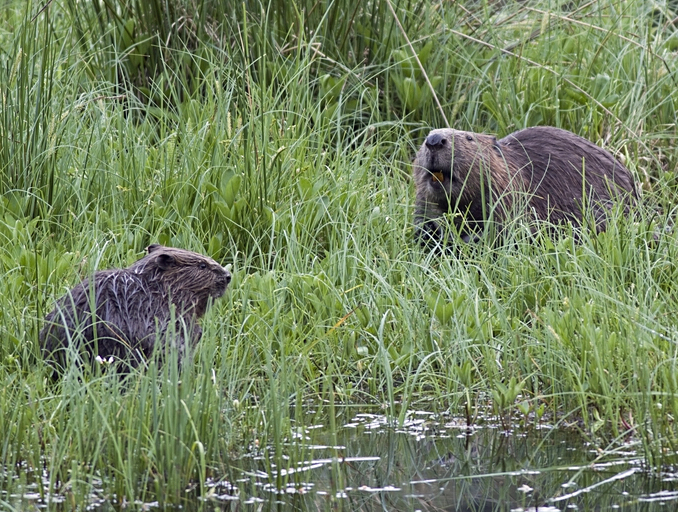
A species on the brink
By the dawn of the 20th century, the Eurasian beaver, Castor fiber, was functionally gone from most of its historic range. Centuries of trapping for its dense fur and castoreum—a glandular secretion used in perfumes—had reduced a once-thriving population across Europe and Asia to isolated pockets. Within the borders of what would become the Soviet Union, the total population was estimated at fewer than 1,000 individuals. The animal that had shaped river systems for millennia was on the verge of disappearing completely.
In 1922, the new Soviet government enacted a ban on beaver hunting. This was followed by a more direct conservation effort. In 1923, a small, remnant beaver population was identified on the Usman River, a tributary of the Don. To protect these survivors, the Voronezh State Reserve was established. This reserve became the center of a state-sponsored effort to understand, breed, and restore beaver populations across the country. On April 10, 1932, the world's first experimental beaver nursery was created at Voronezh, beginning the practice of breeding beavers in captivity for reintroduction. The first successful captive birth occurred there in 1934.
The great beaver dispersal
The Voronezh program developed specific, science-based methods for translocation. Beavers were captured, paired up, and held until they formed stable family groups before being transported in specially designed boxes for release. The first translocation occurred in 1934, when eight beavers were sent to the Lapland Biosphere Reserve. This was the start of a massive, decades-long project. From 1934 to 1977, the Voronezh reserve alone translocated approximately 3,000 beavers to 52 different regions, from Poland to Mongolia.
Beavers were reintroduced to the Prioksko-Terrasny Reserve on the Oka River in 1948, establishing a new population nucleus. As these new populations took hold, they began to re-engineer their environments. As a keystone species, the beaver's impact is significant for its numbers. Their dam-building activities transform the local hydrology, turning fast-flowing streams into series of ponds and wetlands. These changes raise the local water table, trap sediment, and create new habitats. Studies show these beaver-modified areas lead to an increase in aquatic and wetland plants from around 10% to over 28% of local flora. Today, Russia's beaver population is estimated to be over 700,000, with about half descending from the original Voronezh population.