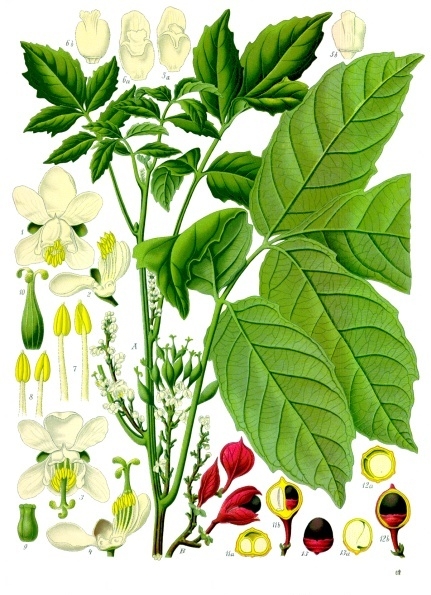
The eyeball fruit in the Brazilian Amazon, within the Andirá-Marau Indigenous Territory, the Sateré-Mawé people cultivate a plant central to their identity: guaraná (Paullinia cupana).%%CITE_1%% They were the first and only group to domesticate this climbing vine, transforming it from a wild liana into a cultivated shrub.%%CITE_1%% The plant produces fruit clusters that are a striking red. When ripe, the fruit splits open to reveal a black seed partially covered by a white, fleshy aril. The resemblance to a human eyeball is unmistakable and is the foundation of the Sateré-Mawé's origin story.%%CITE_2%%%%CITE_3%%
Their name for the plant, waraná, translates to "the beginning of all knowledge." According to their myth, a beloved and clever child in the tribe was murdered by an evil spirit. The tribe's benevolent god, Tupã, instructed the grieving mother to plant the boy's eyes in the soil. From the right eye sprouted the first guaraná plant, and from this plant, the Sateré-Mawé people themselves were born. This makes them, in their own view, the "Children of Guaraná". This story is folklore, it informs a deep, sacred relationship with the plant and its cultivation.
A complex stimulant
The energizing effect of guaraná is well-known, but its chemistry is complex, a simple caffeine jolt. The seeds contain between 2% and 6% caffeine by dry weight, substantially more than coffee beans, which average 1-2%. The seeds also possess a suite of other compounds, including the alkaloids theophylline and theobromine, also found in tea and chocolate, along with tannins, saponins, and various polyphenols like catechins.