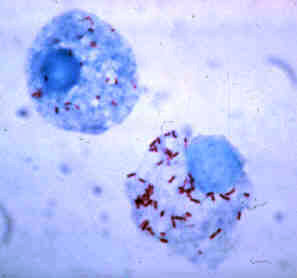
The bacterium that causes epidemic typhus is the closest living relative to mitochondria. Its genome proves that our cellular power plants descended from infectious bacteria that became trapped in host cells 2 billion years ago.
CDC, Public domain
An ancient infection inside you
Inside nearly every cell of your body are mitochondria, tiny organelles that generate the energy you need to live. They were not originally part of you. They are the descendants of an ancient bacterium that, roughly two billion years ago, took up residence inside another single-celled organism. This arrangement, called endosymbiosis, was a turning point for life on Earth, allowing for the evolution of complex cells. The evidence for this event comes from a surprising source: the human body louse and the bacterium it carries, Rickettsia prowazekii.
Phylogenetic analyses show that R. prowazekii, the agent of epidemic typhus, is the closest known living relative to our mitochondria. The 1998 sequencing of its genome, accomplished by a team at Uppsala University in Sweden, revealed similarities to our own cellular power plants. The bacterium’s genome is small, containing only 1,111,523 base pairs and 834 protein-coding genes. Like mitochondria, R. prowazekii lacks the genes for anaerobic glycolysis but possesses a complete set for the tricarboxylic acid cycle and respiratory-chain complex—the very machinery of ATP production. This shared metabolic profile points to a common ancestor.
From parasite to partner
The relationship between Rickettsia and mitochondria shows a process of reductive evolution. The common ancestor was likely a free-living α-proteobacterium. Once it became an endosymbiont—trapped inside a host cell—it began to shed unnecessary genes. Why make something the host cell already provides? Over millions of years, many genes from the proto-mitochondrion were transferred to the host's nucleus, cementing the permanent partnership we see today.
R. prowazekii represents a snapshot of this process. It is an obligate intracellular parasite, meaning it can only survive and multiply inside a eukaryotic cell. Its genome is littered with non-coding DNA, about 24%, which scientists interpret as the degraded remnants of genes that are no longer needed. This genomic decay is a parallel to the extreme reduction seen in mitochondria, which have tiny genomes compared to their bacterial cousin. The functional similarities remain, however. Rickettsia even has transporters to steal ATP directly from its host cell, a feature that may have been present in the original endosymbiont before it learned to produce its own energy for the host.
The carrier of this mitochondrial cousin is the human body louse, Pediculus humanus humanus. The louse thrives in crowded, unhygienic conditions, spreading the bacteria through its feces. When an infected louse bites, it defecates, and scratching the bite can rub the infectious feces into the wound. This mode of transmission has made epidemic typhus a constant companion of warfare, famine, and misery for centuries.
💡Fun Facts
Typhus has shaped military history; it is estimated to have killed more of Napoleon's soldiers than the Russian army during the 1812 retreat.
The genome of *Rickettsia prowazekii* contains the highest percentage of non-coding "junk" DNA (24%) of any known microbe.
The coordinates for this point of interest, 59.8586, 17.6389, point to Uppsala University in Sweden, where the first *R. prowazekii* genome was first sequenced.
Brill-Zinsser disease is a relapsed form of typhus that can occur years after the initial infection, often when a person's immune system is weakened.