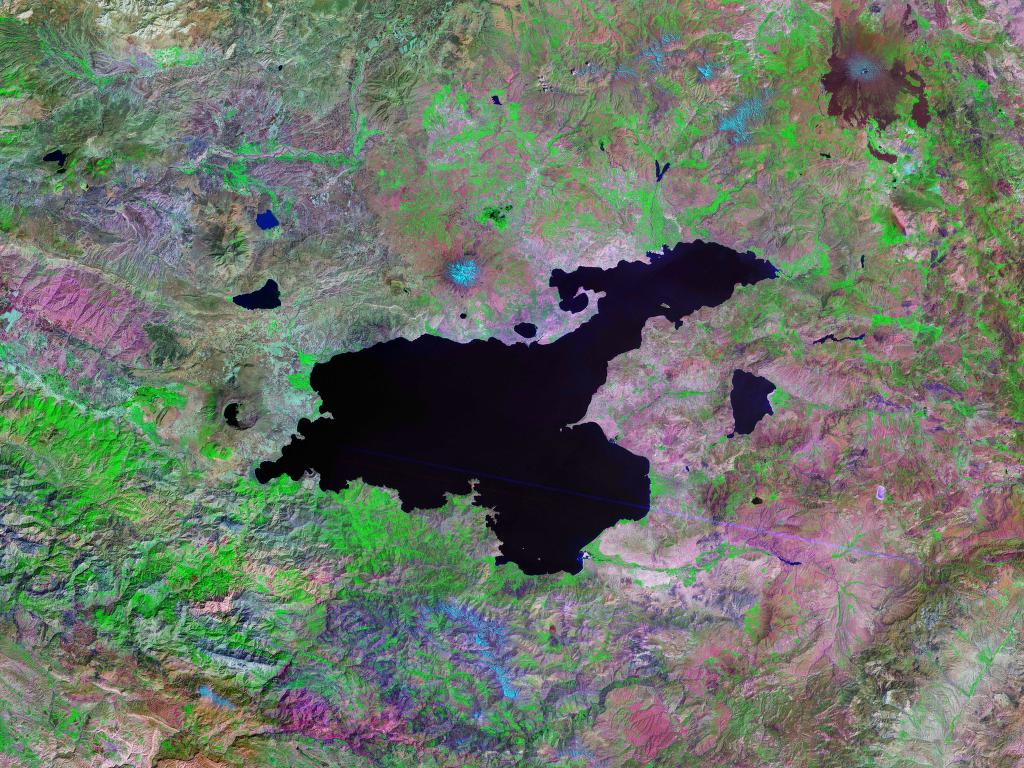
A six-hundred-thousand-year library
Lake Van is the largest lake in Turkey and the largest soda lake on Earth. Its water has a pH of 9.8, making it highly alkaline. The lake has no outlet, so everything that flows into it becomes trapped. About 600,000 years ago, a massive lava flow from the Nemrut volcano dammed the basin, creating this enormous endorheic lake. These conditions make Lake Van a perfect sediment trap. For millennia, fine particles have settled on the lakebed, forming distinct annual layers known as varves. These layers create a continuous record of geological and climatic history.
In 2010, the International Continental Scientific Drilling Program (ICDP) initiated the PALEOVAN project to access this archive. A team of scientists positioned a drilling barge over the deepest part of the lake, in water up to 360 meters deep. They extracted sediment cores reaching 220 meters below the lake floor, pulling up a continuous record that extends back more than 600,000 years. The total length of all recovered cores exceeded 800 meters. This single location provides the longest continuous continental climate record in the entire Near East.