A 370-Million-Year-Old Mineral Deposits
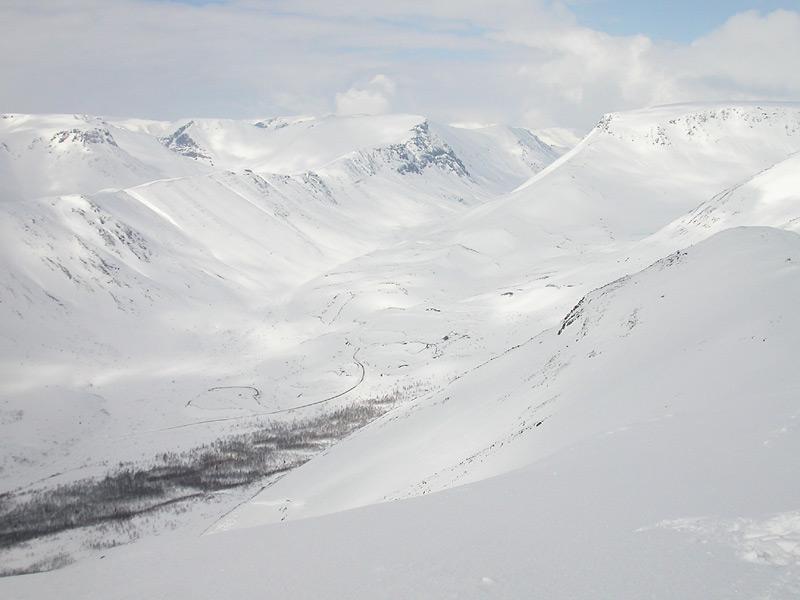
The Khibiny Mountains are not a typical mountain range formed by colliding tectonic plates. Instead, the entire massif is an ancient igneous intrusion that pushed its way toward the surface approximately 370 million years ago, during the Devonian Period. It is one of the largest alkaline plutons in the world, covering an area of 1,327 square kilometers. The structure is a complex, ring-shaped body composed of multiple nested intrusions of silica-poor igneous rocks, primarily nepheline syenites.
This geological origin is the direct cause of its mineral wealth. The alkaline magma was low in silica but enriched in elements that do not easily fit into common rock-forming minerals. These "incompatible elements" include zirconium, niobium, strontium, and a suite of rare earth elements (REEs). As the magma cooled over millions of years, these elements became concentrated in the remaining liquid, eventually crystallizing into a diverse collection of minerals. Over 500 different mineral species have been identified here. Of those, more than 110 were first discovered in the Khibiny Massif, the massif is the type locality for many of the world's known minerals.
The Stone of Fertility and Digital Devices
Large-scale interest in the region began after an expedition led by Alexander Fersman discovered enormous deposits of apatite in the 1920s. Apatite, a phosphate mineral, is a primary component of agricultural fertilizers, earning it the local nickname "stone of fertility." The mining of apatite-nepheline ores has been the economic backbone of the local towns of Kirovsk and Apatity since the 1930s.
These same apatite ores, along with other minerals like eudialyte and titanite, contain significant concentrations of rare earth elements. More than 60% of Russia's rare earth metal reserves are located in the Khibiny Massif's apatite-nepheline deposits. Elements like cerium, lanthanum, and neodymium are extracted as by-products of the phosphate mining operations. These metals are indispensable for producing high-strength magnets, specialized glass for lenses, and advanced electronics. Zirconium, also abundant in the massif, is used in nuclear power applications. The geology that created a resource for growing food also produced the materials important for modern technology.