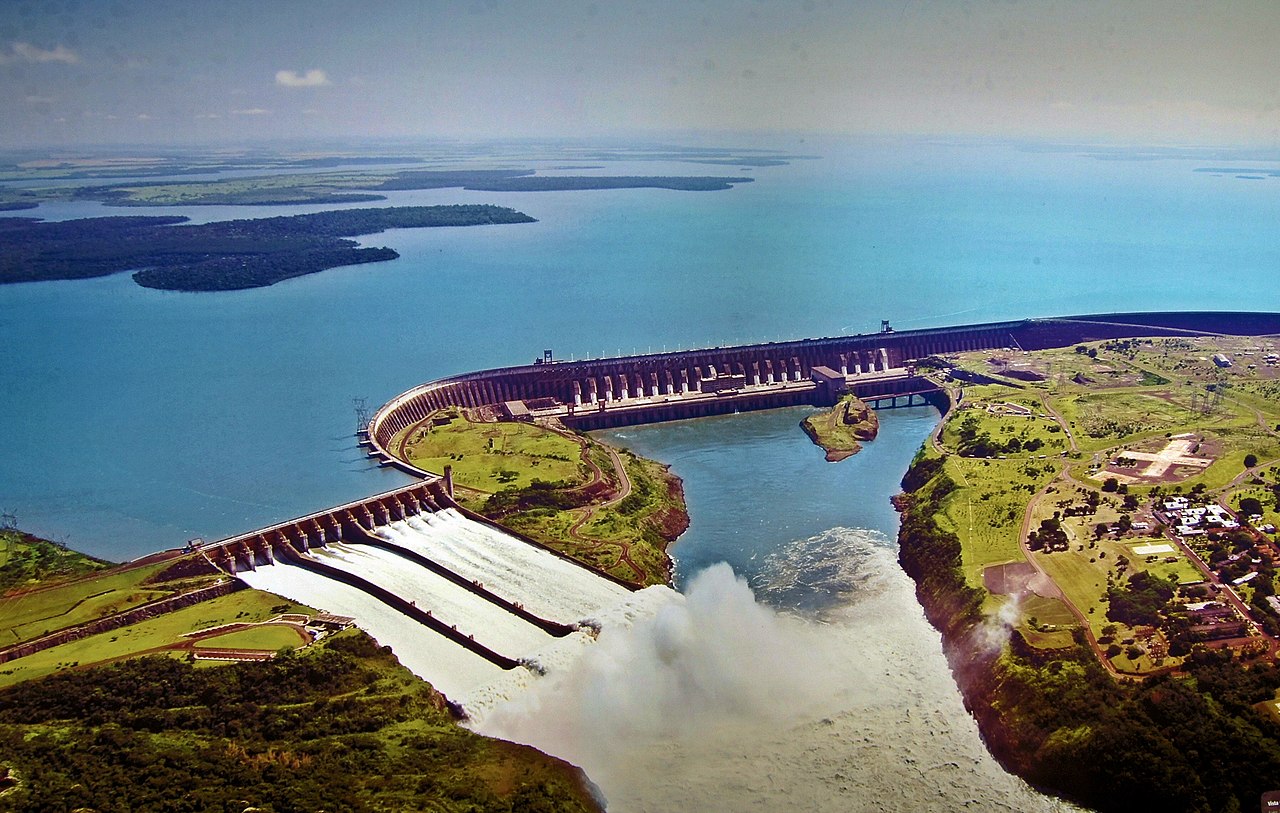
The end of a wonder
Before 1982, the Paraná River contained the Guaíra Falls, or Sete Quedas. This series of 18 waterfalls was a large natural wonder. By total volume of falling water, it was the largest waterfall on Earth. Its constant roar could be heard from 32 kilometers away. The falls marked a sharp ecological boundary, separating the fish species of the upper and lower Paraná River basins. This unique environment, sustained by the constant mist and tumultuous water, supported species found nowhere else.
The construction of the Itaipu Dam, a massive hydroelectric project between Brazil and Paraguay, spelled the end for Sete Quedas. In October 1982, the dam's floodgates were closed, and it took only 14 days for the rising waters of the Itaipu reservoir to completely submerge the falls. The Sete Quedas National Park was officially dissolved by the Brazilian government. The inundation of 1,350 square kilometers of land destroyed the falls and also vast tracts of forest and agricultural areas, forever altering the region's environment and biodiversity. The natural barrier that had separated aquatic ecosystems for millennia was gone, leading to a massive invasion of fish species into the upper Paraná basin.
Operation Mymba Kuera
As the waters began to rise, a massive and desperate wildlife rescue operation was launched. Known as "Mymba Kuera," a name from the local Tupi language meaning "Catch the Animals," the effort aimed to save terrestrial wildlife from the slowly flooding landscape. For months, teams of biologists and volunteers worked frantically. They navigated the newly formed lake in boats, capturing animals trapped on shrinking islands of high ground.
The sheer scale of the operation was unprecedented. The teams rescued a total of 36,450 animals. These creatures, ranging from jaguars and monkeys to capybaras, snakes, and birds, were captured, cataloged, and relocated to nearby protected areas and biological refuges created by the Itaipu project. While the operation saved thousands of individual animals from drowning, it could not save the ecosystem itself. The habitat they were removed from vanished beneath the water. Species endemic to the unique microclimate of the falls, which could not be relocated, were lost forever. The rescue is one of the largest wildlife translocation efforts ever attempted in the face of habitat destruction.