A current of creation
In the 19th century, naturalist Alfred Russel Wallace, co-developer of the theory of evolution, noticed something peculiar about the monkeys of the Amazon. He observed that major rivers often marked the edge of a particular primate species's territory. On one bank, he would find a certain species, but on the opposite bank—sometimes just a few hundred meters away—he would find a different, closely related species. This observation became the foundation of the "river barrier hypothesis," which suggests that large rivers can act as impenetrable barriers for certain animals, isolating populations and allowing them to diverge into new species over millions of years.
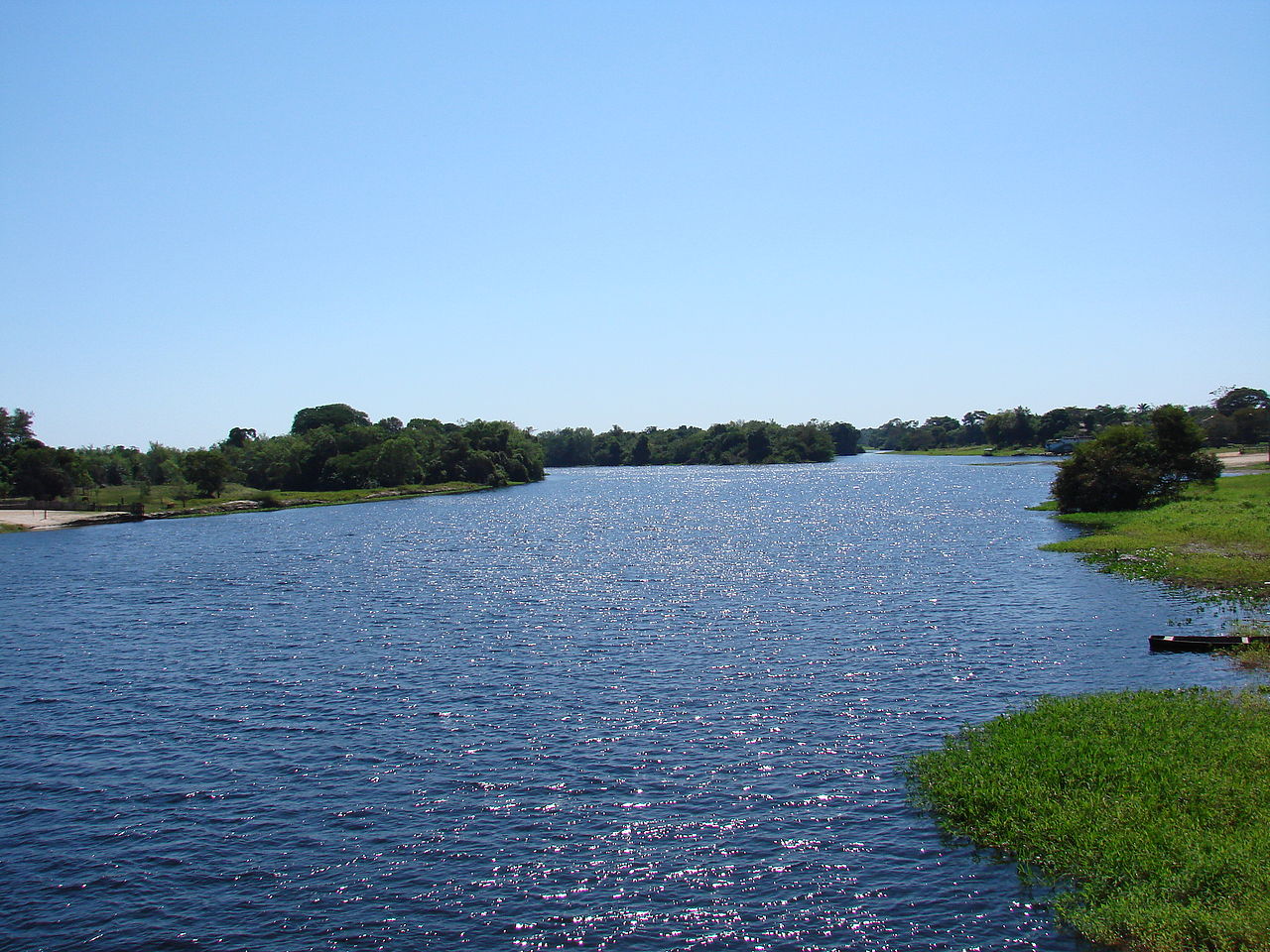
The Guaporé River, known as Río Iténez in Bolivia, is an example of this phenomenon in action. For about 920 kilometers, this clearwater river forms the border between Brazil and Bolivia. It is a substantial waterway, part of the Madeira River basin which flows into the Amazon. For small, tree-dwelling primates, a wide, fast-flowing river is a barrier as a mountain range. This separation prevents gene flow between the populations on opposite banks, led to for allopatric speciation—evolution through geographic isolation.
A tale of two marmosets
The effects of the Guaporé are seen in the region's marmosets. On the Brazilian side, in the state of Rondônia, lives the Rondon's marmoset (Mico rondoni). This small primate, only officially described as a distinct species in 2010, has a very specific range, bounded by the Guaporé, Mamoré, and Ji-Paraná rivers. It has silvery-gray fur, a dark head, and a distinctive whitish patch on its forehead. Its body averages about 22 centimeters in length, with a 31-centimeter tail, and it weighs around 330 grams.
Across the river in Bolivia, its ecological niche has a relative from the same genus, the Black-tailed marmoset (Mico melanurus). While genetically related, they are visually distinct and do not interbreed. The Rondon's marmoset was, for a time, considered a subspecies of another marmoset, Mico emiliae, before genetic and morphological studies confirmed its status as a unique species shaped by its river-bound isolation.
This pattern is not absolute for all animals. Larger, more mobile species, or animals capable of swimming, might not be restricted by the same riverine barriers. Studies have shown that for some frogs and larger mammals, rivers like those in the Amazon basin are less of an obstacle. But for small primates like marmosets, which spend their lives in the forest canopy, the Guaporé River is a definitive and evolutionarily significant divide.