An invasive fungus's complex plot
In the forests of Vermont, a complex biological drama unfolds, centered on the Eastern White Pine (Pinus strobus) and a fungus with a five-act life cycle. The fungus, Cronartium ribicola, causes the disease known as white pine blister rust. It is not native to North America; it was accidentally introduced around 1900 on infected pine seedlings shipped from Europe for reforestation efforts. Native to Asia, the fungus found North American five-needle pines, like Vermont's white pines, to be highly susceptible hosts with no co-evolved resistance. The disease can be lethal, with mortality rates in some western stands exceeding 95% of infected trees.
The life cycle of Cronartium ribicola is what sets it apart. It is heteroecious, meaning it requires two different, unrelated hosts to complete its cycle. In this case, the hosts are any five-needle pine and plants of the Ribes genus, which includes currants and gooseberries. The fungus also produces five distinct types of spores, each with a specific job, making it a macrocyclic rust. This complex process means the fungus cannot spread directly from one pine tree to another.
The five stages of infection
The fungus's life begins in the late summer and fall when basidiospores, released from a Ribes plant, land on pine needles. These spores germinate in cool, moist conditions and enter the needle through its stomata. The fungus then grows down into the twig and branch, forming a canker that slowly expands.
- Spermatia (Pycniospores): After about three years, the canker produces tiny droplets of a sweet fluid containing spermatia. These spores serve a sexual function, fertilizing receptive fungal structures within the canker.
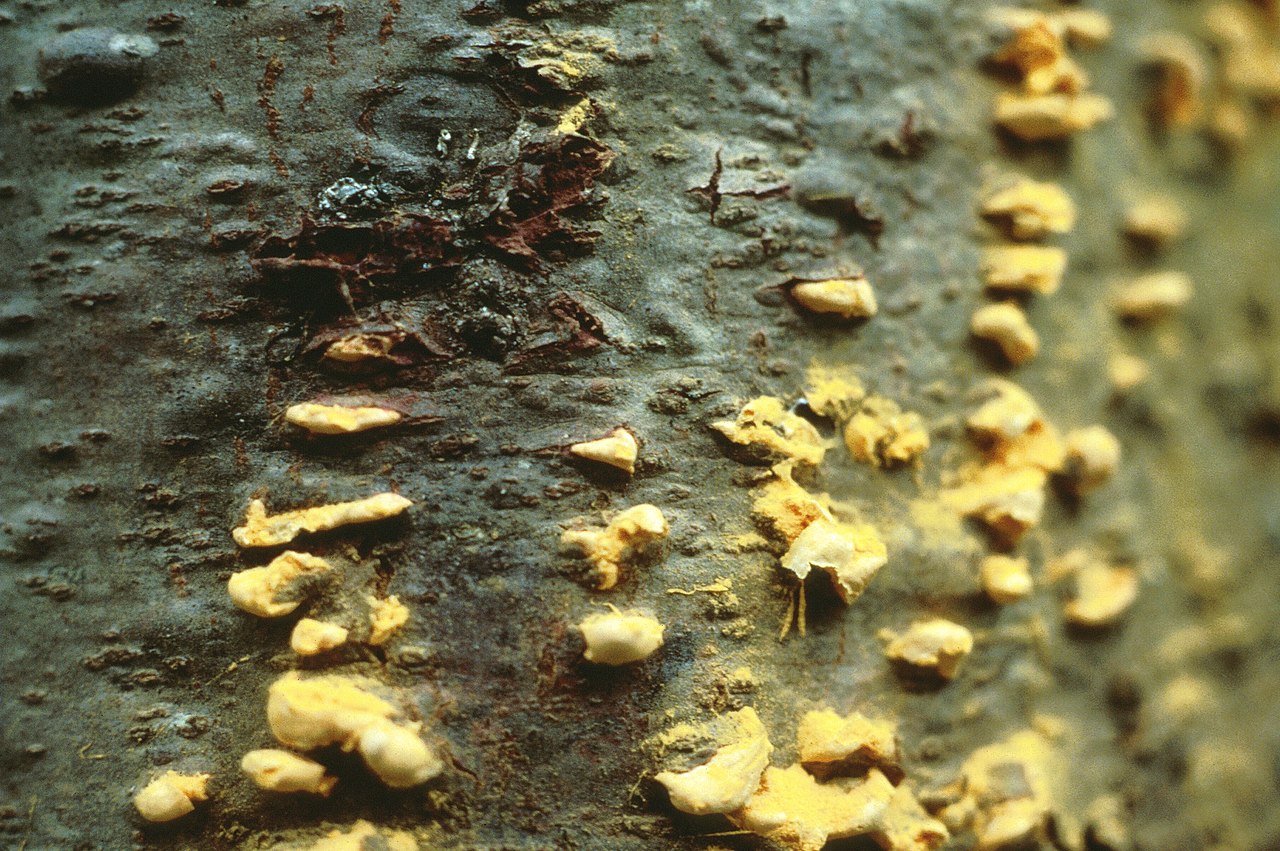
- Aeciospores: The following spring, the canker develops prominent white blisters, called aecia, which rupture to release millions of powdery, yellow-orange aeciospores. These durable spores are carried long distances by the wind but can only infect the alternate host: Ribes plants.
- Urediniospores: When aeciospores land on a Ribes leaf, they produce orange pustules called uredia on the underside of the leaf. These release urediniospores, a "repeating stage" that spreads the infection rapidly among other Ribes plants throughout the summer.
- Teliospores: Later in the season, brownish, hair-like structures called telia form on the Ribes leaves. These structures contain the teliospores, which remain on the leaf.
- Basidiospores: The teliospores germinate in place, producing the final spore type: basidiospores. These are the only spores capable of infecting pines. They are fragile and travel shorter distances, typically under a mile, on cool, moist air to land on pine needles and begin the cycle again.
This entire pine-to-pine cycle can take three to six years to complete. The resulting cankers on the pine girdle branches and trunks, cutting off the flow of nutrients and often killing the tree.