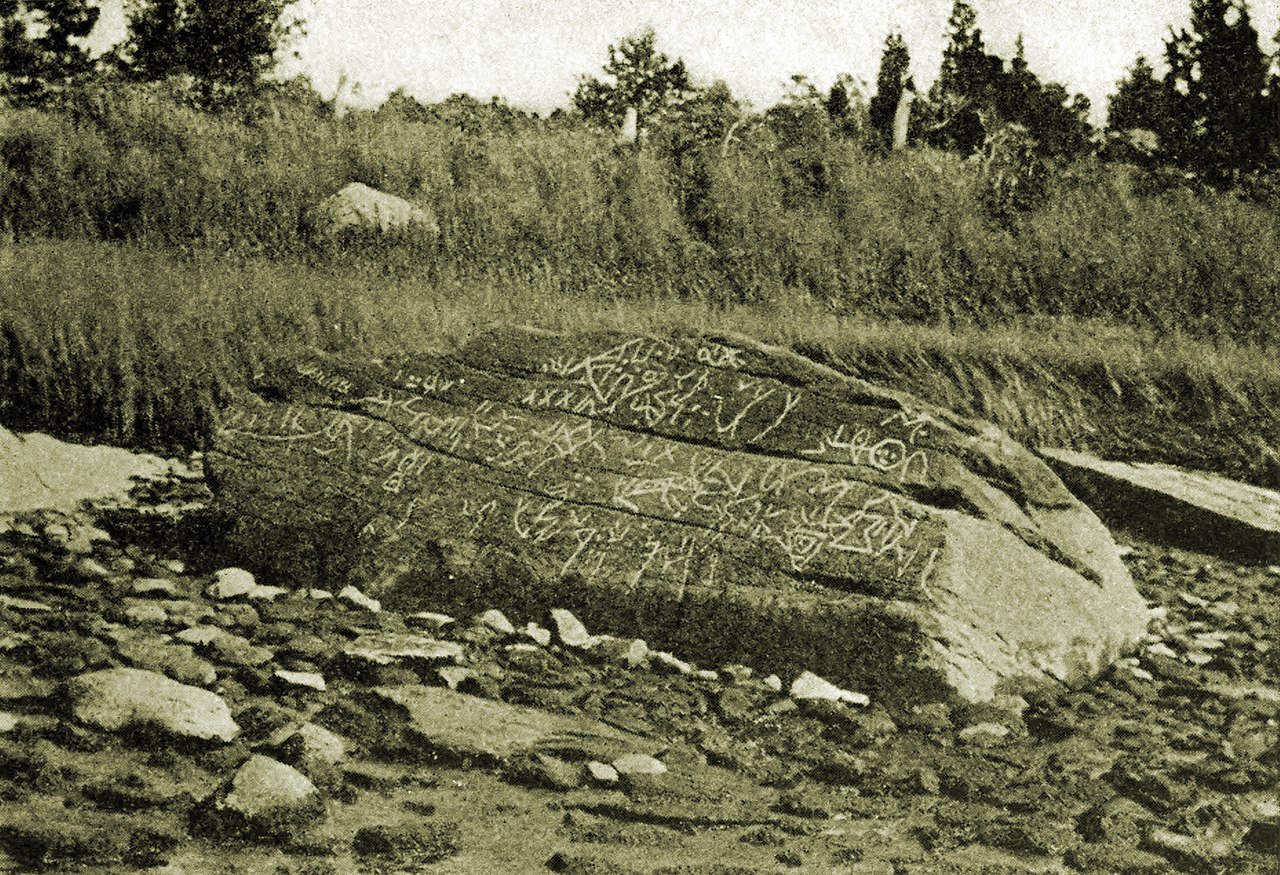
A region with reports of cryptid sightings, UFOs, and mysterious disappearances. Geological surveys found magnetic anomalies but no confirmed explanation.
Frank S. Davis, Public domain, via Wikimedia Commons
A 200-square-mile zone of high strangeness
The Bridgewater Triangle is an area of about 200 square miles (520 km2) in southeastern Massachusetts. The term was first used in the 1970s by cryptozoologist Loren Coleman to define a region with vertices in the towns of Abington, Rehoboth, and Freetown. This area, which includes the 16,950-acre Hockomock Swamp, has unexplained phenomena. The Wampanoag people, who have inhabited the area for millennia, called the swamp "Hockomock," which means "place where spirits dwell."
This region was the site of intense conflict during King Philip's War (1675-1676), the deadliest war in American colonial history on a per capita basis. The war culminated in the defeat of the Wampanoag chief Metacomet (King Philip) and the capture of his war chief Anawan at Anawan Rock in Rehoboth on August 28, 1676. A sacred Wampum belt, which held the tribe's history, was surrendered and subsequently lost. Some believe this event placed a curse on the land, contributing to its paranormal reputation.
Cryptids, unidentified objects, and spectral phenomena
Reports from within the Triangle describe a wide array of unusual encounters. Sightings of large, hairy, bipedal creatures resembling Bigfoot were documented in 1970, prompting police searches for a large bear, though none was ever found. On April 8, 1970, two police officers in a cruiser near the swamp reported their vehicle was lifted off the ground and then dropped.
Other cryptid sightings include giant birds, or "Thunderbirds," with wingspans reportedly between eight and twelve feet. In 1971, Norton Police Sergeant Thomas Downy reported seeing a bird-like creature over six feet tall near the swamp. In 1976, a large black dog, said to be the size of a pony, was blamed for killing two ponies in Abington.
UFO reports are common of the Triangle. These range from unexplained balls of light to larger, structured craft. A notable flap of sightings occurred in the summer of 1978 and the spring of 1979. One of the most prominent landmarks is the Dighton Rock, a 40-ton boulder covered in petroglyphs of unknown origin. First documented by Reverend John Danforth in 1680, the carvings have been attributed to Native Americans, Norse and Portuguese explorers, and even medieval Chinese sailors, but their true origin is debated. The Freetown-Fall River State Forest, located within the Triangle, has gained a reputation as "The Cursed Forest of Massachusetts" due to incidents of cult activity, animal mutilations, and murders that have occurred there.
💡Fun Facts
The term "Bridgewater Triangle" was coined in the 1970s by cryptozoologist Loren Coleman, who later popularized it in his 1983 book "Mysterious America".
Hockomock Swamp, a central feature of the Triangle, was a strategic base for Wampanoag chief Metacomet during King Philip's War (1675-1676).
In 1963, the 40-ton Dighton Rock was moved from the Taunton River riverbed to a museum to preserve its mysterious carvings.
Profile Rock, a 50-foot-high granite formation in the Freetown-Fall River State Forest that resembled a human face, collapsed in June 2019.