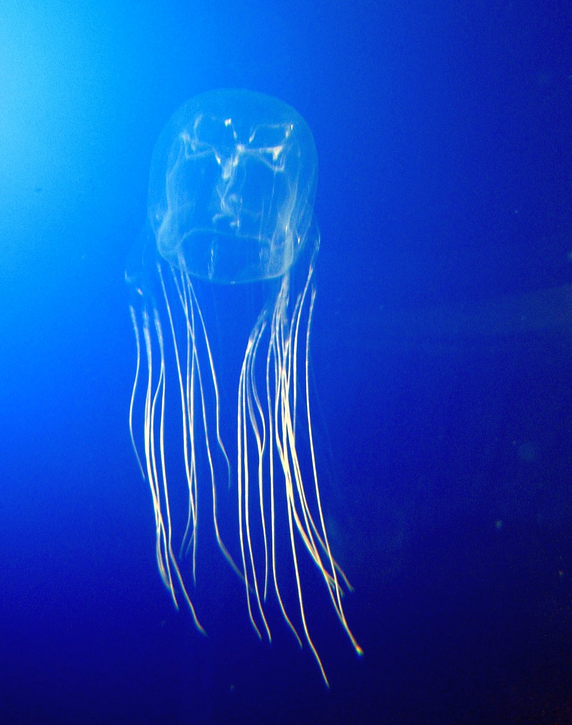
The Cellular Assassin
The coastal waters of Tropical Queensland host Chironex fleckeri, the Australian box jellyfish. It is a large cubozoan, with a bell that can grow up to 35 cm in diameter and as many as 60 tentacles that can stretch 3 meters long. These tentacles are armed with millions of microscopic stinging cells called cnidocytes, each containing a harpoon-like structure known as a nematocyst. When triggered by contact, these nematocysts fire, injecting venom with a penetrative force comparable to some bullets. A significant sting from C. fleckeri can be fatal to an adult human in as little as two to five minutes, making it one of the most venomous animals in the world. The amount of venom in a single jellyfish is estimated to be enough to kill 60 adult humans.
The venom itself is a complex mixture of proteins. The abundant and dangerous components are pore-forming toxins, or porins, specifically families of proteins like CfTX-1 and CfTX-2. These proteins are the primary agents behind the venom's rapid and devastating effects on the body. Their structure is remarkably similar to certain bacterial toxins, giving researchers clues about how they function on a molecular level. The venom also contains a diverse array of other proteins, including proteases and neurotoxins, contribute to the excruciating pain, inflammation, and tissue death associated with a sting.
A Pore-Forming Problem
The primary mechanism of the box jellyfish venom is brutally efficient. Once injected, the porin toxins travel to cells and begin to assemble. They insert themselves into the cell membrane, creating transmembrane pores about 12 nanometers wide. This action effectively punches holes in the cell's protective barrier, leading to a catastrophic loss of integrity.
The immediate result is a massive, uncontrolled leakage of potassium ions from inside the cells into the bloodstream. This causes a condition called hyperkalemia, a dangerous elevation of potassium in the blood that disrupts the normal electrical signaling required for muscle contraction. The heart is especially vulnerable. The sudden potassium spike interferes with cardiac muscle function, leading to a rapid decline in the heart's ability to pump blood, cardiovascular collapse, and cardiac arrest. This entire process happens with incredible speed; significant potassium release can occur within five minutes of exposure to the venom.
Studying this venom is a powerful model for understanding cell death. The pathways the venom triggers—including necroptosis and apoptosis—are fundamental processes in biology. Researchers have used tools like CRISPR gene-editing to identify the specific host factors required for the venom to kill cells. This research identified a calcium-transporting protein, ATP2B1, as a component for cytotoxicity. By understanding how to block these pathways, scientists hope to develop better jellyfish antivenoms and new therapies for conditions where unwanted cell death is a problem, such as in preventing the rejection of transplanted organs.