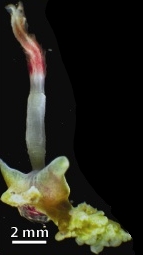
A flower of snot on the seafloor
In 2003, researchers from the Tjärnö Marine Laboratory sank the carcass of a Minke whale into the Kosterfjord on Sweden's west coast, lowering it to a depth of 125 meters. When they returned with a remotely operated vehicle to check on it, they found the bones covered in a reddish, flower-like shag. This was Osedax mucofloris, a species new to science and the first of its kind found in the Atlantic. Its name means "bone-eating snot flower," a reference to its diet and the protective mucus it leaves behind when it retracts into its tube.
The discovery was surprising because this part of the North Sea is one of the most studied marine habitats in the world. These organisms belong to the genus Osedax, first identified just a few years earlier in 2002 on a whale skeleton 2,893 meters deep in Monterey Canyon, California. The Swedish discovery showed that these strange worms are not deep-sea specialists but can thrive in much shallower shelf waters. Osedax mucofloris is currently the only species of bone-eating worm known from the North Atlantic.