A Triple Junction of Tectonics
The Afar Depression is a place of geologic superlatives. It is a tectonic triple junction where three of Earth's crustal plates—the Nubian, Somali, and Arabian—are pulling away from each other. This process of continental rifting, part of the Great Rift Valley system, began around 25 million years ago. The plates are separating at a rate of 6 to 17 millimeters per year, constantly reshaping the landscape. This intense geological activity makes the Afar one of the most volcanically active regions on the planet, home to features like the Erta Ale volcano with its persistent lava lake.
The constant stretching thins the Earth's crust, causing large blocks of land to drop down, creating the valley. This process, combined with erosion from seasonal rains, slices through ancient layers of sediment. As the ground pulls apart and washes away, it exposes the fossilized bones of animals and early humans that lived and died there millions of years ago. The geology drives discovery, making the entire region a conveyor belt that brings the deep past to the surface.
A Catalog of Ancestors
The Afar corridor has yielded some of the most significant fossils in the history of paleoanthropology. For decades, this region has produced a near-continuous record of hominin evolution.
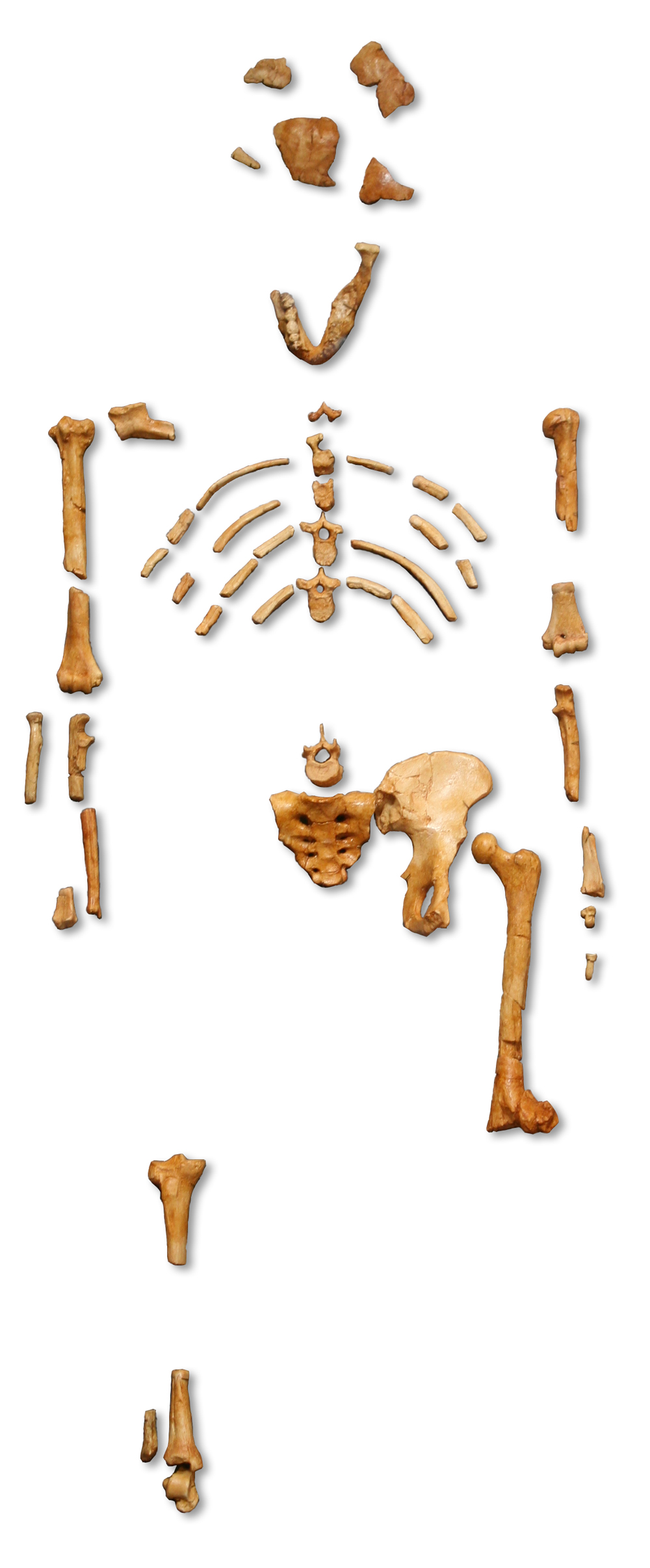
Perhaps the most famous resident is "Lucy," a 3.2-million-year-old skeleton of Australopithecus afarensis discovered in 1974. Her skeleton, which was about 40% complete, showed that our ancestors walked upright long before the evolution of larger brains. Standing just over a meter tall, Lucy was a young adult when she died.
Even older is "Ardi," a 4.4-million-year-old Ardipithecus ramidus specimen found in 1994. More complete than Lucy, Ardi's skeleton shows a mix of traits for both climbing in trees and walking on two feet, showing an even earlier stage of human evolution. Her discovery in a woodland environment challenged the long-held idea that bipedalism began in open savannas.
Other major finds include "Selam," the fossilized remains of a 3.3-million-year-old Australopithecus afarensis child, discovered in 2000. The remarkable completeness of this 2.5-year-old toddler's skeleton, including a full spinal column, has provided information about the growth and development of early hominins. The region has also yielded fossils from the genera Homo and, more recently, Paranthropus, showing that multiple hominin lineages coexisted here.