An accidental discovery
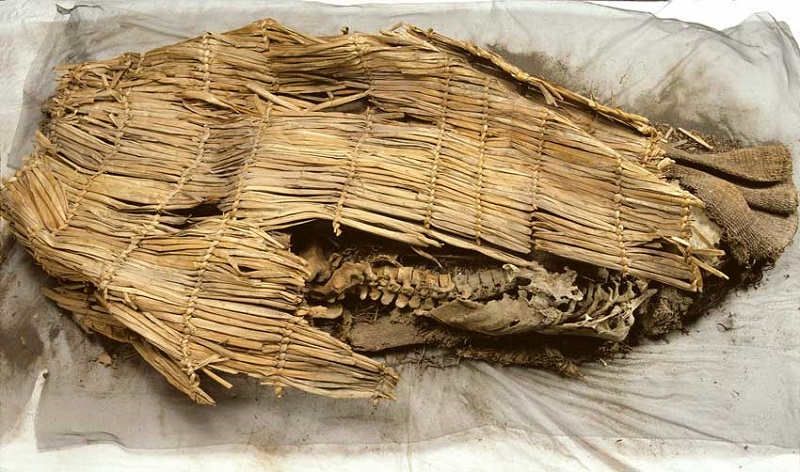
In 1940, archaeologists Sydney and Georgia Wheeler were surveying a cave in Nevada to salvage artifacts before potential destruction from guano mining. Inside the small, arid rock shelter, they found the remains of two individuals wrapped in tule matting. One body, buried deeper than the other, was partially mummified by the dry, alkaline conditions of the cave. This individual, a man aged between 40 and 45, was wearing moccasins and had been wrapped in a rabbit-skin blanket and sophisticated woven mats.
The Wheelers, believing the finds to be between 1,500 and 2,000 years old, recovered 67 artifacts and delivered the remains to the Nevada State Museum. There, they sat in storage for more than 50 years. In the 1990s, new technology allowed for a more precise analysis. R. Ervin Taylor, an anthropologist at the University of California, Riverside, used accelerated mass spectrometer radiocarbon dating on the textiles. The results were unexpected: the man had died approximately 10,600 years ago, making him the oldest mummy ever found in North America.
A record of ancient technology
The individual in Spirit Cave was buried with a remarkable collection of textiles. He was wrapped in two finely woven mats made from tule reeds. The weaving technique, a complex style known as diamond-plaiting, shows a sophisticated knowledge of textile production. Fish bones found in his digestive tract suggest a diet that included resources from the ancient wetlands that once filled the Great Basin.
Bioarchaeological analysis of the skeleton shows the man lived a difficult life. He had a healed skull fracture, a severe dental abscess, and a congenital spine defect called spondylolysis. These remains show the health and hazards of life in the Great Basin during the early Holocene epoch. The artifacts buried with him are some of the most well-preserved and oldest examples of fiber technology in North America, showing details about the daily lives and mortuary practices of these ancient people.
A genetic resolution
Following the discovery of the mummy's true age, a two-decade legal and scientific debate began. The Fallon Paiute-Shoshone Tribe asserted a claim to the remains in 1997 under the Native American Graves Protection and Repatriation Act (NAGPRA), stating the individual was one of their ancestors. Some researchers contested this, arguing that skull measurements suggested he might belong to a different population, sometimes called "Paleoamericans," with no direct link to modern Native Americans.
The dispute was resolved by genetic science. In 2015, with permission from the tribe, a team led by geneticist Eske Willerslev sequenced the mummy's genome. The DNA analysis proved that the Spirit Cave individual was more closely related to contemporary Native Americans than to any other population on Earth. The genome showed a direct ancestral link to the Fallon Paiute-Shoshone people. This genetic evidence settled the long-standing controversy. In November 2016, the remains and artifacts were officially transferred to the tribe. The tribe conducted a private reburial ceremony in 2018, finally returning their ancestor to a permanent resting place.