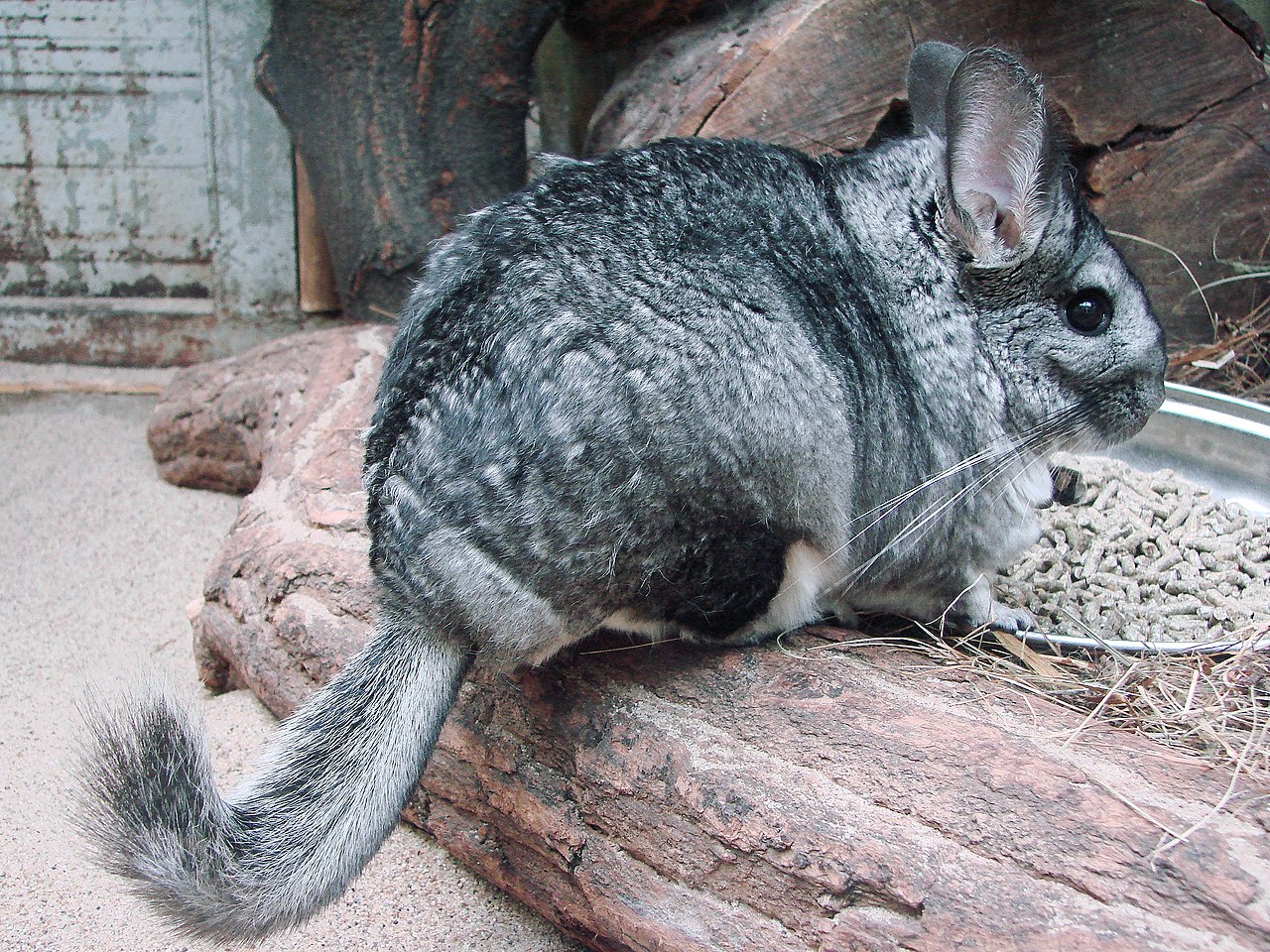
Wild populations thought extinct were rediscovered, but captive animals descend from different ancestors. Genomic comparison guides breeding programs to maximize genetic diversity in rescue efforts.
Guérin Nicolas (messages), CC BY-SA 3.0, via Wikimedia Commons
The Ghost of the Andes
High in the barren and rocky landscapes of the Andes, the short-tailed chinchilla (Chinchilla chinchilla) was once a common sight across parts of Argentina, Chile, Bolivia, and Peru. This rodent is adapted to elevations between 3,000 and 5,000 meters, sheltering in rock crevices. It possesses the densest fur of any land mammal, with as many as 50-60 hairs emerging from a single follicle. This exceptionally soft pelt drove a global fur trade that began in the 19th century. Millions of pelts were exported to Europe and the United States, and the relentless hunting drove the species to the brink of extinction. By the mid-20th century, many believed the short-tailed chinchilla was gone from the wild forever.
For decades, the only known short-tailed chinchillas existed in captive breeding programs. However, field surveys eventually confirmed their continued, albeit precarious, existence. Small, isolated wild populations were identified again in the high Andes, including in the border regions of Argentina's Jujuy Province. Five years of fieldwork in Jujuy published in 2007 failed to find any specimens, demonstrating their extreme rarity. These rediscovered wild animals contain unique genetic information, completely separate from the chinchillas known in captivity around the world.
A Genetic Bottleneck of Eleven
The story of every pet and farmed chinchilla in the world today begins with Mathias F. Chapman, an American mining engineer working in Chile. Between 1919 and 1922, as wild populations were collapsing, Chapman undertook a painstaking effort to capture live chinchillas with the vision of breeding them in the United States. After three years, he had managed to collect just eleven individuals.
In 1923, Chapman successfully transported these eleven chinchillas—only three of which were female—from the Andes to California. He carefully managed their transition from high altitude to sea level and kept them cool with ice on the long ship journey across the equator. These eleven animals became the founding population for the entire global domestic chinchilla industry, both for fur and as pets. This event created a massive genetic bottleneck. Every one of the millions of domestic chinchillas today is descended from this tiny, isolated group. While these were primarily the long-tailed species (C. lanigera), some short-tailed animals (C. chinchilla) were later crossed into breeding stocks.
The rediscovery of wild Chinchilla chinchilla populations in places like Jujuy is an important opportunity. These wild animals harbor the full genetic diversity of their species, lost to the captive population. By comparing the genomes of the wild and domestic animals, conservation scientists can identify unique genes and craft breeding strategies. These genetic rescue programs aim to reintroduce diversity into captive stocks, improving their health and long-term viability, and helping a species nearly erased by human activity.
💡Fun Facts
Chinchillas have the densest fur of any land mammal, with about 20,000 hairs per square centimeter.
The name "chinchilla" is derived from the Chincha people of the Andes, who traditionally wore the animal's fur.
To keep their dense fur clean, chinchillas take dust baths in fine sand or volcanic ash to remove oils and moisture.
A chinchilla pregnancy lasts for about 111 days, an unusually long gestation period for a rodent of its size.
The high-altitude puna ecosystem of Jujuy is accessible year-round. Specific national reserves or protected areas may have their own regulations and visiting hours.
Admission
Access to the general region is free. National monuments or parks may charge an entrance fee.
Accessibility
The terrain is a remote, high-altitude Andean environment. Travel to chinchilla habitat requires a 4x4 vehicle and acclimatization to altitudes often exceeding 4,000 meters. Roads can be unpaved and rugged.