A library of ancient environments
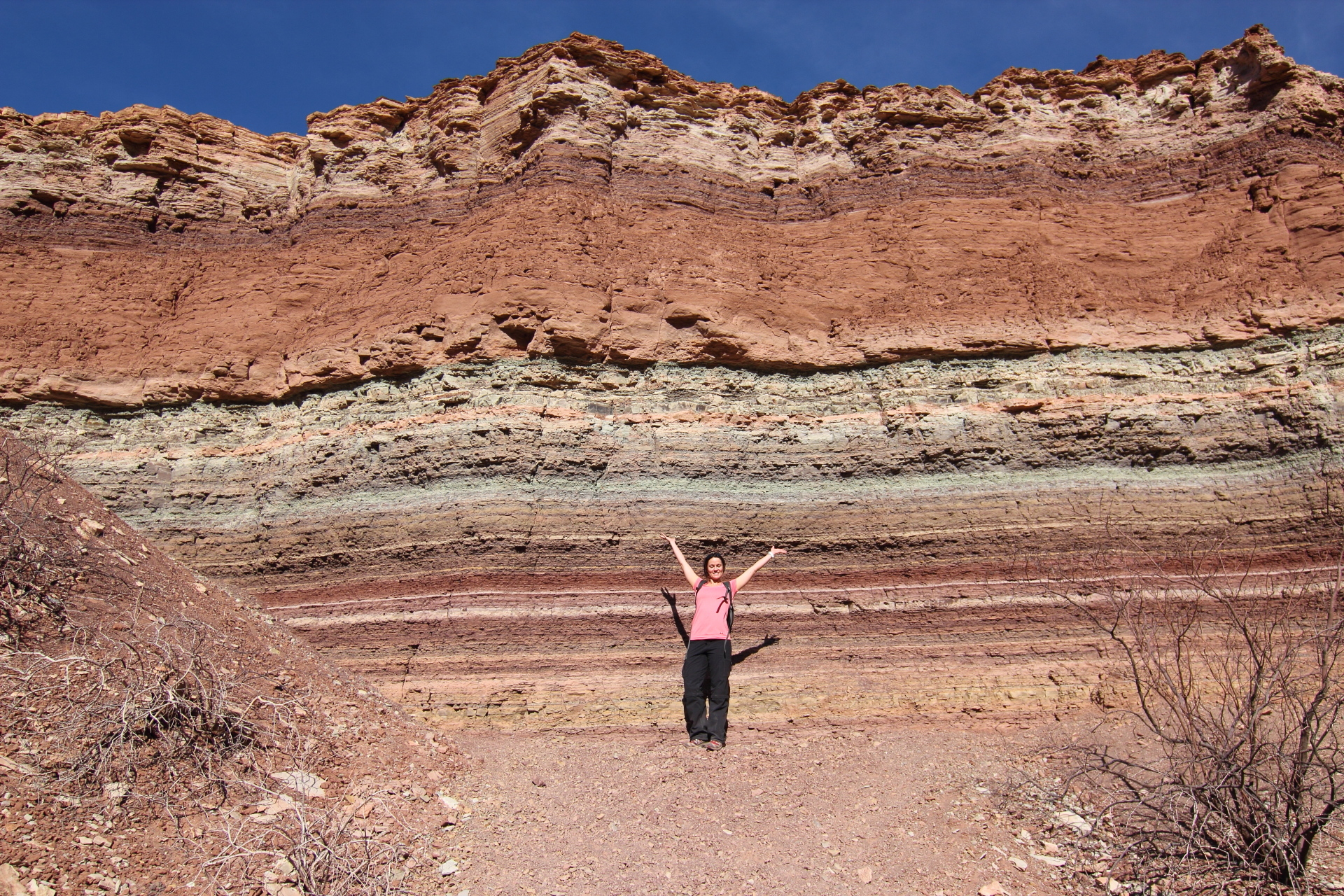
The Quebrada de Humahuaca in northwest Argentina is a 155-kilometer-long valley that records 600 million years of Earth's history in its stone. The valley's famous multicolored mountains, like the Cerro de los Siete Colores (Hill of Seven Colors) and the Paleta del Pintor (Painter's Palette), are sedimentary rock formations. Each layer was deposited in a distinct environment—ancient seas, lakes, or rivers—and later uplifted and tilted by the tectonic forces that formed the Andes mountains. Subsequent erosion by wind and water has sculpted the landscape, exposing this chronological record.
The oldest visible layers date back to the Precambrian and Cambrian periods. The green and grey shales and schists are marine sediments from this era, formed before complex life was abundant. The bright color palette results of the specific mineral composition of each sedimentary layer. The age of these layers ranges from just one million to 600 million years old. The oldest green layers contain copper oxide. White layers are primarily limestone, dating back 400 million years. Yellows are sandstone containing sulfur, while purples and browns contain lead and calcium carbonate, deposited around 80 to 90 million years ago. The prominent reds and pinks come from claystone containing oxidized iron, or rust, laid down just 3 to 4 million years ago.
Cretaceous seas and fossil footprints
Many of the most striking formations, including the Serranía del Hornocal, belong to the Yacoraite Formation, which dates to the late Cretaceous and early Paleocene. These deposits formed in a shallow sea that once covered the region. This formation is a record from the age of dinosaurs. The Yacoraite Formation contains a diverse fossil record, including stromatolites (layered microbial mats), gastropods, and fish.
Paleontologists have discovered numerous vertebrate trace fossils here. Well-preserved dinosaur footprints assigned to Hadrosaurichnus australis have been identified, confirming the presence of large hadrosaurs, or duck-billed dinosaurs, in the region. The discovery of dinosaur eggs provides further evidence of their nesting grounds. The fossil record crosses the Cretaceous-Paleogene boundary, showing the environmental changes that occurred after the Chicxulub asteroid impact. The arrangement of these fossil-bearing rocks, tilted into dramatic triangular "flatirons" at Hornocal, reveals the immense power of the Andean uplift that began around 30 million years ago.