A forest before fields
The Sannai-Maruyama archaeological site reveals a large, settled Jomon period community that flourished between 5,900 and 4,200 years ago. This village, which may have housed up to 500 people, existed long before wet-rice agriculture became common in Japan. Rather than farming cereal crops, the inhabitants developed a sophisticated form of forest management, a type of proto-agriculture centered on the Japanese chestnut, Castanea crenata.
Paleoethnobotanical studies show that chestnuts were a primary resource for the Sannai-Maruyama people. Pollen analysis from the site indicates a local environment dense with chestnut trees, far more so than would occur naturally. This suggests the Jomon inhabitants actively cleared competing tree species to favor chestnuts. Evidence comes from the chestnuts themselves. Genetic testing of nuts unearthed at the site confirms they were a cultivated variety, distinct from wild populations. This managed chestnut grove was maintained for approximately 1,500 years, providing a stable, long-term food source that supported a large, sedentary population.
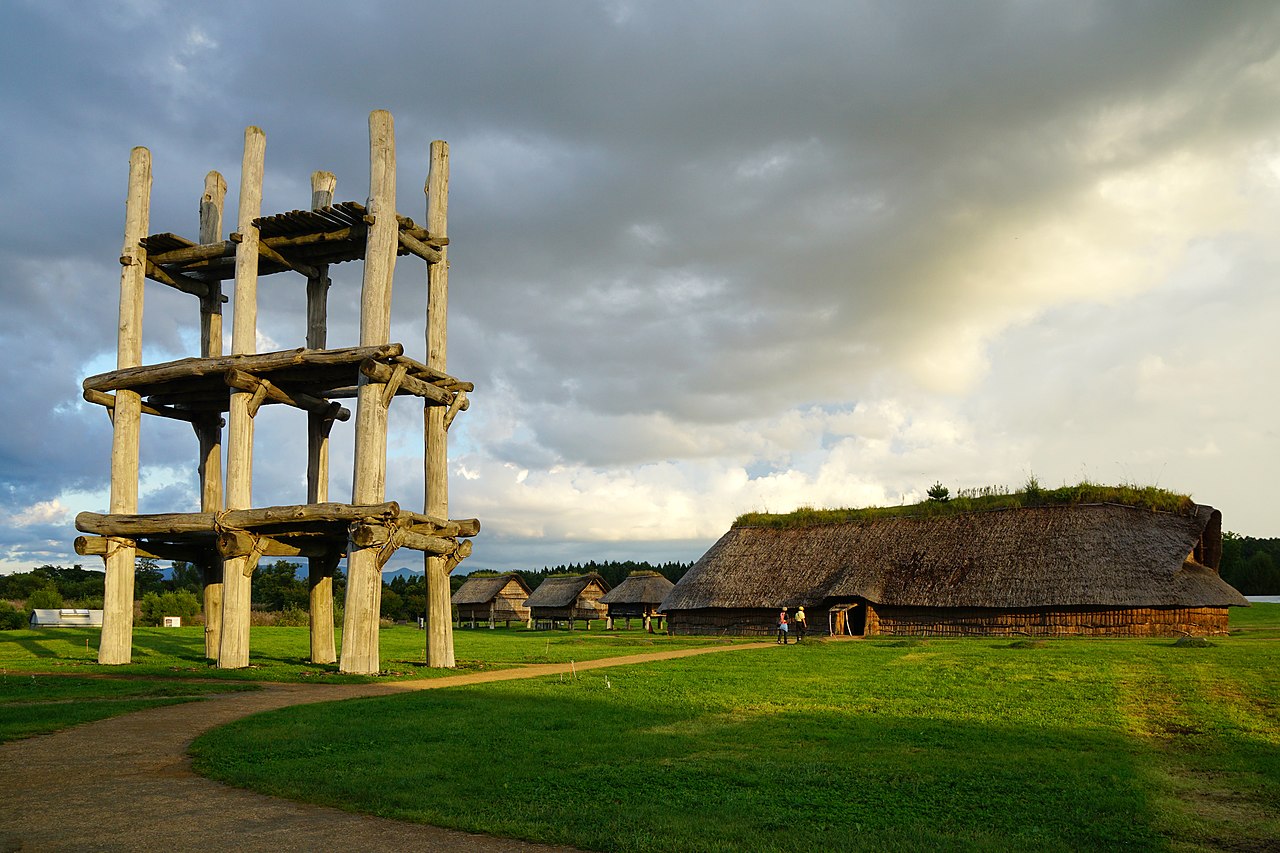
The scale of the settlement is evident from the remains of more than 650 pit dwellings, large pillar-supported structures, and extensive storage pits. One reconstructed building, thought to be a watchtower or monument, was built using six massive chestnut logs, each about one meter in diameter, spaced exactly 4.2 meters apart. This construction and community planning was all supported by the reliable yields of their managed forests.
Evidence from the earth
Excavations at Sannai-Maruyama show the Jomon diet and their relationship with plants. In addition to evidence of chestnut management, archaeologists have found remains of other cultivated or managed plant species. These include gourds (Lagenaria siceraria), perilla, burdock, and various beans, such as soybeans (Glycine max). The discovery of these plants challenges the traditional view of Jomon society as being composed of hunter-gatherers.
The waterlogged soil of a former wetland, used as a refuse area, has preserved organic materials exceptionally well. From these deposits, scientists have recovered nuts, seeds, but also wooden tools, lacquerware, and baskets. The plant remains show a diverse diet that also included walnuts and horse chestnuts. The presence of seeds from elderberries has even led some scholars to suggest the possibility of fruit wine production.
This evidence demonstrates that the people of Sannai-Maruyama possessed a deep knowledge of their environment. They systematically cultivated and managed a variety of plants for food, tools, and construction materials. Their society was a long-term adaptation that relied on the sustainable management of forest resources, a distinct pathway from the grain-based agriculture that would later dominate Japan.